When you study within Gettysburg College’s Biology Department, you receive the breadth and depth of knowledge from a liberal arts and sciences education. In turn, you’ll develop the critical thinking, communication, and research skills needed to excel in graduate school, professional school, or a range of science careers. Explore your interests and pursue your career success with our bachelor’s degree in biology or through a minor in biology or neuroscience.
Why study biology at Gettysburg?
When you study biology at Gettysburg College, you learn to become multifaceted and inquisitive by developing critical thinking and problem solving—enduring skills that employers across all industries value. Moreover, earning a biology degree prepares you for diverse career opportunities, including research and education.
Since the field of biology is vast and interconnected, many graduates perform vital roles by ensuring the safety of our food supply, water systems, and ecosystem. Others go on to graduate school to discover ways to prevent human disease as medical scientists or investigate the origin of a disease as an epidemiologist.
According to the U.S. Bureau of Labor Statistics, professionals seeking employment in life, physical, and social sciences occupations often earn nearly double the median annual wage for all occupations.
Major in biology
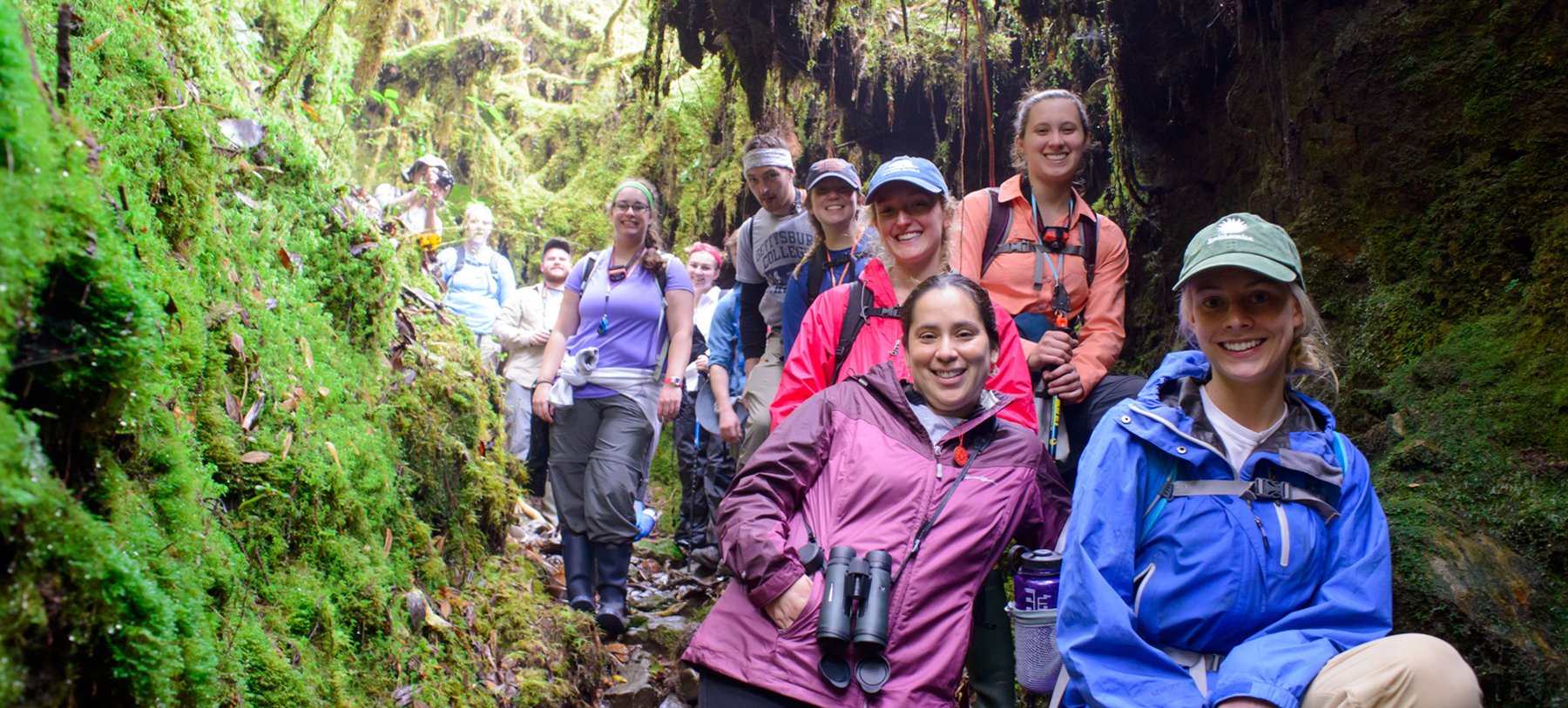
Both the B.S. and B.A. in biology degree programs include a broad range of laboratory and research work, with many opportunities to attend field trips or conduct scientific fieldwork with faculty and peers. If you want to study within the Bachelor of Science in biology program, you’ll take additional courses:
- One additional elective biology course
- One additional course in a related department
Both biology degree programs encourage active participation in labs and seminars to foster key communication skills needed for careers in the sciences.
Explore the complete biology major requirements.
Minor in biology
Gettysburg College offers a six-course biology minor for those who want to supplement their studies in the biology major.
- Biology 111 (or 110 or 113)
- Biology 112
- Four additional biology courses
Minor in neuroscience
The Biology and Psychology departments jointly provide a six-course neuroscience minor, available to all students regardless of their major. To pursue this minor, students must take four core courses and two electives.
Review the neuroscience minor requirements.
Curriculum
With a biology major or minor, you focus on a particular field of study, such as animal behavior, ecology, immunobiology, genetics, or neurobiology. Through studying organisms, populations, and molecular and cellular biology in our core course sequence, you encounter a range of research techniques and disciplines. The bachelor’s degree in biology curriculum ensures you develop the academic foundation to meet your educational goals.
What’s unique about Gettysburg’s Biology Department?
More than 70% of biology majors conduct student research during their time at Gettysburg. Previous undergraduate research experiences in the Biology Department have covered topics such as aquatic toxins, cell cycle regulation, innate immune response, amphibian development, genetics of digestive enzymes, and marine biodiversity.
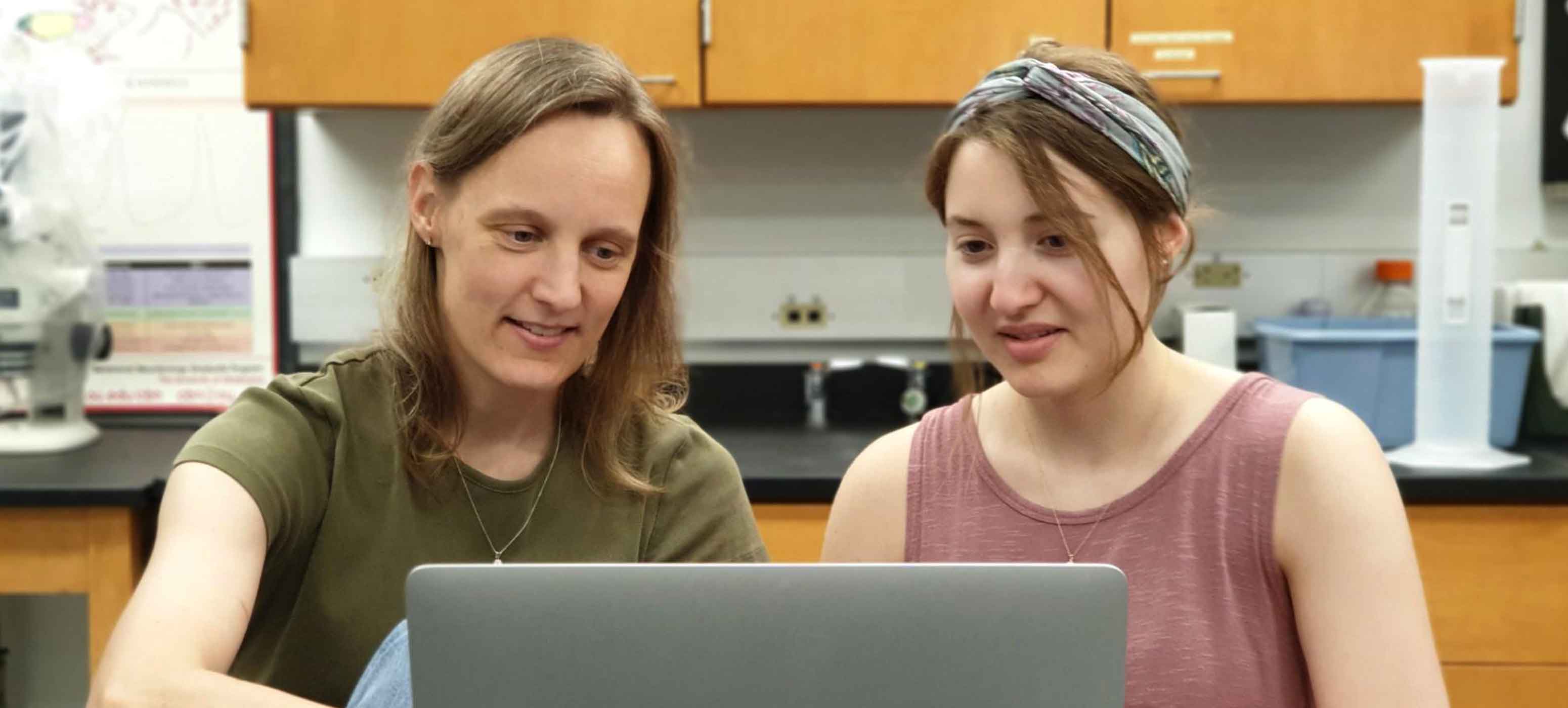
Research opportunities in biology are open to all students at any point in their degree program, with faculty members available to help them closely curate their plan. Work within the program may include publishing scientific research or aiding scholars in developing public programming. In addition, students in the department are encouraged to participate in internships, which help them build their résumés and prepare to secure satisfying career experiences after graduation.
Get involved in student research
From presenting research at national science meetings to co-authoring research publications on emerging diseases, our graduates have a stellar track record of leading research with innovation. Learn what some of our former biology students have achieved through research at Gettysburg:
- Conducted research at the Smithsonian Tropical Research Institute in Panama
- Used genetic engineering to study a novel gene that protects the cytoskeleton
- Discovered that cold stress induces a terminal investment reproductive response in C. elegans
Each research experience is unique since it builds upon your scientific knowledge and provides you with valuable networking opportunities as you progress in your career. You could pursue student-faculty research, cross-disciplinary research with peers, or scientific conferences where you present your research findings.
Explore research opportunities to get started.
Finding internships
Along with traditional research, you may also seek an internship. Former students have completed internships at the following:
- Hospitals
- Pennsylvania Department of Agriculture
- Universities such as Cornell, Carnegie Mellon, Thomas Jefferson, and the University of Pittsburgh
- Veterinary clinics
Visit the Center for Career Engagement to view a full catalog of internship opportunities and complete internship application forms.
Career preparation
Each program available in the Biology Department ensures you are ready for the next step in your studies and career. With small class sizes, collaborative faculty, and research opportunities, you’re prepared to enroll in graduate study or start your career.
Explore a list of common fields where biology graduates work:
- Allied health professions
- Dentistry
- Governmental agencies
- Pharmacy
- Pre-health professions
- Teaching
- Veterinary medicine
The Gettysburg alumni network
To best support you, all Gettysburg biology students have access to the Gettysburg Network through the connectGettysburg platform. More than 33,000 alumni strong, this platform serves as your tool for online engagement, networking, and career mentoring.
Featured course
Jump to level: All Biology courses
Department publications
-
Article Genomic and phenotypic signatures of bacteriophage coevolution with the phytopathogen Pseudomonas syringae. by Hernandez CA, Delesalle VA, Krukonis GP, DeCurzio* JM, Koskella B
-
Article Ca2+ entry units in a superfast fish muscle by Kittelberger, J.M., Franzini-Armstrong, C., and Boncompagni, S.
-
Article Forty years without family: Three novel bacteriophages with high similarity to SPP1 reveal decades of evolutionary stasis since the isolation of their famous relative. by Delesalle V.A., B.E. Tomko*, Albert C. Vill*, Katherine Boas*, and Greg P. Krukonis
-
Article Comparative genomics of six lytic Bacillus subtilis phages from the Southwest United States by Vill*, A.C., V.A. Delesalle, B.E. Tomko*, K.B. Lichty*, M.S. Strine*, A.A. Guffey*, E.A. Burton*, , N.T. Tanke* and G.P. Krukonis
-
Article Complete Genome Sequences of Two Temperate Bacillus subtilis Phages Isolated at Tumamoc Hill Desert Laboratory by Krukonis GP, Kemp AK, Storrie KF, Chavira VR, Lantrip HW, Perez VD, Reyes DA, Truax JA, Loney* R, Delesalle VA
-
Article Mechanisms of collateral damage: heterospecific neighbor density mediates parasitism by eavesdroppers on hourglass treefrogs by Ruether, B. F., Brady, M. J., Derick, T. L., Dula, B. T., Smith, S. A., & Trillo, P. A.
-
Article Recovery of partially engorged Haemaphysalis longicornis (Acari: Ixodidae) ticks from active surveillance by Keith J. Price, Bryn J. Witmier, Rebecca A. Eckert, Christian N. Boyer
-
Article Developing Inside a Layer of Germs—A Potential Role for Multiciliated Surface Cells in Vertebrate Embryos by Prof. Ryan Kerneye
-
Article Borrelia burgdorgeri sensu stricto DNA in field-collected Haemaphysalis longicornis ticks, Pennsylvania, United States by Keith Price, Bryn Witmier, Holly Chapman, Brooke Coder, Christian Boyer, Erik Foster, Sarah Maes, Ying Bai, Rebecca Eisen, and Andrew Kyle
-
Article The influence of signaling conspecific and heterospecific neighbors on eavesdropper pressure by Trillo, P. A., Benson, C. S., Caldwell, M. S., Lam, T. L.*, Pickering, O. H.*, & Logue, D. M.
-
Article Predicting the future: Parental progeny investment in response to environmental stress cues by Leah Gulyas (‘19) and Jennifer Powell
-
Article Co-cultures of Oophila amblystomatis between Ambystoma maculatum and Ambystoma gracile hosts show host-symbiont fidelity by Ryan Kerney, Jasper Leavitt*, Elizabeth Hill*, Huanjia Zhang*, Eunsoo Kim & John Burns
-
Book The Flowering of Ecology: Maria Sibylla Merian’s Caterpillar Book by Kay Etheridge
* Asterisks indicate Gettysburg College Biology students.
Discover career possibilities with a biology degree
Through the Biology Department at Gettysburg College, you can engage in hands-on research opportunities, investigative labs, and collaborative courses that challenge your thinking about the natural world. Here at Gettysburg, you’ll discover the topics in biology that interest you so that you can begin your career in the dynamic field of life sciences.