
English Alumni and Outcomes
This section of the English Department website is especially for alumni. You are invited to stay connected with your classmates, other alumni, the faculty, and the various activities and events in the department. We also encourage you to be available for students through mentoring, networking and other interaction opportunities.
Keeping in touch
We'd love to keep in touch with all English alumni, so that we can email our newsletter and reach out when students have career questions. Make sure we have your current information. If you'd like to update it, please send an email to Kathy Ambrose (kambrose@gettysburg.edu), Academic Administrative Assistant.
English Major Outcome Stories
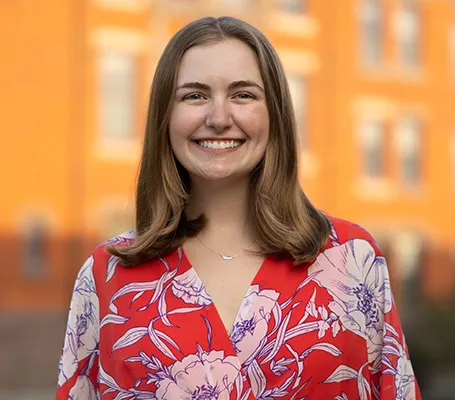
Laken Franchetti '24
Management and Program Analyst, U.S. Department of Justice
Gettysburg offered Franchetti an opportunity to study across multiple academic disciplines and explore a wealth of career-building experiences. A double major in history and English with a concentration in writing, she served as editor-in-chief of both The Getttysburgian and Her Campus and as nonfiction genre head of The Mercury. During her senior year, she was the lead communications intern for the Office of Communications and Marketing and also worked as a user service assistant in Musselman Library. A global leader for the Center for Global Education (CGE), she studied abroad in England during her junior year. “Through the academic curriculum and my extracurricular activities, I have learned the importance of storytelling and how to effectively communicate those stories with an audience,” Franchetti said. “These lessons and experiences that I have gained at Gettysburg have made me a more driven and focused student and person.” Following graduation, Franchetti plans to move to Washington, D.C., to pursue a career in government communications.
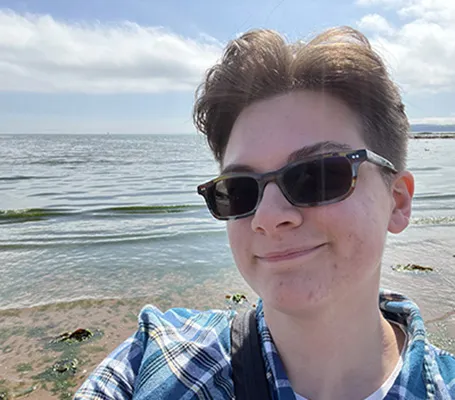
Jessica Roshon '23
Master's in Library and Information Science, University of Maryland
“I learned how to be more open-minded and honest with myself about who I am and who I want to be,” said Roshon, a history and English double major and Civil War era studies minor. “Not only have I developed my skills in research, writing, and critical-thinking, but I have also learned how to be a better person, both for myself and others. These are skills that every human needs to function in the real world and their careers, including my own.” Roshon was a member of the Bullets Marching Band and symphony band, served as a tutor at El Centro, and studied abroad in England. The summer before her junior year, Roshon completed the Diane Werley Smith ’73 Internship in Gettysburg College’s Special Collections, which alongside the continuous support of Prof. Ian Isherwood. helped cement her career goal of becoming an archivist after getting a master’s degree in library and information science.
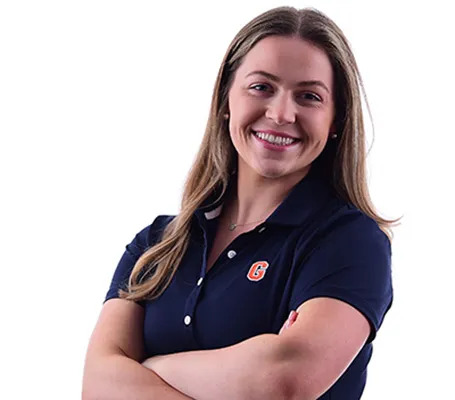
Caroline Kurtt '23
Foundation Coordinator, United States Golf Association
“I first discovered Gettysburg during my recruiting journey,” said Kurtt. “I did research on Gettysburg's successful women's golf program and I knew it was something I wanted to be a part of. Other than sports, I chose to attend Gettysburg because of the support I knew I would have not only during my four years here, but for the rest of my life. The faculty, coaches, and alumni network I met gave me the assurance I needed to make my decision.” Kurtt, who helped the women’s golf team win the Centennial Conference championship this spring, was the director of new member education of Alpha Omicron Pi, co-president of Student-Athlete Impact Leaders (SAIL), and participated in the Snell-Shillingford Leadership Symposium. After graduation, the English major and business minor will work in donor research and prospect tracking as the foundation coordinator at the United States Golf Association.
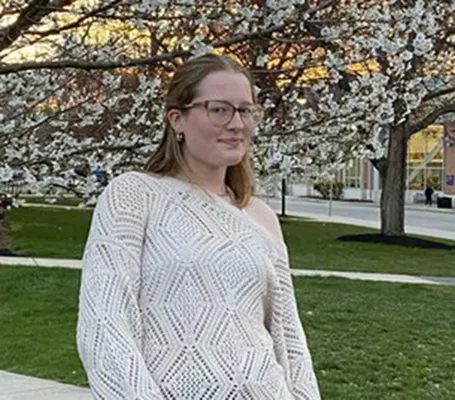
Emma Fee '23
Grants Associate, Philadelphia Museum of Art
“I am most proud of the picnic that I planned at the Painted Turtle Farm in collaboration with OSAGL, Farm House, GECO, and Listeners and Performers,” said Fee. “It made me so happy and fulfilled to see so many people come together to enjoy the farm and the work of our peers.” Fee developed an individualized major called “The Philosophy of Poverty” to go along with a second major in English. She was a member of several campus organizations focused on sustainability and preservation, including Students for Indigenous Awareness/Gettysburg Acknowledging Local Earth and the President’s Climate Change and Sustainability Council. Fee, who studied abroad in Tunisia, will complete a service fellowship before pursuing a graduate degree in philosophy.
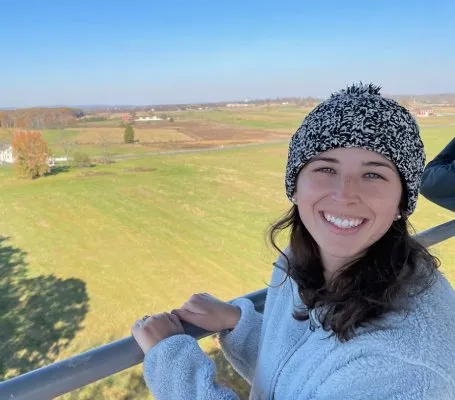
Cameron D’Amica '22
Associate Banker, Citi Private Bank
“My First-Year Seminar was a pivotal moment for me in my experience at Gettysburg,” said D’Amica, who studied English with a writing concentration and minored in business. “The course solidified my interest in English literature and built so many research and writing skills that I rely on inside and outside of the classroom today. I also learned how important it is to get to know your professors and how incredibly helpful they are in your time at Gettysburg. I realized all that Gettysburg could offer academically and the support faculty can provide. This was the class that taught me to be a successful college student and made me so excited for learning and my future at Gettysburg.”
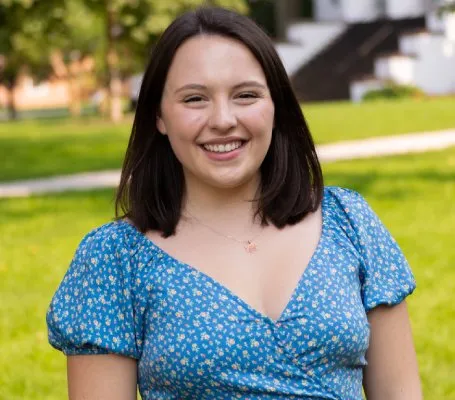
Phoebe Doscher '22
Marketing Copywriter, Brown University
“Throughout the past four years, I have picked up tangible writing, communication, and contextualization skills both inside and outside the classroom that I can only attribute to the liberal arts and sciences experience,” said Doscher, who studied theatre arts and English with a writing concentration. “I have faced tough problems and challenging questions that required me to interrogate the current political and social landscape. I have had engaging conversations that have changed my outlook and viewpoints—conversations on subjects that I never would have considered had it not been for my Gettysburg education with our incredible professors and driven students. The liberal arts and sciences education has forced me to analyze the world around me and become a better citizen—one that is well-informed, articulate, confident, and ready for what’s next.” After graduation, Doscher plans to begin working in an editorial capacity with a medical education company.
Newsletters
A Note from the Chair
Hello All, and welcome back from Reading Days for the rest of fall semester!
Reading is, of course, central to our work in the English department, and I’d like to offer this quote from Jeannette Winterson’s memoir Why Be Happy When You Could Be Normal? about reading when she was a college student:
The more I read, the more I felt connected across time to other lives and deeper sympathies. I felt less isolated. I wasn’t floating on my little raft in the present; there were bridges that led over to solid ground. Yes, the past is another country, but one that we can visit, and once there we can bring back the things we need.
Literature is common ground. It is ground not managed wholly by commercial interests, nor can it be strip-mined like popular culture—exploit the new thing and then move on.
There’s a lot of talk about the tame world versus the wild world. It is not only a wild nature that we need as human beings; it is the untamed open space of our imaginations.
Reading is where the wild things are. (Winterson 2012 144)
In your reading, when you come across a quote about how and why literature matters and sustains us, please feel free to email it to me, at krhett@gettysburg.edu. I’d like to post the English department hallways with reminders of our common ground, of why words matter.
Kathryn Rhett
Chair, Department of English
New English Faculty
Sean Kennedy
Sean Kennedy joins the English Department from the City University of New York, where he spent the last seven years working on his PhD, as well as being part of several movements for change regarding labor insecurity and low pay for adjunct faculty. He was previously a professional journalist who wrote and edited for a number of publications. He received his BA in English and modern studies from the University of Virginia, his MFA in fiction writing from Rutgers University—Newark, and his PhD in English from the Graduate Center of the City University of New York. This semester, he is teaching ENG 235: Survey of African American Literature and ENG 386: Rethinking Race and the Nation. At Gettysburg, he has enjoyed his classroom experiences co-learning with students, as well as the visual art offerings of both the Schmucker Art Gallery and Special Collections. He encourages students to ask him anything they want, regardless of whether they are registered for his classes or not. Next semester, he will be teaching ENG 378: Autobiography in African American Narrative and would love for as many students as possible to enroll. In addition to the formal writing components of the course, we'll have opportunities to experiment with informal autobiographical analysis, which I think will make the class especially edifying and fun.
Matt Barrett
Matt Barrett joins the English Department from University of California, Davis, where he taught creative writing and intro to college writing classes for two years. Previously, he taught composition and literature courses at the University of North Carolina at Greensboro during the 2015-16 school year. He received his undergraduate degree here at Gettysburg College, and his MFA in fiction from the University of North Carolina at Greensboro. This semester, he will be teaching ENG 101: Introduction to College Writing. He’d like to spend more time on the battlefield, not just for the history but also for walking, running, people watching, etc. He loves that Gettysburg College is a community where everyone has an opportunity to impact the school and contribute based on their own abilities. To him, “[i]t just feels like a place to belong. Go Bullets!” As an alumnus of Gettysburg, he always wanted to return but never expected he’d live across the country before he did.
Molly Reid
Molly Reid joins the English Department as the Emerging Writer Lecturer from the University of Cincinnati, where she was finishing and defending her dissertation in the PhD program. She received her BA from California Polytechnic University San Luis Obispo, her MFA in fiction from Colorado State University, and her PhD in literature and creative writing, fiction from the University of Cincinnati. This semester, she'll be teaching ENG 205: Introduction to Creative Writing and ENG 309: Prose Poetry and Flash Fiction. Outside of the classroom, she enjoys going for bike rides and running along the beautiful battlefield roads. She wants students to know that, “I love old school horror movies like Texas Chainsaw Massacre (the original). For strictly academic purposes, of course…” She thinks that everyone in Gettysburg has been so helpful and friendly and that her students are so intelligent. She’s excited and full of gratitude.
Melissa Forbes
Melissa Forbes joins the English Department in a new position. Before coming to Gettysburg, she was in graduate school in Urbana, Illinois, where she taught a variety of courses including intro to film, professional writing, and on one occasion a senior writing seminar for biochemistry majors. She received her PhD in English with an emphasis in Writing Studies from the University of Illinois at Urbana-Champaign. In spring of 2018, she began as an adjunct professor but has moved to a new position as a visiting assistant professor. This semester, she is teaching ENG 101: Intro to College Writing, ENG 200: Multimodal Composition, and ENG 270: Nonfiction Across Media. Having taught at a Big 12 school for most of a decade, she loves how the liberal arts atmosphere of Gettysburg College allows her to build ongoing relationships with her students. In her own college career, the connections with her professors were important and she thinks it’s wonderful to see those connections from the other side. She’s been very impressed with how thoughtful and engaged her students are here.
Submit to The Mercury: Art & Literary Magazine of Gettysburg College!
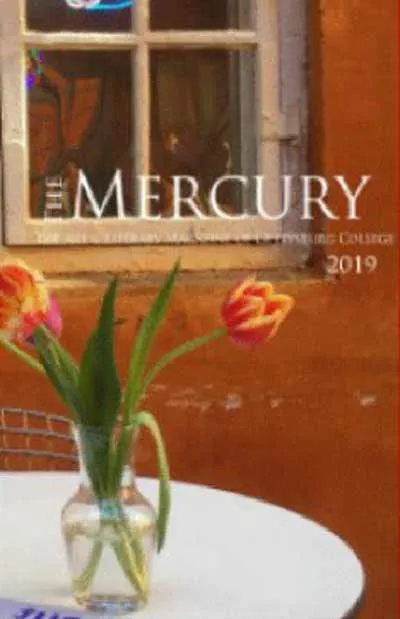
We are accepting Submissions in: Art, Poetry, Short Fiction, and Creative Nonfiction.
Submissions for the 2019-20 edition of The Mercury are now open! Students are encouraged to submit any work that has not previously been published. Work for class (creative writing, art) is fair game. The Mercury has non-exclusive copyright, so while you are allowing us to print your work, you still own the rights; this means you can publish your piece elsewhere after it has been published in The Mercury. Reviewing is double-blind, so it will be an anonymous process.
We have updated our submission guidelines, so please read them carefully here: http://cupola.gettysburg.edu/mercury/submission_guidelines.html
The most important things to note are:
- Once pieces are published they cannot be amended or removed from the Cupola.
- Accepted authors will have a chance to review their final work before it goes to print. We will not print anything without your final consent.
- Anonymous submissions are strongly discouraged.
Get started here: http://cupola.gettysburg.edu/mercury/
Email Questions to: Ellianie Vega at vegael01@gettysburg.edu
Alumni News
Jackie Marotto ’15
English Major with Writing Concentration and Women, Gender, and Sexuality Studies Minor
Jackie Marotto ’15 graduated from Gettysburg College with a B.A. in English with a Writing Concentration and a minor in Women, Gender, and Sexuality Studies. In 2017, Marotto received a Masters in Public Health (MPH) in Health Education and Behavioral Sciences from Rutgers University. This fall, she began pursuing a Masters of Science in Regulatory Affairs and Quality Assurance from Temple University. Currently, she works as a Senior Scientific Writer at Bristol-Myers Squibb in Lawrenceville, NJ. In this position, Marotto “serve[s] as a coordinating author working with cross-functional groups on submission-facing documents to worldwide health authorities. These contain aggregate data on the safety of our products, and include documents such as Periodic Benefit-Risk Evaluation Reports (PBRERs), Development Safety Update Reports (DSURs), and Risk Management Plans (RMPs), all of which are regulated by global guidance.”
Were any of your English classes at Gettysburg particularly impactful, or any of your English professors particularly influential?
I remember being nervous for English 299, which I took with Professor [Joanne] Myers. It was definitely a challenging class, but it was also rewarding when looking back and realizing how much I had learned in just one semester. Examining language critically, learning to think outside the box, and considering the meaning of language on a deeper level changed how I approached both reading and writing throughout the remainder of my classes at Gettysburg.
While at Gettysburg, were you involved with any activity/activities outside of the classroom that helped you gain valuable experience?
I was on the Cross Country and Track & Field teams, and I also worked a few days a week in the Athletics Equipment Room. Both of these helped me develop organizational skills to allow enough time for the activities I had to do, as well as the ones I wanted to do. I have more recently realized that learning these time management skills have translated into establishing a good work/life balance.
How do you think your degree helped you in your endeavors after graduating from Gettysburg?
My degree in English allowed me to consider a variety of careers after graduation, such as one in a health-related field, a future career that isn’t typically considered English-related. However, after my professors at Gettysburg challenged me to think critically and taught me how to communicate effectively, it was a seamless transition to implement these same principles into the concepts of health education and behavioral sciences. More recently, communicating in a straightforward manner has become an everyday part of my job, as part of writing message-driven documents.
Is there anything else you would like to add?
English majors I think are quite often asked what they want to do after graduation, because it is seen as one of the more “limiting” degrees, but I simply do not think this is true. Earning my English degree opened a variety of options to me after Gettysburg, including my current position as a scientific writer, a job that I hadn’t even known existed when I was at Gettysburg. My advice is to search for a career that will allow you to merge your English degree with something you are passionate about.
Homecoming Alumni Panel
Five English & Writing alums returned to campus for a Homecoming Alumni Panel: Rick Deutsch (2000), Sara (Harenchar) Levinson (2009), Matt Barrett (2011), Molly Yingling (2012), and Joe Kirkenir (2014). Thank you for coming back to talk with students about your career paths!
Student News
Featured Summer Internship: Benjamin Lowenberg ’20
English Major, Religious Studies Minor
What was your internship?
I was an Intern at BOLD Worldwide, a digital marketing firm.
Where was your internship?
BOLD Worldwide is located on Wall Street in New York City.
Could you describe what your internship entailed?
I was tasked this summer with both copywriting and performing sales calls with current and potential clientele. We held several successful events in which I was able to build my PR skills and marketing abilities.
What were a few of the best parts of your experience?
What I really enjoyed was working on projects with my peers and having them give me complete autonomy with my work and constant feedback. One of the best parts of my internship was when we hosted a business marketing event and I had the opportunity to meet some incredibly successful and inspirational people like Chad Metcalf, a retired Navy Seal turned PGA Tour Golfer, who is currently working towards his Master of Business degree.
How have your English studies at Gettysburg aided you in your internship?
My English studies at Gettysburg College were tremendously beneficial in that I was able to work at a high level with other copywriters as well as being able to write in both a creative and effective way. Studying English has also given me the ability to be able to review and edit writing at an advanced pace.
Is there anything else you would like to add?
I was also able to see how a successful business on Wall Street was operated from every aspect, including accounting and account management. The three months I worked at BOLD Worldwide was a truly remarkable experience and a growing moment in my life.
Announcements
On the Calendar
- 42nd Annual Croll Lecture: Professor Tita Chico: Thurs, Oct 24th 4:30 p.m. Joseph Theater
- Mesha Maren Fiction Reading & M. Randall O’Wain Nonfiction Reading: Wed, Oct 30th 5:00 p.m. Joseph Theater
- Ada Limon Poetry Reading: Mon, Nov 11th 5:00 p.m. Lyceum (4th floor Penn Hall)
Writing Center Hours
| Day | Time |
|---|---|
| Sun. | 4:00 p.m. – 10:00 p.m. |
| Mon. – Thurs. | 4:00 p.m. – 10:00 p.m. |
| Fri. & Sat. | Closed |
The Gettysburg College Writing Center is located on the ground floor of Breidenbaugh Hall and open for drop-in visits by student writers Sunday through Thursday from 4:00 p.m. – 10:00 p.m. We are staffed by fifteen student tutors this semester from a wide variety of disciplines and departments across campus.
Students are welcome at any point in the writing process although last minute appointments are usually less productive than visits that allow sufficient time for revision before the project is due. So, please come early and often! Our tutors also find it helpful if writers bring with them a written copy of the assignment they are working on and at least one paper copy of the essay itself, printed back to back.
Although we can’t be a “fix it” service for written work, students can expect an intelligent conversation about their writing during a session that usually lasts about a half hour. During most sessions, our tutors will begin by asking about the assignment to ensure an appropriate connection between that assignment and what the student is working on. Next, they will look for the paper’s main point to make sure it is clearly expressed, then turn to the structure of support for this main idea, paragraph coherence, transitions, and potential problems at the level of the sentence. A serious effort is made to keep the student writer in an active role, encouraged through questions and suggestions to consider making changes in the work at hand.
Writing project of all kinds are welcome, everything from lab reports to creative pieces to capstone research papers. Work longer than ten pages, however, may require multiple sessions.
Casagrande Corner
Recognizing the importance of travel in supporting and strengthening research and learning for faculty and students, Dr. Peter J. '60 and Pamela M. Casagrande have established an endowed fund to support domestic and international travel for both faculty and students in the English department.
Faculty and students are invited to apply directly to the chair for grants of up to $500 to support travel for research, professional presentations, conference attendance or other special projects that contribute to scholarship, teaching, and learning.
New department button!
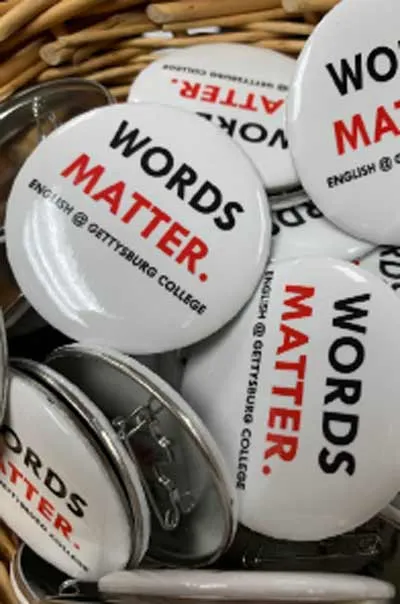
Pick up our new English department button in the office!
Have an idea for a future button? Email Jody Rosensteel at jrosenst@gettysburg.edu
Written by Maddie Neiman ’21 and Chloe Wojcik ’20
A Note From the Chair
Hello, English Department Community, and a special welcome to our new majors and minors!
I appreciate seeing everyone in person this fall on campus! And I’m grateful as always that we’ve been able to continue our work. Hope to see those of you on campus at our English Department Open House on October 20th. In the meantime, I’ll leave you with this thought from writer Richard Rodriguez.
I have come to think of myself as engaged in writing graffiti. Encouraged by physical isolation to reveal what is most personal; determined at the same time to have my words seen by strangers. I have come to understand better why works of literature—while never intimate, never individually addressed to the reader—are so often among the most personal statements we hear in our lives.
Writing, I have come to value written words as never before. One can use spoken words to reveal one’s personal self to strangers. But written words heighten the feeling of privacy. They permit the most thorough and careful exploration.
—Rodriguez, Richard. Hunger of Memory. Dial Press, New York, NY, 1982.
Happy reading & writing, and I hope you and yours are safe and well.
Kathryn Rhett
Chair, Department of English
Faculty News
Professor Sushmita Sircar
How has your first semester teaching at Gettysburg College been for you so far?
It has been wonderful to be back in the classroom with students, in Gettysburg College of course, but also, just in this late phase of the pandemic! It is a tremendous pleasure to be able to read together and develop our ideas in conversation with each other. I am also discovering for myself all the benefits of a liberal arts college I’ve always heard about—small classes, the charming campus, running into people everywhere!
For those who are unaware, could you please explain what the Mellon Fellowship is?
The Mellon Fellowship supports one year of teaching a one course per semester load, giving the fellows more time to develop those courses but also to focus on their research. After this year, Mellon Faculty Fellows transition to a tenure-track assistant professorship. I’m grateful for the opportunity the fellowship affords to devote time to research, begin work on my book project and adjust to life in Gettysburg!
What does the research you are conducting entail?
My research is in the field of postcolonial literature and the anglophone South Asian novel. Specifically, I focus on the figure of the “revolutionary”—the terrorist, the student, the dissenting soldier, among others—in the anglophone novel, to think about how they position themselves against the nation-state. I ask what histories they claim for themselves, what futures they imagine, and what kinds of relations to each other (comradeship, brotherhood) they need to position themselves against the state. Some of the novels I examine are Neel Mukherjee’s The Lives of Others, Madhuri Vijay’s The Far Field and Pankaj Mishra’s The Romantics.
What courses are you teaching this year?
I am teaching an introductory course on world literature that focuses on translation in world literature. We are reading some contemporary prize-winning novels and poetry that theorize translation as a condition of global circulation. In the spring, I am teaching a course called “Asian Internationalisms,” which looks to Afro-Asian solidarities, Indian Ocean imaginaries, and transnational anti-colonial networks to expand our idea of what Asia’s borders looked like over the course of the twentieth century.
Professor McKinley Melton
Professor Melton will be teaching a new course this spring, Literature of the Civil Rights Movement, that will be offered T/R 2:35 p.m. – 3:50 p.m.
Recent Publications
Professor Aristides Dimitriou
Published in the Arizona Quarterly: A Journal of American Literature, Culture, and Theory (Volume 77, Number 2, Summer 2021) titled:
“Outlaw Aesthetics: John Rechy’s Narrative Epistemology of the Borderlands.”
This article examines how John Rechy's outlaw sensibility not only mobilized an early form of Queer Chicanidad but also inspired an experimental narrative discourse to critique the neo-imperial governance of the US-Mexico borderlands in the mid-twentieth century. Juxtaposing the recurrence of discrimination against marginalized groups in the United States with the reemergence of empire in the borderlands, Rechy's work articulates a historical genealogy of transnational displacement and migration, which shows how the ostensible freedoms of the present remain rooted in the unfreedoms of the colonial past. Rechy offers a narrative epistemology of border-thinking: a disclosure of transnational consciousness, positioned between temporal and spatial borders, which highlights the unavailability of existential freedom and the need for political struggle. In exploring the contours of Rechy's outlaw aesthetics this article offers a new understanding of Rechy's work that helps expand the fields of global modernism, postwar American literature, and Chicanx studies.
Alumni News
Nicole Cvjetnicanin ’18
English Major and History Minor
Nicole Cvjetnicanin ’18 graduated Gettysburg College with a B.A. in English and a minor in History. After graduating from Gettysburg, she began a Master of Science program in Library Science at the University of North Carolina at Chapel Hill. During her graduate program, she was also a graduate research assistant at Wilson Library on the UNC campus. From 2018-2019, she held a position in the archival processing section of the library. And from 2019-2020, she was transferred to working on archival digitization in the North Carolina Digital Heritage Center. In 2020, Ms. Cvjetnicanin received her masters degree from UNC. Currently, she is located in Madrid, Spain, where on October 1, 2021 she began working as a Teacher’s Assistant teaching English in a secondary school. In this position, she will be in charge of helping students improve their existing English language skills while simultaneously teaching them about American culture and assisting the teachers in their duties.
How do you think your degree helped you in your endeavors after graduating from Gettysburg?
My degree from Gettysburg College helped me to become a well-rounded individual with knowledge in a wide variety of subjects. Because of the liberal arts education I received at Gettysburg, I was able to enter graduate school and excel in an array of different subjects and disciplines, which is extremely helpful in the library science field. Because I took classes in so many different departments at Gettysburg, I feel prepared to work as a librarian/educator in more subjects than just those that I majored and minored in.
Were any of your English classes at Gettysburg particularly impactful, or any of your English professors particularly influential?
During the fall semester of my senior year at Gettysburg College, I took a course entitled "Victorian Aesthetics" with Professor Suzanne Flynn. The highlight of the class was a fall break trip to London to visit museums, galleries, and monuments that pertained to our course material. It was so incredible to be able to have this hands-on experience and to see in person the art and architecture that we had been learning about in class. I also took my senior seminar with Professor Flynn and she always made the material accessible and gave us a wealth of knowledge concerning the context for everything we read and studied. In both "Victorian Aesthetics" and the Thomas Hardy Seminar, our classes felt like one big family. Professor Flynn always invited opposing viewpoints and intellectual diversity into her class discussions. We always felt comfortable sharing our opinions and thoughts on the material, and she always challenged us to dig deeper into those viewpoints.
While at Gettysburg, were you involved with any activity/activities outside of the classroom that helped you gain valuable experience? If yes, please explain.
I worked as a student assistant at Musselman Library's Special Collections and College Archives. My work was one of my favorite parts of my college experience. Not only did it help me realize that I wanted to go into the field of library science, but I had so much fun every day working with the incredible staff in Special Collections and Musselman Library as a whole. My supervisors were so open to making the experience the most valuable it could be for my professional development. During my senior year, I coordinated with my supervisor to let me take on an existing project of processing and digitizing our extensive collection of historic sheet music from the 19th and 20th centuries. All week I would look forward to the hours I would spend sorting through and discovering these amazing pieces of history and culture. I still consider that project one of the crowning achievements of my educational and professional careers.
Is there anything else you would like to add?
My advice to every college student that I talk to (especially Gettysburg students) is to branch out and take courses that may not fall under your usual scope of interest. There are so many amazing courses and professors at Gettysburg College, and they all can add to the well-rounded education for which Gettysburg College is known and revered. This willingness to try new things will also serve you well in your future educational and career endeavors and help you to be suited to a wide variety of disciplines.
Student News
Featured Internship
English Major with Writing Concentration & Theatre Arts Major ’22
I worked as a Fashion and Music Journalist Intern for The Garnette Report, an entertainment publication dedicated to linking the gap between up-and-coming and established artists.
The internship was fully remote, but the company is based in New York City.
I was responsible for writing three articles per week for their website, covering current fashion and music news. If they hadn’t assigned a story to me, I’d do some research on current topics under those genres and find a relevant story to cover. Then, I’d upload them to the website, including pictures and captions.
Some of the assignments from the editor came with official PR emails from the artist or fashion designer. I thought it was so cool to see the publicity materials firsthand and learn how to turn these press releases and photos into news stories.
I think my experience with the English department has made me a better writer and critical thinker. Being a journalist requires an innate curiosity about the world, and as an effective reporter, you have to think, “What’s this topic about?” or “What are the implications of this in society and the world?” Ultimately, when you’re sharing news with the world, you have to look at it with a critical eye and write in such a way that anyone will understand or learn something from. At Gettysburg, I learned to extract important information from texts and communicate it effectively, and I used that every day in my internship.
I loved the opportunity to dive into the world of entertainment writing this summer. This experience made me a more versatile writer and encouraged me to write almost every day in a concise and clear manner on a deadline. I’ll take that with me this semester and beyond.
Class of 2022 Honors Students
We are looking forward to hearing about your amazing topics!
Cameron N. D’Amica
Topic: Three women from Shakespeare’s comedies: Portia, Viola, and Rosalind.
Thesis Advisor: Professor Chris D’Addario
Esmeralda Orndorff
Topic: The relationship between religious institutions and female agency in Gothic literature.
Thesis Advisor: Professor Joanne Myers
Hannah Evans
Topic: An experimental collection of poetry and creative nonfiction essays centered on ideas of identity formation, multidimensionality, connection, and growth.
Thesis Advisor: Professor Kathryn Rhett
Mirabelle Cohen
Topic: Haunted houses in the 20th century
Thesis Advisor: Professor Elizabeth Duquette
Phoebe M. Doscher
Topic: A collection of creative non-fiction essays about life, love, loss, growing up, and growing through traumatic times.
Thesis Advisor: Professor Kathryn Rhett
Announcements
Writing Center Hours: 9/5–12/9
| Day | Time |
|---|---|
| Sun. | 4:00 p.m. – 10:00 p.m. |
| Mon. – Thurs. | 4:00 p.m. – 10:00 p.m. |
| Fri. & Sat. | Closed |
In-person, we have TWO locations: the main Center on the ground floor of Breidenbaugh and the Annex on the lower level of Musselman Library. Appointments are encouraged, but we’re happy to take walk-ins as we are able!
Please note that the Breidenbaugh and Library locations use different calendars—if your desired time isn’t available in one, check the other.
Online, you can either 1) schedule an online appointment to meet synchronously with a tutor for 25 or 50 minutes or 2) select eTutoring and upload your draft to receive asynchronous feedback at the end of your appointment time (50 minutes only).
For online and eTutoring options, it doesn’t matter which calendar/location you select.
To make an appointment and for more information about The Writing Center, please visit the landing page on the Gettysburg College website!
On the Calendar: Writing House Series
- November 9th, poet Shara McCallum (hosted by The Gettysburg Review), 5:00 p.m., The Lyceum
- November 18th, poet Marcus Jackson, 5:15 p.m., Joseph Theater in Breidenbaugh
Casagrande Corner
Students and faculty may apply for funding for academically related travel, including attendance at virtual conferences. Email krhett@gettysburg.edu if interested.
Department PLA: Cam D’Amica
Hi, my name is Cam D’Amica, and I will be the English Department PLA for the 2021-2022 school year. I’m a senior English Major with a Writing Concentration and Business Minor. Please reach out to me via email (damica01@gettysburg.edu) in order to schedule an appointment if the dates on the sign-up sheet do not work for you. I can be available via Zoom or in person. I look forward to hearing from you!
A Word’s Worth of News, written by Lureann Semple ’22 and Caroline Kurtt ’23
Ready to Do Great Work?
