

Online Summer Courses
Take a course online this summer from anywhere to accelerate your graduation, expand your breadth and depth of knowledge, build enduring skills, elevate your GPA, and explore your academic interests.
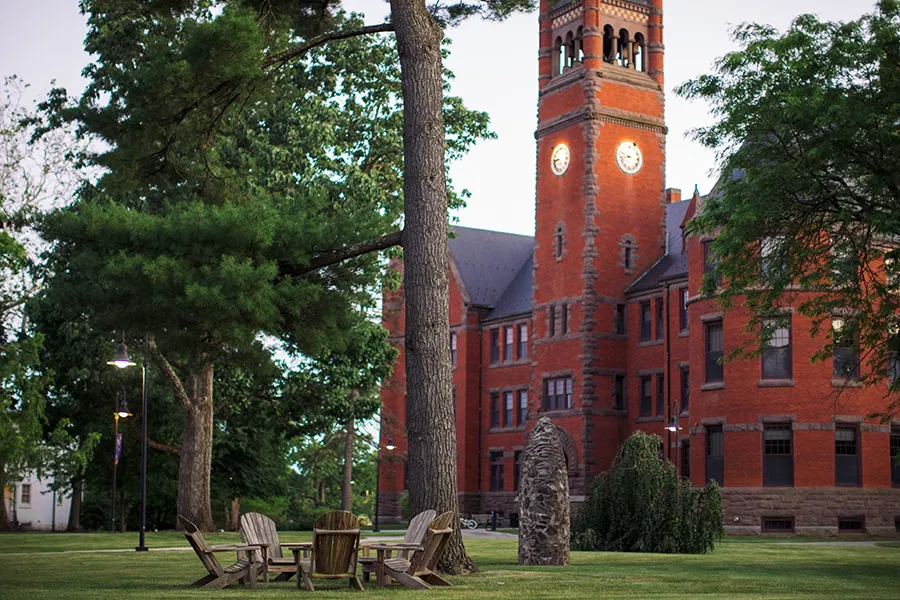
Gettysburg College summer classes offer a unique blend of academic rigor and flexibility, allowing you to pursue your interests, stay on track for graduation, or discover new areas of study with the convenience of online learning.
Open to rising sophomores, juniors, and seniors, online summer courses at Gettysburg enable you to take a class in subjects ranging from Anthropology and History to Management and Philosophy taught by our distinguished faculty members.
Find Your Course How to Register
Summer courses at a glance
Summer online courses give students an opportunity to utilize their time outside of the regular academic year to earn extra credit through a hands-on internship or engaging virtual class.
- 100% Online: Synchronous and asynchronous instruction
- Two Five-week Term: Earn credit at an accelerated pace, giving you the opportunity to earn two-course units toward graduation
Summer 1 courses begin on Monday, May 18, and end on Friday, June 19. The add/drop period is one week, ending on Friday, May 22. The last day to withdraw from a Summer 1 course is Monday, June 8.
Summer 2 courses begin on Monday, July 6, and end on Friday, August 7. The add/drop period is one week, ending on Friday, July 10. The last day to withdraw from a Summer 2 course is Monday, July 27.
Summer 2026 Dates:
Summer 1:
- Monday, May 18: First Day of Class
- May 18-22: Add/drop period
- Monday, June 8: Last day for student receive a W
- Friday, June 19: Last Day of Class
- Friday, June 26: Final Grades due
Summer 2:
- Monday, July 6: First Day of Class
- July 6-10: Add/drop period
- ·Monday, July 27: Last day for student receive a W
- Friday, August 7: Last Day of Class
- Friday, August 14: Final Grades due
Course credit
Each summer course is a four-credit hour course currently offered at Gettysburg College. Upon successful completion, students earn 1 unit (equivalent to 4 credits) toward the 32 units required to complete the degree. The course unit and final grade earned will appear on student transcripts.
The benefits of taking an online summer course
The Gettysburg summer experience
At Gettysburg, we tailor our courses to meet the unique needs of our students. Whether you want to discover a new subject, catch up on your studies, or graduate early, our faculty and staff are here to support you.
Even though the classes are online, it doesn’t mean you miss out on engaging conversations and mentorship. Gettysburg’s online summer courses combine interactive synchronous instruction with asynchronous sessions, ensuring you acquire marketable skills and in-depth knowledge.
Learn more about the Gettysburg Approach.
Further your study and graduate early
Taking a summer class is a great way to challenge yourself and get ahead of your studies. After you complete your summer course, you fast-track your graduation by earning 1 unit (4 credits) that can apply to your bachelor’s degree. You may also complete a course for a second major or minor and finish within a four-year academic plan.
Pave your path to career success
During your summer course, our immersive online classroom helps you build strong writing and reasoning skills that are essential for your future graduate studies. You may also utilize your summer to take an internship class to gain professional experience that can pave your path to career success.
Discover and expand your academic inquisitions
Use summer courses to expand your breadth and depth of knowledge in subjects that interest you. Our offerings allow you to engage in stimulating coursework you may not be able to take during a fall or spring semester.
Lighten your course load and prepare for study abroad
Are you taking a challenging course or two during the fall or spring semester? Enrolling in a Gettysburg summer class enables you to complete a program requirement when your academic schedule is lighter. A summer course is especially helpful if you plan to study abroad in the fall through our Global Education program.
Take a dropped course or retake a class
If you dropped a course during the fall or spring semesters or want to retake a class you already completed, enrolling in a summer course can provide these options. Learn more about Gettysburg’s repeated course and grade cancellation policy.
Complete coursework from anywhere
Gettysburg’s 100% online summer courses provide flexible study options for students. Note: Online summer courses offered at Gettysburg College include both asynchronous and synchronous instruction.
Online summer courses enrollment requirements
Students currently enrolled at Gettysburg College and returning for the subsequent fall semester may enroll in one of the online courses. Students placed on academic suspension at the conclusion of the preceding spring semester may not earn credit for an online course and are unenrolled prior to the start of the summer term.
Students may enroll in only one Summer online course per summer session..
Cost and tuition
The cost for each course is $3,330.00, with payment due by May 15. If students register after this date, payment is due within 24 hours. The charge for the course is nonrefundable after the add/drop period ends.
Tuition charges will be posted to Campus Experience within 72 hours of registration. Billing statements will be sent to all of those currently registered for summer by Friday, April 3, and then again during the first week of May.
Students must pay for the course in full to avoid a financial hold, including a transcript hold and course registration hold for the upcoming academic year.
Financial aid for summer courses
Federal Financial Aid for summer courses may be available to Gettysburg College students; however, it is extremely limited. If you are a Gettysburg student and have questions concerning financial aid eligibility, our Financial Aid team is here to help! Contact financial aid to learn more.
Enrich your summer with Gettysburg’s online courses
Embark on a journey of intellectual exploration this summer with Gettysburg College's online courses. Whether you're a current student at Gettysburg or from another college, these courses offer an excellent way to advance your education and make your summer count.
Have questions? Contact the Registrar!
FAQs
Summer online courses at Gettysburg are five weeks long, from Monday, May 20, to Friday, June 21.
At this time, Gettysburg College summer courses are available for Gettysburg College rising sophomores, juniors, and seniors only.
You can take one class per summer session at Gettysburg College.
Your grade earned through the summer online course will be on your transcript. A strong summer grade can help you raise your overall GPA.
Gettysburg’s online summer courses are only open to current sophomores, juniors, and seniors at Gettysburg College. If you are a current high school student, you may join us through our summer programs.
Available courses summer 2026
Summer I courses
Instructor: Aisha Mershani
Introduction to computer-mediated communication technologies (CMC) examining how digital media is used for interpersonal interactions and collective action. Social connections through various new media platforms (Facebook, Twitter, Instagram, and more) are explored to convey the possibilities and limitations of using digital platforms for social interaction. We will draw from various academic disciplines such as cultural studies, communications, and new media studies to critically evaluate the influence of social media on activism, politics, mainstream media, relationships and identity. Students will maintain an online blog throughout the semester and utilize social media during the course to engage with new media content.
Instructor: Vernon W. Cisney
Exploration of the development of major genres of Western literature and thought (from the fall of the Roman Empire to the 18th century), including epic and narrative poetry, drama, the novel, and literary nonfiction. Authors read may include St. Augustine, Dante, Rabelais, Shakespeare, Milton, Voltaire, and others. Through reading, writing, and discussion of complete works, the student is introduced to those humanistic skills and critical methods that have traditionally distinguished the liberally education person. Course not offered every year.
Instructor: Vernon W. Cisney
This course will examine the nature of philosophy (‘the love of wisdom’) through a particular question: what is the meaning of love? Love is arguably one of the most basic, most universal, most natural things that human beings do, and yet it is also one of the most complex and paradoxical; and many of our most basic intuitions about love are irreconcilable. We believe that love should be passionate, and yet that it should transcend bodily desires. We believe that love is the fusion of two incomplete selves, and yet, we also believe that love should be grounded in one’s own emotional and moral strength. We believe in ‘soul mates,’ while also holding that ‘there are a lot of fish in the sea.’ We believe that love makes us stronger, and that ‘love hurts.’ We see it as both a basic biological impulse, and as a reflection of the divine in humanity. In this course we shall examine the nature of this complex phenomenon through the lenses of religious thought, film, and philosophy.
Instructor: Stephanie A. Sellers
Interdisciplinary exploration of the history, cultural meanings, and contemporary practices of team sports and individual athletes of Indigenous nations of the Americas before and after European contact. The course examines the historic disruptions of these practices by European colonization and how Native Americans respond(ed) to those intrusions. Issues of Indigenous sports mascots, colonial narratives of Native peoples in relation to their physicality and identities, the role of sports at Indian boarding schools, the prevalence of Euro-formed historic narratives of Natives in media today, and critical Indigenous actors in the world of sports are discussed.
Instructor: Aisha Mershani
This course will introduce the numerous ways in which Arab youth charted an alternative path towards social and political change in the Middle East through the use of new media and modern technologies. Discussions focus on the challenges Arab youth face in their 21st-century, globalized environments, and on their engagement with their regimes and societies, particularly in the context of the Arab Spring. Arab youth’s artistic and political expressions are discussed as a primary aspect for the transformation in the region. This course will place engagement in new media platforms within the broader context of the Arab media landscape and its history, as well as examine the socially constructed category of “youth" within a regional and historical context. Additionally, contemporary cultural and political events in the Arab world will be frequent sources of discussion. Readings for this course will be drawn from a variety of fields of scholarship, including sociology, anthropology, and media studies, among others.
Instructor: Maheshan Ekanayaka
Introduction to the power and scope of mathematical ideas by investigating several particular topics. Topics vary among sections. Example of topics include basic mathematical modeling, dynamic geometry, puzzles and recreational mathematics, linear programming, game theory, voting power, legislative representation, and cryptology. Course is intended for first year and sophomore students in the arts, humanities, and social sciences who do not plan to take calculus. Students who have received credit for any Mathematics course at Gettysburg College, whether through course completion, transfer credit, or AP credit, may not enroll in Mathematics 103. No prerequisites.
Instructor: Katherine W. Delaney
Introduction to the scientific study of behavior and mental processes, including topics such as cognition, learning, development, personality, social behavior, and psychological disorders. The course emphasizes how psychologists collect, analyze, and apply data to understanding individuals and societal issues.
Instructor: Allison Yurasek
Course will provide an introduction to how biological, psychological, and social factors influences health and illness prevention. The course broadly focuses on health beliefs and behavioral change. Sample topics include stress, nutrition, weight control, exercise, addiction, pain management, psychoimmunology, and healthcare accessibility. Prerequisite: PSYCH 101
Summer II courses
Instructor: Divonna Stebick
Education shapes our lives in powerful ways—but access to high-quality learning experiences isn’t distributed equitably. This course explores how different educational systems—urban, rural, private, cyber, and magnet—reflect and reinforce broader social inequities. Through real-world case studies and interdisciplinary research, we’ll examine why gaps in opportunity and achievement persist and how factors like social class, race, gender, and identity shape students' experiences. By investigating the systems behind these disparities, students will develop a deeper understanding of how education impacts communities—and how they can play a role in making it more just.
Instructor: William O'Hara
Survey of technological, sociological, and artistic issues related to games and game music. Students will critically examine notions of play; explore the evolution of video game soundtracks; analyze how music operates in games; explore and critique "music games" such as Guitar Hero; and explore music and sound in game-related cultural phenomena (such as video game soundtrack concerts and tribute bands). The course includes a substantial multimedia component. Offered occasionally.
Instructor: Katherine W. Delaney
A developmental approach to the study of adolescence and emerging adulthood. Theory, methodology, and research are presented in the areas of physical, cognitive, social, emotional, and moral development. This course will discuss research addressing the role of family, peers, schools, and culture in adolescence and emerging adulthood. Prerequisite: Psychology 101. Credit may not be granted for this course and Psychology 229.
Ready to Do Great Work?
