
EI Undergraduate Fellows
Tackle the greatest challenges of our time.
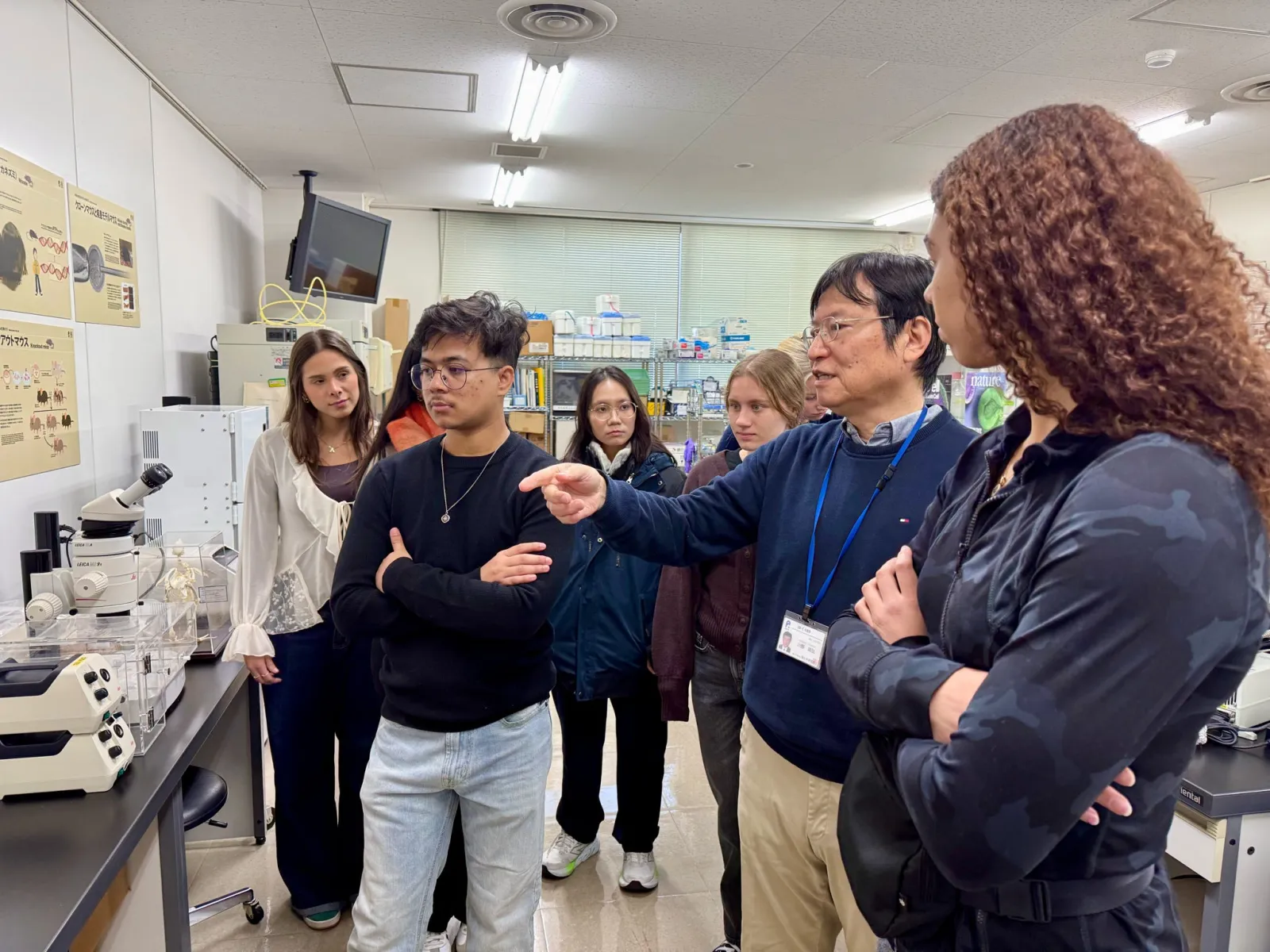
The Eisenhower Institute Undergraduate Fellows program offers a select group of Gettysburg College seniors the chance to develop their leadership skills and grow in their knowledge and understanding of public policy. Under the guidance of Professor Ryan Kerney, the Harold G. Evans Professor of Eisenhower Leadership Studies, they are responsible for developing and promoting a public policy theme with programming in both Gettysburg and Washington, D.C.
The 2026-27 theme for the fellowship is Federal Investments in Science. Over the course of the year, the Fellows will examine how science advances by examining government investments in scientific research and training, the long-term impact of those investments on national priorities, and the distinct U.S. approach compared with other countries.
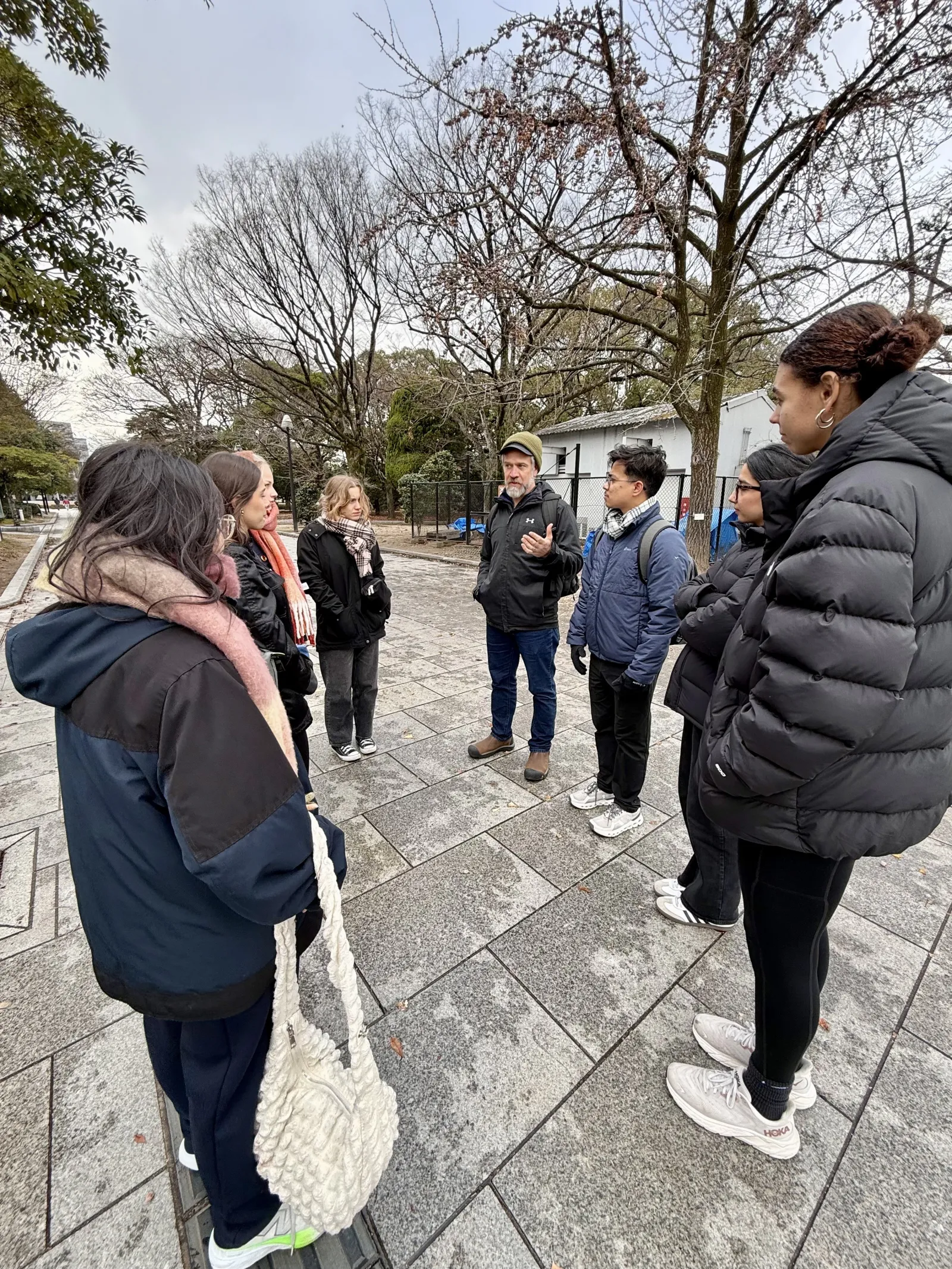
Opportunities experienced by past Undergraduate Fellows have included:
- Meeting with prize-winning authors and journalists, as well as senior executives in the Department of State, Department of Defense, and the National Security Council
- Hosting a Cabinet Member of the European Union Commissioner for Security Union for a lecture in D.C.
- Moderating an on-campus discussion about environmental justice between an economist at the Environmental Protection Agency and an activist with Greenpeace
Schedule
Undergraduate Fellows will meet weekly during the academic year. An international trip is planned for January 2026. Fellows will also engage in periodic trips locally and to Washington, D.C. This fellowship is a significant commitment during your senior year. Aside from classes, Fellows are expected to make this program a high priority. For more details, review Undergraduate Fellows FAQ below.
Prospective Applicants
The Undergraduate Fellowship is open to students who will be graduating in May 2027. Students who wish to participate must be available on campus throughout the 2026-27 academic year to participate in in-person meetings, activities, field work, and travel. Selected Fellows must have a passport, or are required to obtain a passport by September 1, 2026. Fellows are responsible for obtaining visas for international travel, if required.
Federal Investments in Science
The miracle machine of science has transformed modern life – reshaping medicine, food systems, transportation, energy, and nearly every aspect of how we live. These breakthroughs are possible because of revolutions in scientific inquiry and the enormous societal investment that fuels them. Government funding, in particular, plays a central role: it builds a scientifically literate public, trains the technical workforce, and launches the research programs and grand challenges that define scientific progress.
This fellowship will dive into the real-world forces that shape science today. Fellows will explore how governments, universities, and companies prioritize their financial investments and how those priorities are shifting in an era defined by rapid technological change. We’ll examine how federal research funding impacts the economy, influences innovation, and affects everyday life while also comparing how other countries are racing to lead in key scientific fields.
Throughout the year, the 2026-27 Undergraduate Fellows will engage directly with scientists, policy experts, industry leaders, and elected officials. The fellowship emphasizes learning from a wide range of perspectives, each offering insight into the data, tools, and decision-making processes that shape the future of science.
As machine learning, automation, and big data redefine scientific practice, Fellows will be expected to cultivate their own curiosity and pursue the questions that drive them. Their personal inquiries will guide our collective exploration of how science—and the systems that support it—continue to evolve.
As part of the Undergraduate Fellowship, Fellows will be expected to:
- Participate in an orientation in early September
- Attend and contribute to weekly lunchtime meetings during the academic year
- Conduct field visits to laboratories, agencies, and administrative offices
- Participate in an international study trip during J-Term (January 2027)
- Actively contribute to a cumulative group project throughout the academic year
- Present group findings in April 2027
- 2025-26: The Policies of Science and Innovation
- 2024-25: The Future of Work: Labor and Climate Change
- 2023-24: The Future of Work: Man vs. Machine
- 2022-23: The Future of Work: Labor Policy and the Post-COVID Economy
- 2021-22: U.S.-China Relations: Is a New Cold War Coming? Is It Already Here?
- 2020-21: The Domino Theory and Eisenhower's Foreign Policy
- 2019-20: The Government We Pay For
- 2018-19: Common Security, Common Prosperity
- 2017-18: Transportation & Infrastructure
- 2016-17: Refugee Policy
- 2015-16: Energy Policy
- 2014-15: Intelligence Policy
- 2013-14: Space Policy
- 2012-13: Presidential Elections
General information
- Eligible class years: Open to rising Gettysburg College seniors graduating in May of the following year
- Major requirements: Open to all majors
- Cost: No cost to participants
- Contact: ei@gettysburg.edu
What do Undergraduate Fellows do?
Each year, the Undergraduate Fellows explore a different topic or policy theme by meeting with experts, planning campus-wide panels, and participating in experiential learning trips and projects to developing their understanding of the theme in domestic and international contexts. The Undergraduate Fellows also serve as ambassadors for the Eisenhower Institute throughout the year.
What are the benefits of the Undergraduate Fellowship?
This Fellowship allows students to interact directly with experts and gain an in-depth understanding of a certain topic or policy theme. It creates many opportunities to network and to make lasting connections. Fellows also gain skills and experience through discussions, working with experts, researching their topic or theme and completing projects with/for practitioners.
Who leads the EI Undergraduate Fellows program?
Undergraduate Fellows are mentored by Professor Ryan Kerney, the incoming Harold G. Evans Chair of Eisenhower Leadership Studies, and supported by the Eisenhower Institute staff. The Fellows are also expected to take a leadership role in planning their activities.
How much does it cost?
There is no fee to participate in these programs. The Eisenhower Institute pays for most costs, including meals and travel, although students may be responsible for individual personal expenses (travel snacks, passport and visa fees, souvenirs, etc.). Additional financial assistance is available.
Is there travel involved?
Yes. Undergraduate Fellows have opportunities to participate in both domestic and international travel to meet subject matter experts. Fellows are expected to participate in all components of the program, including travel.
What is the difference between the EI Undergraduate Fellows and the Fielding Fellows?
The Undergraduate Fellows focus on an annual theme related to public policy. The Fielding Fellows program revolves around the study of the executive branch of government, specifically the Presidency and the U.S. State Department.
How many total Fellows are selected?
Eight Fellows are selected for the academic year.
What is the time commitment?
The time commitment can vary based on upcoming programming. It could be anywhere from 4-10 hours per week. This program should be treated as a priority throughout your senior year.
What happens if I have a class or other obligation during an Undergraduate Fellows activity?
Class is always the first priority. If you have an event other than a class that would conflict, you should contact your program leader and Eisenhower Institute staff in advance to let them know. We ask that the Undergraduate Fellows program be a top priority, but if there is a valid reason for missing an event, it should be excused.
Can I still participate in other Gettysburg activities and organizations?
Yes! Most Undergraduate Fellows are involved in several other campus activities.
Can I participate in other Eisenhower Institute programs as an Undergraduate Fellow?
No. Due to the high level of commitment required for the Undergraduate Fellowship, participants are not able to participate in additional EI programs throughout the duration of the program.
Will I receive any academic credit for my work?
No. All Eisenhower Institute programs are non-credit, co-curricular opportunities meant to complement academic coursework.
What’s the application process like?
The application is online. You will provide basic information, complete short-answer essays, and submit a resume and references. The Evans Chair and EI staff first review the applications blind (all personal information is removed), then after initial assessments are made, applications are unblinded to finalize the cohort. All students will be notified of their status (selected or not selected) after the application review period concludes for all EI programs.
Is prior Eisenhower Institute involvement a factor in the selection process?
The application is open to all qualified students. While past involvement with the Eisenhower Institute is taken into consideration, it is only one way of demonstrating leadership and involvement beyond the classroom.
What is the preferred GPA?
The average cumulative GPA of past participants has been 3.25. However, we welcome applications from all interested students and will look at applications holistically (GPA, resumes, prior experiences, interest) in order to build a strong cohort.
Is this only open to seniors?
Yes.
Do I have to be a Political Science or Public Policy major?
No, all majors are welcome.
Are there any prerequisite classes?
No.
Do I need to be a U.S. citizen?
No.
Can I apply to multiple EI programs, including the Undergraduate Fellows?
Yes. Students are able to apply to multiple programs and are asked to list their applications in order of preference (i.e., 1st - Undergraduate Fellows, 2nd - Environmental Leadership). If a student is desired for multiple EI programs, their preference will be taken into account to match them with the best option.
Who should I contact with other questions?
You can contact the Eisenhower Institute or Professor Kerney, or ask any current Undergraduate Fellows about their experience.