
Gettysburg College helps bring Lincoln’s visit to life
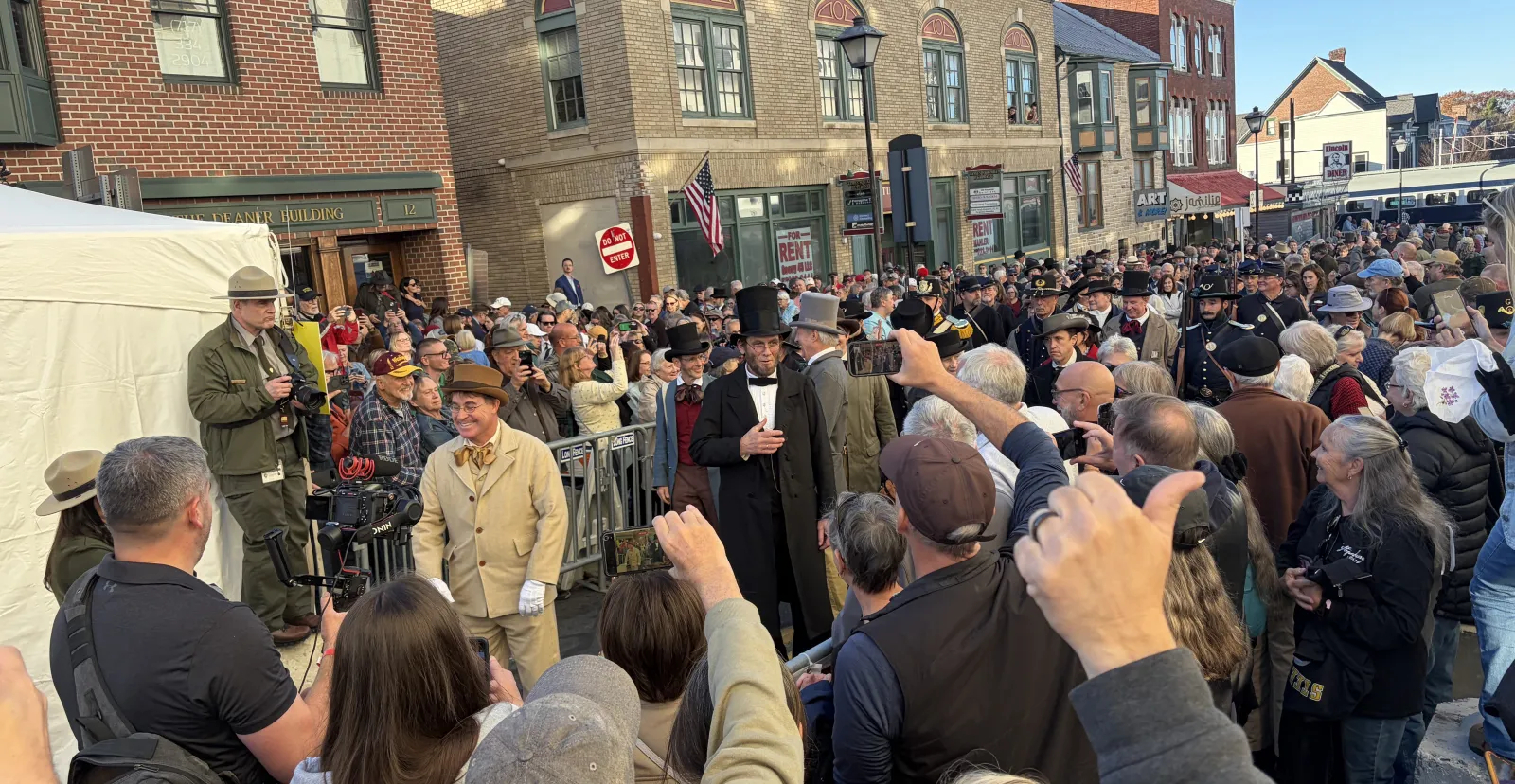
Gettysburg College students, alumni, and leaders joined community partners to bring President Abraham Lincoln’s visit to life, culminating in the Fortenbaugh Lecture and a stirring musical performance at the historic Majestic Theater.
A packed house filled the Majestic Theater on Thursday, Nov. 19, for an evening of history and music that brought Gettysburg College and the community together to reflect on Abraham Lincoln’s words and consequential impact on America.
At the 64th Annual Robert Fortenbaugh Memorial Lecture, historian Matthew Pinsker explored the partisan context behind the Gettysburg Address. The Sunderman Wind Symphony followed with a performance of Aaron Copland’s “Lincoln Portrait,” narrated by actor Bruce Boxleitner. A standing ovation brought an encore of “America the Beautiful.”
The evening was the highlight of a week of robust programming across the broader community entitled “Lincoln at Gettysburg: Shall Not Perish” presented as part of America’s 250th anniversary celebration. Students, alumni, faculty, staff, and College leaders joined community partners to bring Lincoln’s 1863 visit to Gettysburg to life—from a steam-train arrival to a procession and ceremony at the Soldiers’ National Cemetery.
“From President Lincoln’s arrival by steam train to our immersive Dedication Day reenactment and our enhanced Fortenbaugh Lecture, culminated by a stirring performance by our Sunderman Conservatory Wind Symphony, this year’s festivities in honor of America’s 250th anniversary were truly unforgettable,” said Gettysburg College President Bob Iuliano.
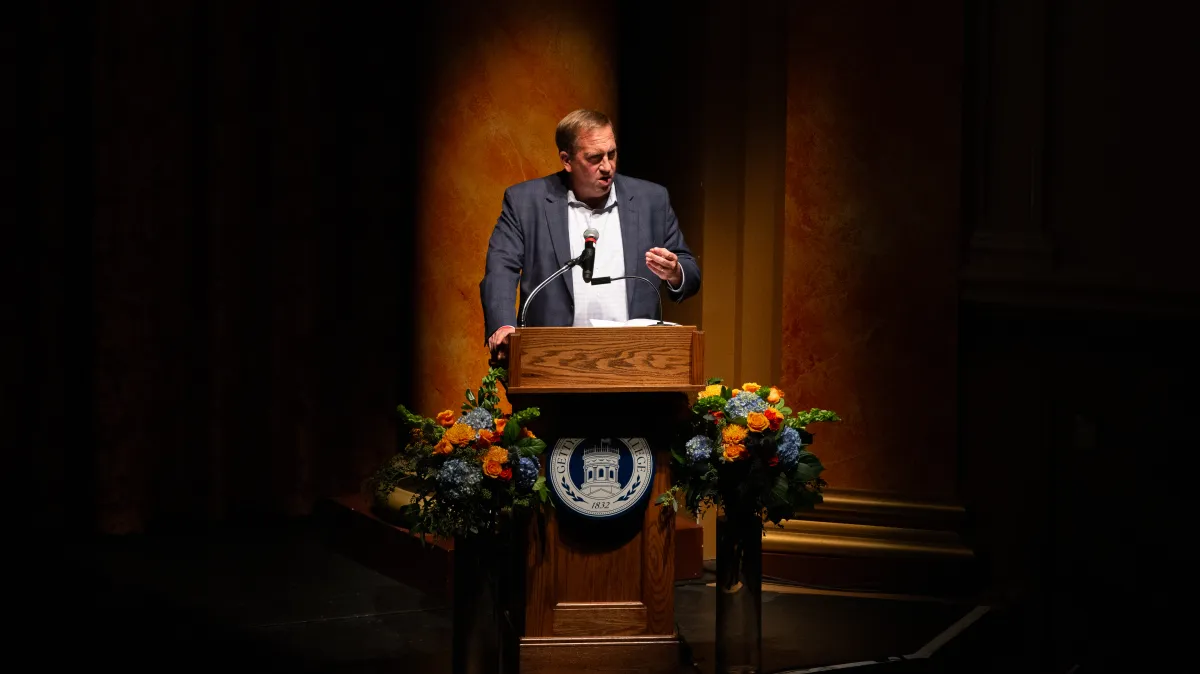
History and music at the Majestic
Pinsker, the Brian Pohanka Chair of Civil War History at Dickinson College, drew on his recent book, “Boss Lincoln,” to consider the partisan politics surrounding the Gettysburg Address. His lecture, “Twelve Score and Ten: Lincoln, Gettysburg, and America 250,” invited the audience to reflect on Lincoln’s words within the circumstances of his presidency and the nation’s continuing “unfinished work.”
For Harlyn Gray ’27, an anthropology and history double major and Civil War Institute (CWI) Fellow, the lecture offered a perspective on Lincoln and the people around him. Gray, a Civil War Era Studies and classics double minor, said she attends the CWI and History Department–sponsored Fortenbaugh Lecture each year. This year’s presentation may have been the best, she said.
“Dr. Pinsker was amazing, and his lecture was both informative and captivating,” Gray said. “His connections not only to Abraham Lincoln, but also to the lesser-known individuals surrounding various aspects of his presidency were moving and eye-opening about the various challenges he faced, as well as his words here at Gettysburg.”
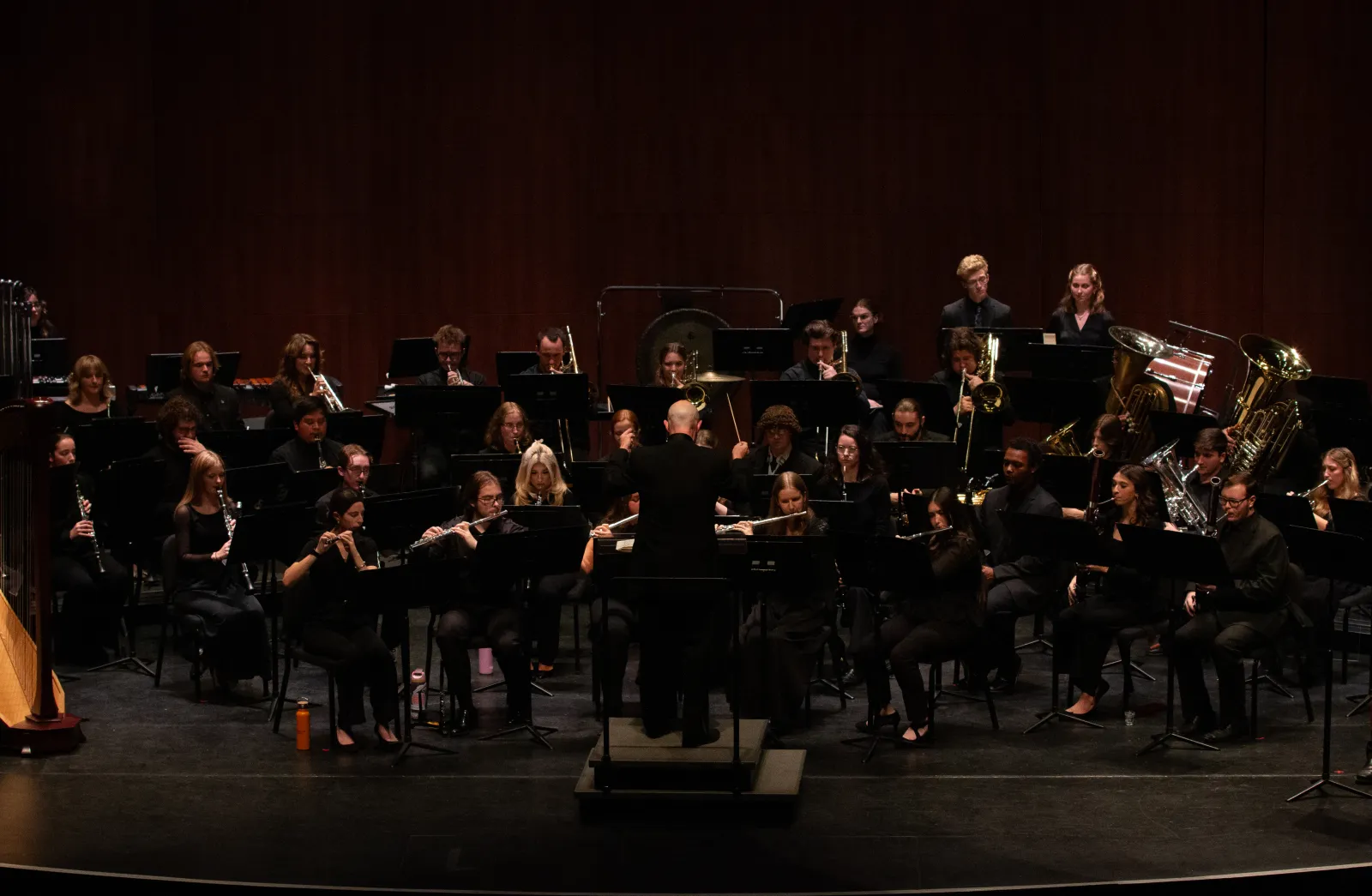
The Sunderman Wind Symphony performs Aaron Copland’s “Lincoln Portrait” on stage at the Majestic Theater.
Following the lecture, the Sunderman Wind Symphony, conducted by Director of Bands Russell McCutcheon, performed “Lincoln Portrait,” an evocative composition that combines music with Abraham Lincoln’s own words. The piece was composed in 1942 during World War II and has featured notable narrators, including Eleanor Roosevelt, James Earl Jones, and Barack Obama. Boxleitner, star of “A Gettysburg Christmas” and the newly released “Gettysburg 1863,” provided a stirring recital of Lincoln’s words.
Gray called the narrated performance “a wonderful end to the evening.”
“I think that this is definitely an experience unique to Gettysburg,” she continued. “We are so lucky to have multiple student organizations that help us work with special programming and showcase the talents of some students for such awesome events.”
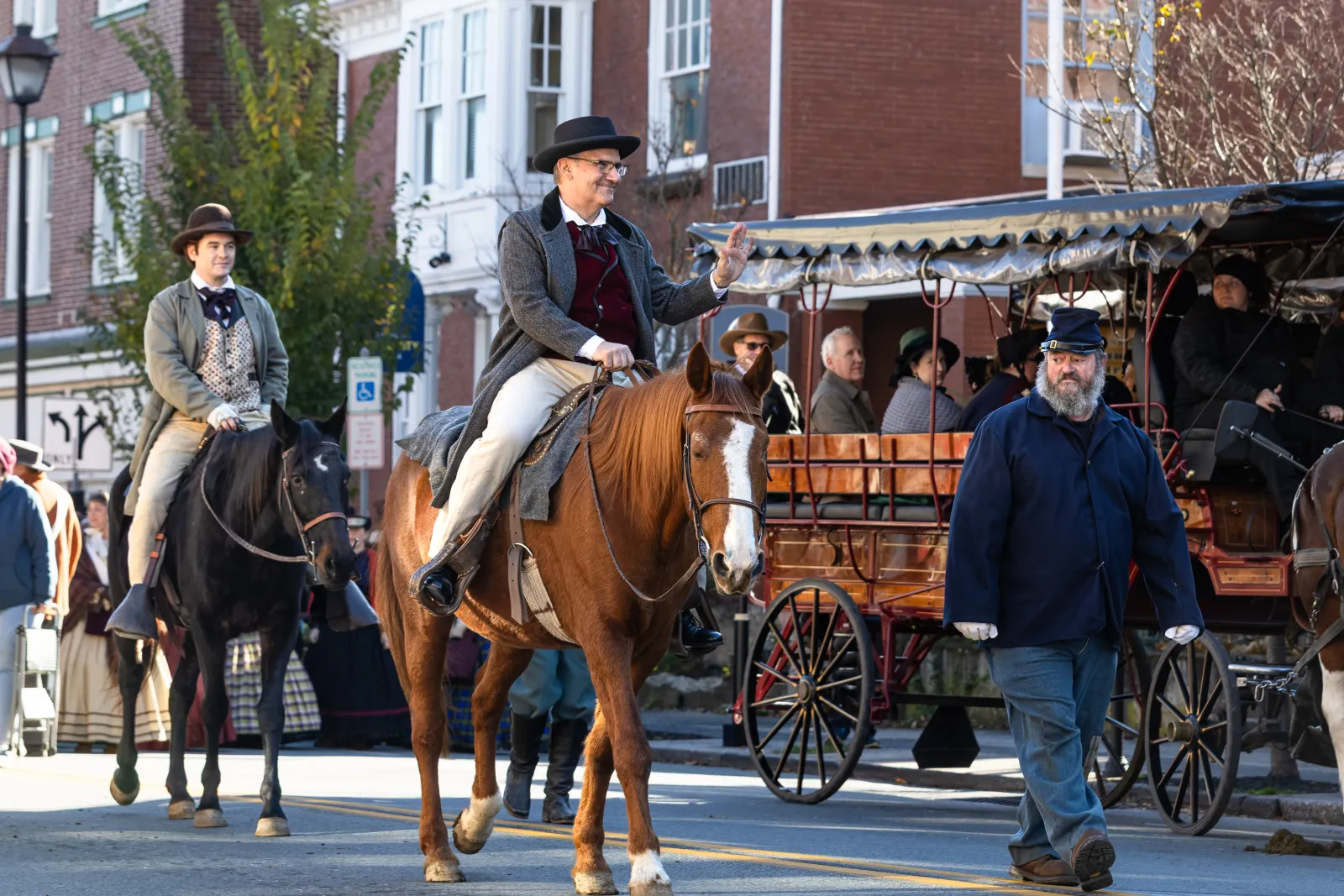
President Bob Iuliano rides his horse, Fern, during the procession to the Soldiers’ National Cemetery for Dedication Day, Nov. 19.
A College connection, then and now
The College’s relationship to the Gettysburg Address reaches back to the ceremony itself. David Wills, a member of the Class of 1851, invited Lincoln to deliver a “few appropriate remarks” at the dedication of the Soldiers’ National Cemetery on Nov. 19, 1863. Henry Baugher, then president of the College, delivered the benediction.
Those connections were brought to life during this year’s Dedication Day reenactment. Featuring actor Billy Campbell portraying Lincoln, the procession traveled on horseback from the David Wills House on Lincoln Square in downtown Gettysburg to the cemetery. Iuliano joined the procession on horseback, portraying Baugher.
Other Gettysburgians took part in the ceremony and its recreation. Bryan Willard ’98, a local history teacher at Gettysburg High School, portrayed then-New York Gov. Horatio Seymour among the dignitaries seated on the rostrum. College students, faculty, and staff contributed to performing ensembles or watched from the crowd.
“Everyone knew it was a recreation, and yet for a moment, they could feel what it might have been like to stand on that street and see Lincoln coming toward them.” – Chris Gwinn ’06, chief of interpretation and education at Gettysburg National Military Park
Students also helped recreate a moment from the night before Lincoln delivered the Gettysburg Address. After Lincoln Fellowship President Wendy Allen reached out to the 26th Pennsylvania College Guard, Gray and club president Ethan Bowers ’27 organized members to portray the College students who called for Lincoln to speak. Gray coordinated with Allen, helped arrange costumes, and prepared participants.
“We greatly enjoyed the experience and the ability to participate!” Gray said.
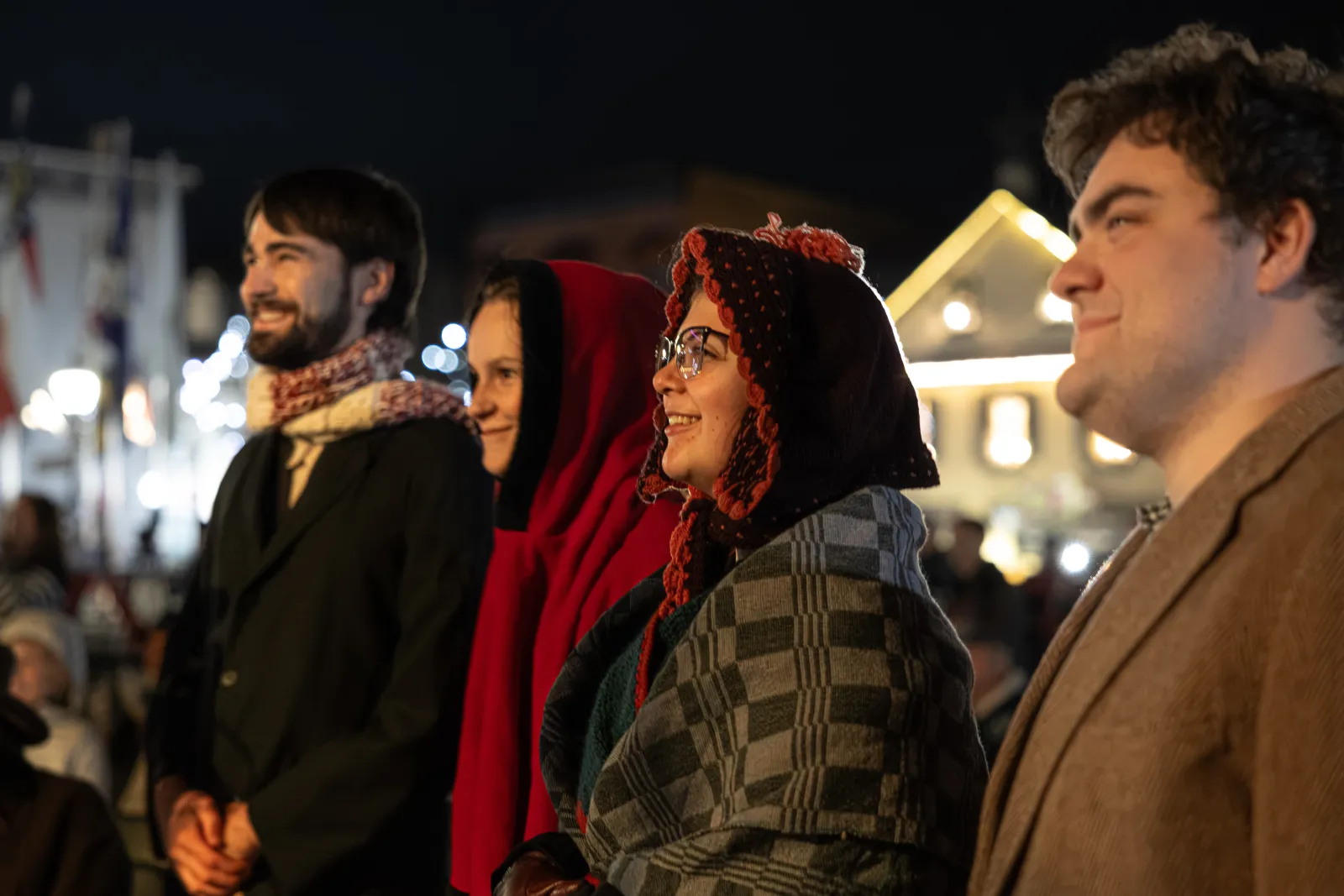
Students from the 26th Pennsylvania College Guard call on Lincoln from the square in Gettysburg.
A community effort
For Chris Gwinn ’06, chief of interpretation and education at Gettysburg National Military Park, the commemorations resulted from years of planning. About four years ago, he suggested to Allen that the community recreate the original cemetery consecration ceremony. Allen and the Fellowship, he said, helped turn that idea into a collaboration among the College, the park, and many community partners.
Gwinn hoped the reenactments would give audiences a fuller picture of the events surrounding the address—from Lincoln’s arrival and his time at the Wills House to the procession, speeches, and music at the cemetery.
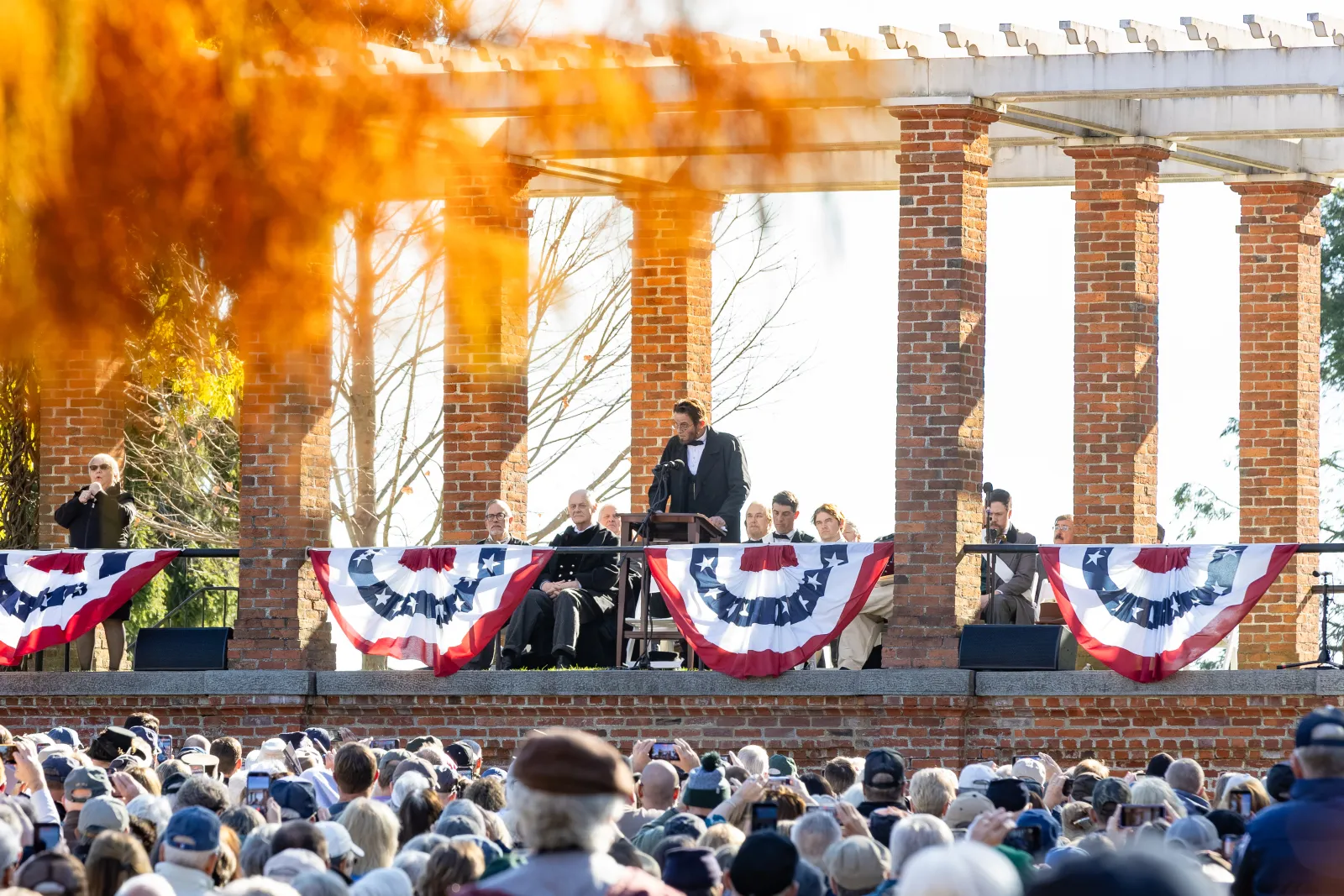
Thousands of people gathered to hear Lincoln’s Gettysburg Address at Soldiers’ National Cemetery on Dedication Day.
Gwinn also took part in the reenactment as Ward Hill Lamon, the dedication’s marshal-in-chief and Lincoln’s self-appointed bodyguard. After the recreated steam train arrived, Gwinn accompanied Lincoln through crowds of spectators. He recalled being surprised by both the number of people and their emotional reactions.
“Everyone knew it was a recreation, and yet for a moment, they could feel what it might have been like to stand on that street and see Lincoln coming toward them,” Gwinn said.
As a Gettysburg alumnus, Gwinn said it was meaningful to see the College’s ties to the story brought to life. Those ties continue through traditions such as the First-Year Walk, which recalls the procession to the cemetery every August.
Iuliano, too, saw the week as both a celebration and a call to action.
“As Gettysburgians—and as an entire Gettysburg community—it is my hope that we will take the inspiration of these past few days and redouble our efforts to living President Lincoln’s words and advancing the ‘unfinished work’ before us as a nation,” he said.
