
Ron Perisho’s generosity inspires Gettysburg’s next generation of scholars
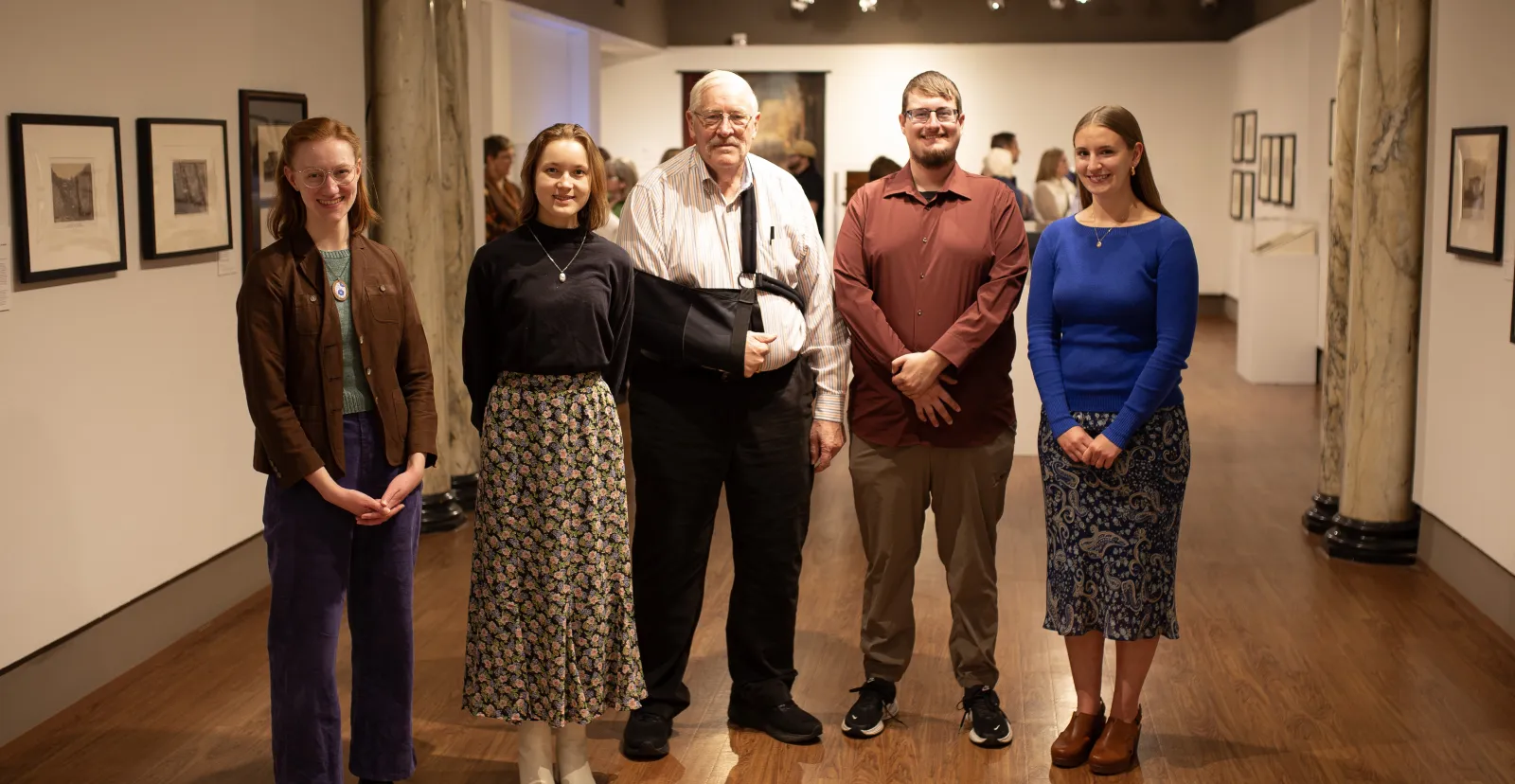
Through Ron Perisho’s generosity, Gettysburg College students are transforming historic photographs and artifacts into public exhibitions. Exploring Lincoln and Civil War history, students gained research skills, curatorial experience, and confidence while bringing America’s past to life in Schmucker Art Gallery.
Photographs Michael Aaron ’26 had known since childhood lay spread across tables in Gettysburg College’s Special Collections. Now, he and fellow curator Maddie Ulman ’26 were deciding how visitors would encounter these rare images in Schmucker Art Gallery.
“Never did I think I would not only see them in person, but be shuffling them around, choosing between them, holding all of them, and picking where they will go on a wall,” Aaron said.
That opportunity grew from collector Ron Perisho’s generosity. Through donated photographs, loans of additional artifacts, and time spent sharing his expertise, Perisho has helped Gettysburg students become researchers and curators of American history.
Their work is on display in two exhibitions presented as part of America’s 250th celebration: “A Great and Truthful Medium: Photography at Gettysburg and Beyond,” co-curated by Aaron and Ulman, and “Uncle Abe: The Common Image of the Uncommon Man,” curated by Devon Szczepkowicz ’27.
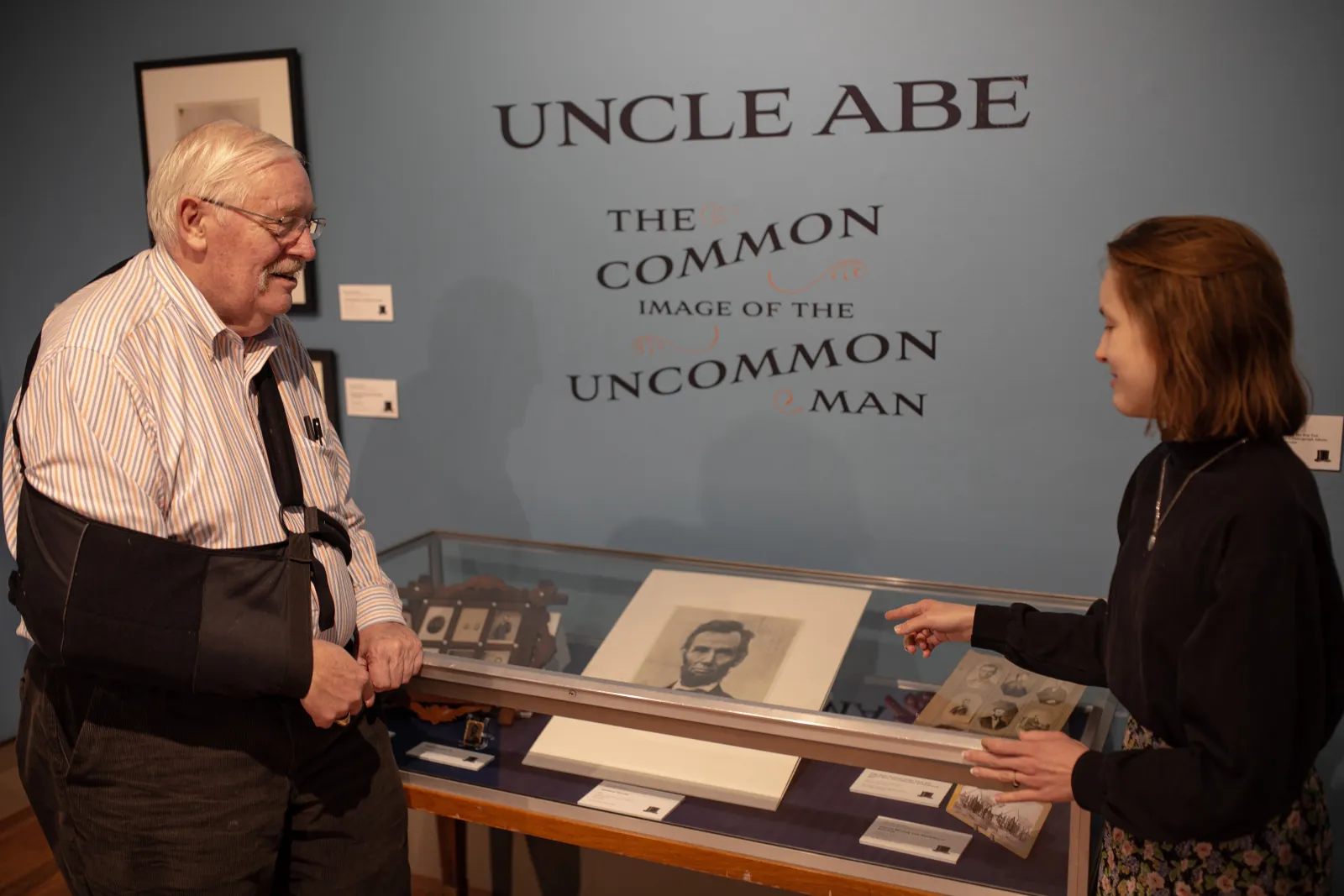
Ron Perisho and Devon Szczepkowicz ’27 examine a print of President Abraham Lincoln.
A passion shared
Perisho’s passion for photography began while watching his father document 4-H activities in Illinois and grew as he studied with Ansel Adams. His career as a civil and geotechnical engineer drew him to landscape and railroad photographs by Timothy O’Sullivan and A.J. Russell, then to their Civil War work. His first Civil War acquisition was O’Sullivan’s famous “Home of a Rebel Sharpshooter,” taken in July 1863 at Devil’s Den in Gettysburg, Pennsylvania.
After four decades in California, Perisho settled in Gettysburg, where he connected with the late Peter Carmichael, director of the Civil War Institute. Together, they opened opportunities for students to explore history through Perisho’s unique and extensive collection.
Perisho recalls expressing his purpose simply: “I want to work with the students. What can we do?”
“Ron’s mentorship has taught me so much about Civil War photography and photography as a broader medium.” – Maddie Ulman ’26
That simple idea grew into class trips to Perisho’s house to view his collection, examine prints in the very spot where they were taken on the battlefield, and receive expert advice on the curation of one-of-a-kind exhibits on campus. Additionally, the College has acquired hundreds of Gettysburg Battlefield photographic works from Perisho’s collection.
Selections from Ron’s collection have been displayed in exhibitions at notable museums such as the Metropolitan Museum of Art, Smithsonian National Portrait Gallery, National Gallery of Art, and other institutions across the country. Now here at Schmucker Art Gallery, visitors have the rare experience of seeing see all five of O’Sullivan’s “Harvest of Death” prints displayed together as well as Samuel Corlies’s “Earthworks on Culp’s Hill, Gettysburg Battlefield, Ambulance in Distance.”
Ulman first met Perisho when he shared photographs in History Prof. Emeritus Michael Birkner’s ’72, P’10 United States history class. Their connection grew through the Civil War Institute’s summer conference and culminated in the recent exhibit.
“Ron’s mentorship has taught me so much about Civil War photography and photography as a broader medium,” Ulman said. “I will always appreciate his generosity and his eagerness to work with Gettysburg College students.”
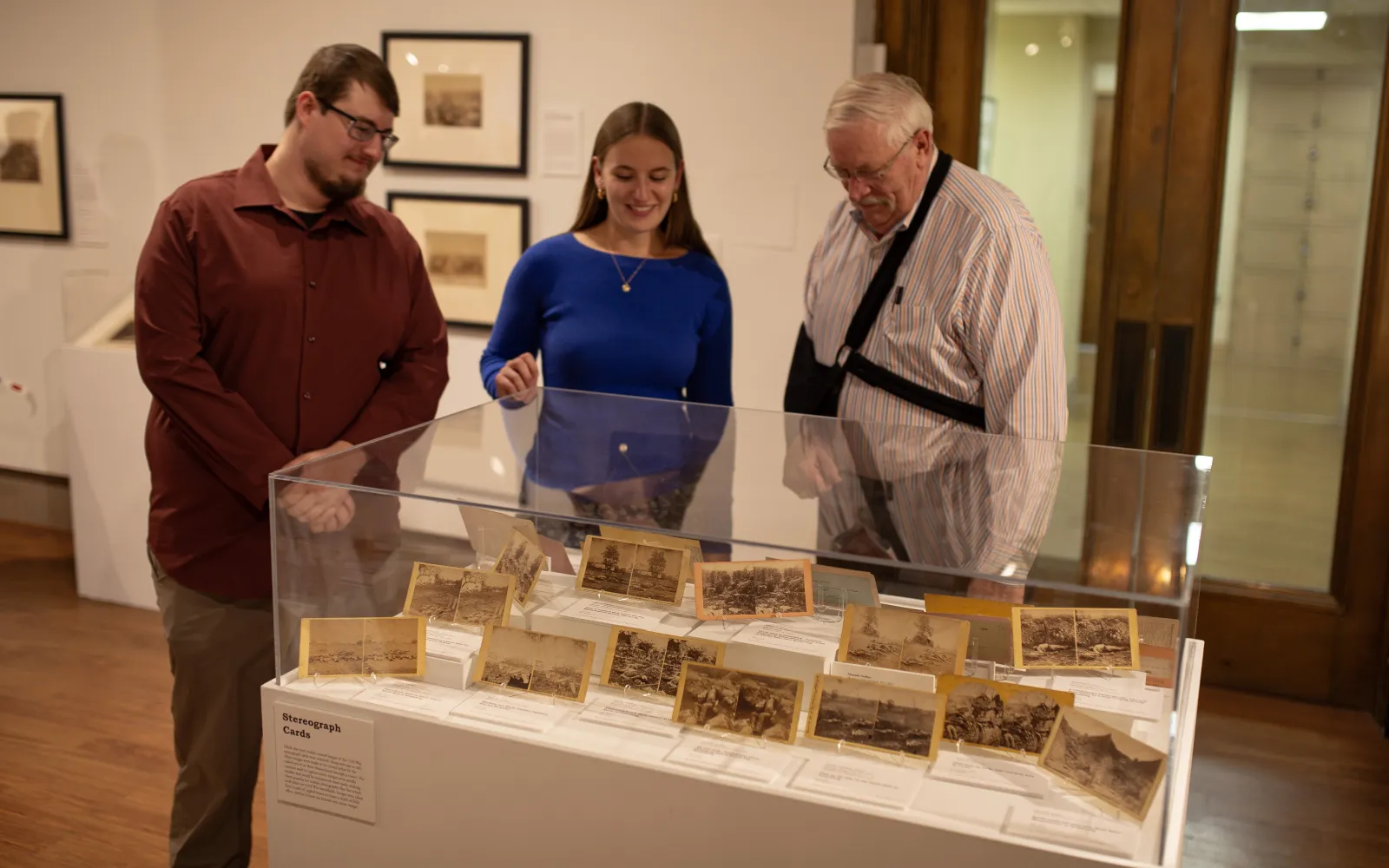
Michael Aaron ’26 and Maddie Ulman ’26 look at stereograph cards of images taken during the Civil War alongside donor Ron Perisho.
Looking through the lens
Perisho encourages students to approach photographs as historical evidence. During battlefield outings, he asks groups to compare images with the landscape and with one another. A distinctive blanket, a rock formation, or a distant building can reveal connections between photographs and help establish where a camera stood.
“If it was written, we’d be tearing it apart about who wrote it and everything,” Perisho said. “We need to be doing the same thing with the photographs.”
In Schmucker Art Gallery, that attention to evidence becomes public interpretation. “A Great and Truthful Medium” examines how photography documented Gettysburg and influenced remembrance of the battlefield. The “Uncle Abe” exhibit explores how popular representations of Lincoln shaped his enduring place in American memory.
“Being allowed to interact directly with these pieces of history made a deep impression upon me. I felt like a true historian!” – Devon Szczepkowicz ’27
Szczepkowicz of Blue Bell, Pennsylvania, a history major with minors in public history and English, pursued the Susan ’77 and Joseph’75 Biernat Internship through Special Collections to put public history ideas into practice. Director of Special Collections and College Archives Carolyn Sautter and Director of Schmucker Art Gallery Sarah Kate Gillespie provided guidance as Szczepkowicz learned to articulate and advocate for ideas.
“Being allowed to interact directly with these pieces of history made a deep impression upon me. I felt like a true historian,” Szczepkowicz said.
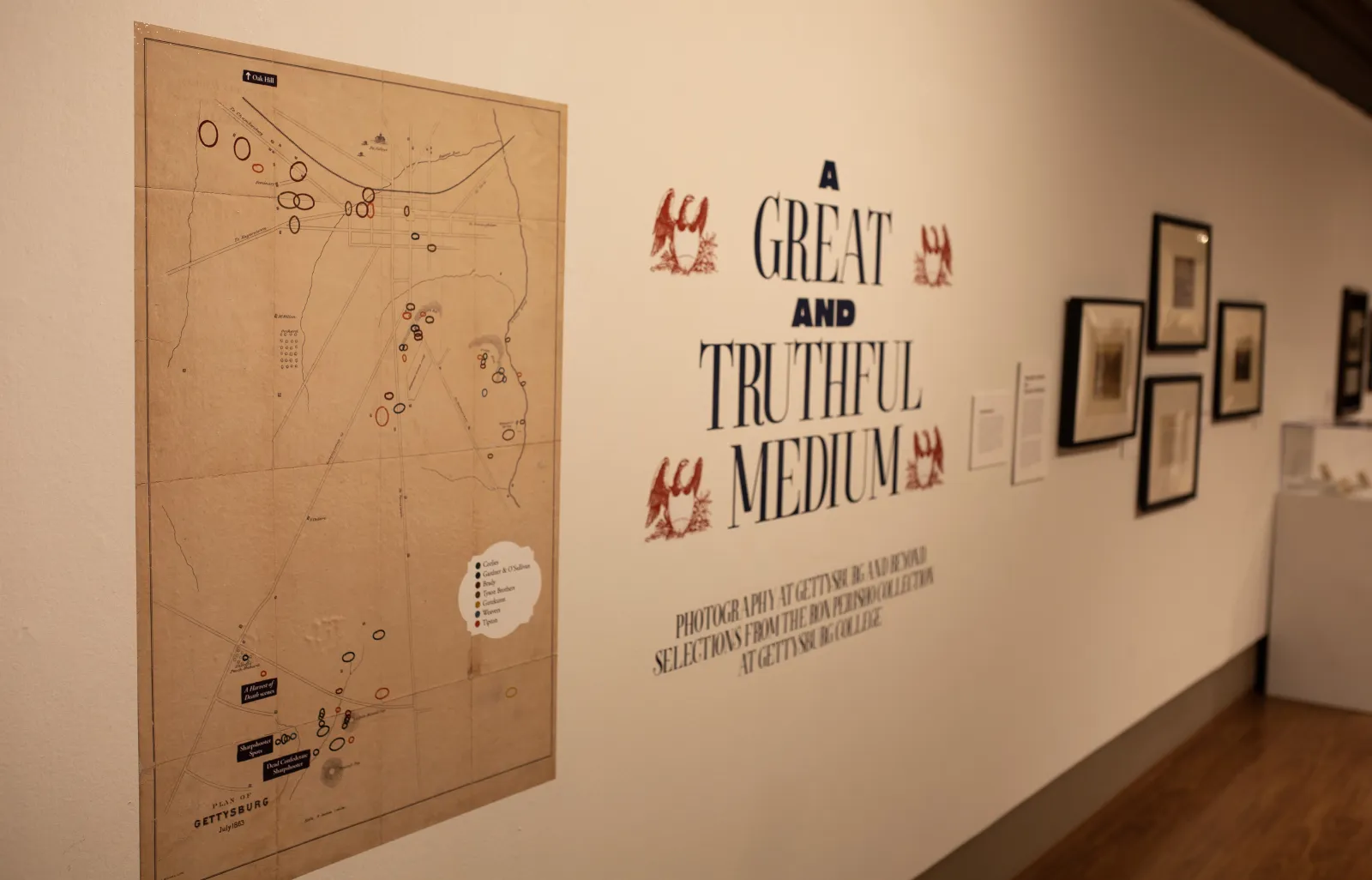
A map on display in the exhibit shows the locations of where many of the famous Gettysburg Battlefield photographers captured their images.
Shaping tomorrow’s scholars
The student curators selected items for display, developed interpretations, and considered how to communicate with visitors. Donor-funded internships, such as the Biernat Internship and the Philip Warman Internship Fund, supported much of their work. This fall, Ava Prickman ’28, who previously worked as the Biernat intern and helped inventory the collection, and Szczepkowicz have led public tours through the exhibits.
Aaron, a history and anthropology double major from Clarion, Pennsylvania, also credited faculty and staff mentorship. His first-year seminar with Gillespie introduced him to museum exhibition work, and co-curating alongside Ulman brought his undergraduate experience full circle. He is currently pursuing a master’s in public history at the University of South Carolina.
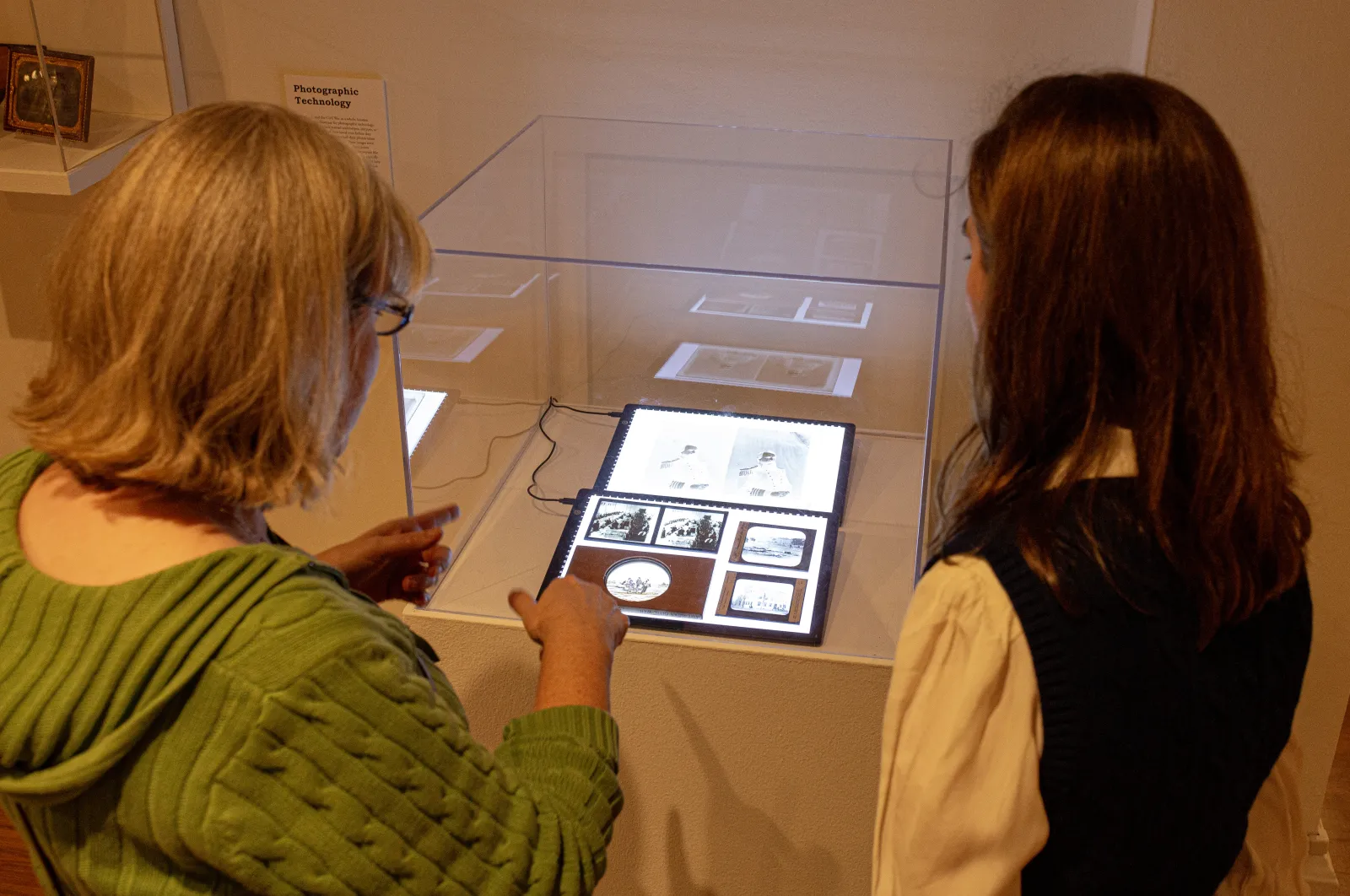
Director of Special Collections Carolyn Sautter and Danielle Russell ’25 view negatives on a lighted display inside the gallery.
Ulman also helped process Perisho’s collection with guidance from College Archivist Amy Lucadamo in Special Collections. The history major from Moorestown, New Jersey, is now pursuing a master’s in library science at the University of North Carolina at Chapel Hill, with a concentration in archives and records management.
“Through this opportunity, I feel prepared to curate an exhibit using archival materials and to engage in outreach with the larger public,” Ulman said.
Perisho finds inspiration in that growth. Among his favorite photographs is an image of students on the battlefield, smiling as they explore historical scenes with 3D viewing boards.
“They have great insights, and just remarkable enthusiasm,” he said. “It just picks you up to go with them for a day and see their light bulbs go off as to what they’re seeing.”
Visit these unique exhibitions in Schmucker Art Gallery during “Lincoln at Gettysburg: Shall Not Perish” activities, Nov. 16–20. Admission is free and hours are 10 a.m. to 4 p.m. daily. On Dedication Day, Nov. 19, hours will be extended to 6 p.m. with both Prickman and Szczepkowicz leading tours beginning at 4:30 p.m.