
Biochemistry and Molecular Biology
Students in the BMB program at Gettysburg College experience the best of a liberal arts education with the hands-on rigor of a pre-professional science curriculum.
The Biochemistry and Molecular Program at Gettysburg College offers a Bachelor of Science degree that allows you to delve into the molecular underpinnings of biology by bringing together biology, chemistry, math, and physics in in-depth course work and hands-on lab work, all while being part of a vibrant community of folks driven by goals to understand the similar scientific questions.
Majors & Minors
| Program Name | Program Type |
|---|---|
Biochemistry and Molecular Biology |
Major Bachelor of Science |
Why study Biochemistry and Molecular Biology?
Biochemistry and Molecular Biology is an exciting interdisciplinary field that sits at the interface of Biology and Chemistry. BMB scientists break down barriers between disciplines to achieve a deep understanding of biological systems at a molecular level. By integrating study of the molecular mechanisms and chemical foundations of life, a major in BMB rigorously prepares students for a range of careers, including academic research, R&D in the pharmaceutical and biotechnology industries, and medicine.
Why study Biochemistry and Molecular Biology at Gettysburg
Opportunities
From your first year, you'll work directly alongside faculty in labs and classrooms, gaining not only technical proficiency but also the ability to think critically, design experiments, collect and analyze data, and communicate scientific ideas effectively. Our small class sizes and supportive community foster deep learning and long-lasting mentorships.

Academics
The BMB major builds a strong foundation in biochemistry and molecular biology. Throughout the major, students are active research scientists, asking novel scientific questions, developing hypotheses, designing and executing experiments, and analyzing the data they generate. They learn to use advanced research tools in their investigations and read and evaluate the scientific literature to understand the broader context of their experiments in the field of Biochemistry and Molecular Biology. Students hone their communication skills through writing about and presenting their experimental results and conclusions.

Community of Scientists and Professors
The curriculum reflects the interdisciplinary nature of the field, integrating key principles from biology and chemistry while emphasizing scientific inquiry and communication. You'll take foundational courses in both departments and have opportunities to explore advanced topics through electives and research.

Community
The BMB program is committed to building a strong community of scientists. The BMB program hosts monthly social hours for students and faculty to connect, weekly study hours for students to work with or alongside each other on their coursework, and through our BOMBS (Brilliant and Outstanding Mentors of BMB Students) program senior BMB majors are able to become mentors to sophomore majors. This allows sophomore students to be able to get to know older students in the major and get advice, while senior students are able to hone their mentoring skills. The BOMBS program features a few social events throughout the year to help build connections across student years.
Conferences
Students in the BMB program frequently present their research at regional, national, and international conferences in their fields. These conferences range from the national Biophysical Society conference, to the American Society for Biochemistry and Molecular Biology annual meeting, the National American Chemical Society meeting, to the Intercollegiate Student Chemistry Conference and Pennsylvania Academy of Sciences, the Allegheny Branch of the American Society for Microbiology and the Annual Meeting of the Pennsylvania Academy of the Sciences to the International C. Elegans Meeting. At these conferences students are able to present their work in poster and oral presentations, as well as learn about the breadth of science that exists outside of Gettysburg College that they may want to delve into in their futures based on the strong foundation they are getting from the BMB major.
Courses
The BMB program features hands-on courses at every level, where students are learning the molecular underpinnings of biology through hands on experiments, advanced courses, and research. These courses include: Molecular Genetics where students delve through literature to understand how genetics lead to disease while learning molecular biology techniques in the lab to study these; X-Methods: Drugs and Cells where students become a pharma company, developing drug molecules to target Parkinson’s disease and testing them in worm models; and iMethods: I’m in love with the shape of nanoparticles where students use cutting edge protein design software to develop ¬de novo¬ designed proteins that will modulate the structures of nanoparticle and quantum dot assemblies, giving them unique therapeutic potential.
Featured Courses
Visit Curriculum tab for a comprehensive list of all available courses
300 Level
Study of the basic mechanisms of information storage and retrieval from DNA and RNA. Topics include genome organization and the regulation of gene expression in prokaryotes and eukaryotes; DNA replication and repair; molecular genetics of cancer and human-inherited disorders; and recombinant DNA technology. Three class hours and laboratory. Capstone course. Prerequisite: Bio 211 and 212. BIO 351 and BMB 351 are cross-listed.
Combined upper-level biology and chemistry laboratory where students design and synthesize organic compounds and determine the impact of structural modifications on these compounds’ biological activity. The semester is divided into two parts: the synthesis, isolation, and characterization of a derivative of a known, biologically active organic compound; and the assessment of its biological activity using in vivo disease models. Capstone course for Biology majors. Two laboratories. Spring semester. Prerequisite: CHEM 204 and BIO 211 or permission of the instructor.
Combined upper-level chemistry and physics lab designed to emphasize the use of tools in these disciplines to answer questions in biology. This course concentrates on the role of lipids (fats) and ions (salt) in biology. Utilizing multiple biochemical and biophysical techniques, students will perform multiple experiments to ultimately answer a complex biological problem. Two laboratories. Spring semester. Prerequisite: CHEM 108 and either PHY 110 or PHY 211, or permission from the instructor.
Biochemistry and Molecular Biology Experience News
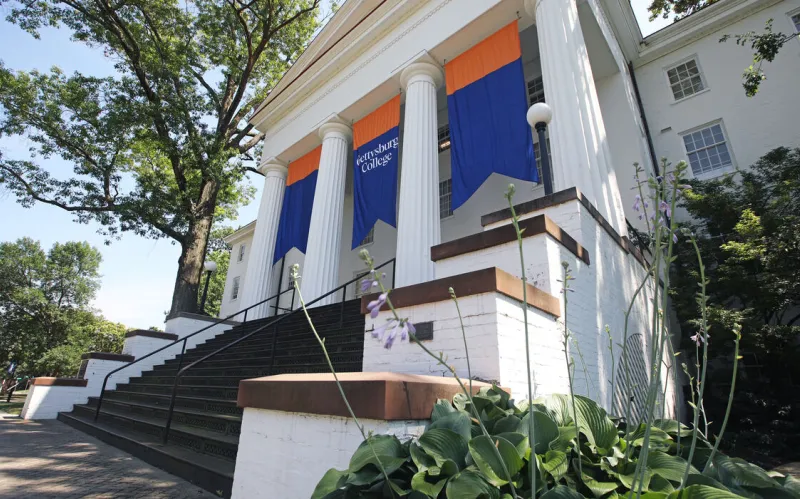


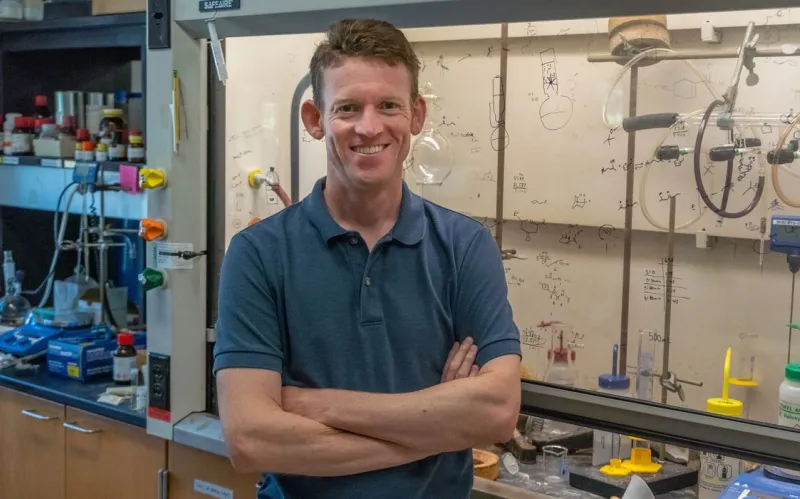
The Biochemistry/Molecular Biology (BMB) major requires study in biology, chemistry, mathematics, and physics.
Students gain hands-on experience with state-of-the-art biochemical analysis and recombinant DNA technology as they examine the structures and chemical reactions within living cells. The program is directed by a Biochemistry and Molecular Biology Curriculum Committee (BMBCC), consisting of faculty members from the various science departments that contribute to the program.
Emphasizing independent research and close collaboration with faculty members, Gettysburg’s interdisciplinary biochemistry-molecular biology (BMB) major requires study in the biology, chemistry, mathematics, and physics departments, consistent with recommendations of the American Society of Biochemistry and Molecular Biology.
A capstone research project frequently results in professional publications co-authored by students and professors or presentations at scientific meetings. Students receive excellent preparation for graduate study, medical school, or careers in a broad range of fields.
Major Information
Eighteen courses are required for the BMB major, Bachelor of Science.
Twelve Core Courses
- BIO 111 Introduction to Ecology and Evolution
- BIO 112 Form and Function of Living Organisms
- BIO 211 Genetics
- BIO 212 Cell Biology
- BIO 351 Molecular Genetics
- CHEM 107 Chemical Structure and Bonding
- CHEM 108 Chemical Reactivity
- CHEM 203 Organic Chemistry
- CHEM 204 Organic Chemistry
- CHEM 305 Physical Chemistry or BMB 307 Biophysical Chemistry
- BMB 333 Biochemistry I
- BIO 334 Biochemistry II
Four Cognate Courses
- PHY 109 Introductory Physics I
- PHY 110 Introductory Physics II
- MATH 111 Calculus I (or exemption)
- MATH 112 Calculus II
Two Major Electives
- At least one course must be at the 300-level and at least one must contain a laboratory component.
- Select two courses from the following: BIO 214, 251, 315, 320, 332, 335(if taken in Spring, 2025 or before), 336, 359, CHEM 246, 320, 353, 355, 356, 358, 359, 375, PHY 246, SYS 226
- Only one course may be a research course from BIO 460, 461, CHEM 460, 461, 465, or 410 (with BMBC approval)
These Individualized Study research projects may be directed by any BMB faculty affiliate. Otherwise, the project requires the approval of the Biochemistry and Molecular Biology Committee (BMBC)
Capstone Experience
- BIO 320, 334, 335, 351, 460, 461, BMB 351, CHEM 334, 410, 460, 461and 465 have components that fulfill the Capstone Experience for the BMB major (an additional course is not required).
A capstone research project frequently results in presentations at scientific conferences or peer-reviewed publications co-authored by students and professors.
First Year Advising and Registration recommendations
Before you register
- A chemistry placement exam (part of the First-Year Dashboard) is required to enroll in CHEM 107. If the Dashboard has closed, contact Prof. Greg Hershey Suryn for access.
- It is possible to begin biology, chemistry, or math in your sophomore year, but this requires more careful planning and may limit study abroad options.
Recommended first-year courses
Fall
- BIO 111 Introductory Biology for Life Sciences
- CHEM 107 (or 107-I) Chemical Structure and Bonding
- MATH 111 Calculus I
Spring
- BIO 112 Form and Function in Living Organisms
- CHEM 108 (or 108-I) Chemical Reactivity
- MATH 112 Calculus II
CHEM 108 does not need to be the same theme as your CHEM 107 section. Math through MATH 112 is required for the BMB major — completing it by the end of first year is strongly encouraged.
Available Courses
100 Level
Introduction to general biological principles, taught through themes with a focus on topical issues and applications. Topics may include adaptation, bioenergetics, patterns of inheritance, the history of life, ecology, gene expression, and cell biology. Designed for science majors with a high school background in biology, chemistry, and mathematics. Three class hours and one hour of weekly laboratory activity.
Standard second semester calculus-based Physics course designed to satisfy the major requirements for Chemistry, and Biochemistry and Molecular Biology majors but can be taken by other students that meet the requirements. The course will explore a wide range of topics including vibrations and sound, light, optics, electricity and magnetism, and electric circuits. Prerequisite: Physics 109. Three class hours and three laboratory hours.
Standard first semester calculus-based Physics course designed to support the curricula of Chemistry and Biochemistry & Molecular Biology majors. The course will explore a wide range of topics including Newtonian mechanics, work & energy, circular motion, rotational kinematics/dynamics, fluids, concepts of heat & temperature, kinetic theory, and thermodynamics. Prerequisite: Calculus 111 (can be taken concurrently), sophomore or higher status, and CHEM or BMB Major. Three class hours and three laboratory hours.
Differential and integral calculus of one real variable. Topics include the definite integral, integration techniques, improper integrals, differential equations and sequences and series. Applications are drawn from the natural and social sciences. Prerequisite: Math 105 and 106 or Math 111 with a C- or better or First Year Standing with no credit for any other mathematics course at Gettysburg.
Differential and integral calculus of one real variable. Topics include introduction to limits, continuity, the derivative, the definite integral. Applications are drawn from the natural and social sciences. No prior experience with calculus is assumed. Students who have received credit for Mathematics 105-106 cannot also receive credit for Mathematics 111. No prerequisites.
Covers the fundamental principles of chemical reactivity, including kinetics, equilibrium, electrochemistry and thermodynamics. This material will be taught through the lens of a specific theme and highlight applications to convey how chemistry is used to resolve current questions in science. Laboratory work is designed to illustrate and complement materials discussed in class. Spring semester. Three class hours and one laboratory. Prerequisite: CHEM 107 or CHEM 107 – I.
Study of fundamental chemical principles focusing on properties of matter and theories of chemical bonding, atomic and molecular structure and chemical reactions. This material will be taught through the lens of a specific theme and highlight applications to convey how chemistry is used to resolve current questions in science. Laboratory experiments are designed to offer a hands-on familiarity with the principles discussed in the lectures. Fall semester. Three class hours and one laboratory. Students registering for CHEM 107 must take the Chemistry Placement Exam.
200 Level
Overview of principles of genetics. Topics include chemical nature of genes, Mendelian and non-Mendelian inheritance, gene regulation, genetic engineering, molecular evolution, and population genetics. Three class hours and laboratory. Prerequisite: Bio 112 with a grade of C- or better and Chem 107.
Continuation of Chemistry 203 with an emphasis on the reactivity of carbonyl compounds, cyclic compounds, and biological molecules such as amino acids, carbohydrates, and peptides. Strategies for design of multistep chemical syntheses are also discussed. Three class hours, one lab discussion hour, and one laboratory. Spring Semester. Prerequisite: CHEM 203.
Study of the fundamental concepts of the chemistry of carbon compounds, with emphasis on molecular structure, stereochemistry, and the application of spectroscopy to the structure of organic compounds. The reactivity of organohalides, alkenes, and aromatic molecules is discussed. Three class hours, one lab discussion hour, and one laboratory. Fall semester. Prerequisite: CHEM 108.
Introduction to the emerging field of bioinformatics, where biology and computer science intersect to interpret and use the rapidly expanding volume of biological information produced by genome sequencing and proteomic exploration of life processes. Application of bioinformatic software tools to the analysis of gene sequences and protein structures is emphasized. Students undertake a laboratory project combining in silico and in vitro approaches to isolate and then analyze a segment of their own DNA. An introduction to computer algorithms used in bioinformatic software is provided. Three class hours and laboratory.
Covers basic topics in genome science, focusing on describing and annotating a newly sequenced phage genome obtained by students in the previous fall semester. Designed for science majors. Laboratory emphasizes the experimental nature of biological investigation. Three lecture/computer laboratory class hours. Prerequisite: BIO 111
Structure and function of eukaryotic cells. Topics include protein structure, enzyme function, membrane structure and transport, protein sorting, energy transduction by mitochondria and chloroplasts, chromosome structure, cell division and cell-cycle control, cell communication, cell motility, and cell biology of cancer. Three class hours and laboratory. Prerequisite: Bio 112 and Chem 108 with a grade of C- or better in both courses.
300 Level
Study of the basic mechanisms of information storage and retrieval from DNA and RNA. Topics include genome organization and the regulation of gene expression in prokaryotes and eukaryotes; DNA replication and repair; molecular genetics of cancer and human-inherited disorders; and recombinant DNA technology. Three class hours and laboratory. Capstone course. Prerequisite: Bio 211 and 212. BIO 351 and BMB 351 are cross-listed.
Combined upper-level biology and chemistry laboratory where students design and synthesize organic compounds and determine the impact of structural modifications on these compounds’ biological activity. The semester is divided into two parts: the synthesis, isolation, and characterization of a derivative of a known, biologically active organic compound; and the assessment of its biological activity using in vivo disease models. Capstone course for Biology majors. Two laboratories. Spring semester. Prerequisite: CHEM 204 and BIO 211 or permission of the instructor.
Introduction to biophysical chemistry, with emphasis on thermodynamics, hydrodynamics, and spectroscopy using lectures, readings, problems, and discussions. Both theoretical underpinnings and the practical applications of commonly used experimental and computational techniques are covered. Three class hours, one discussion hour. Prerequisites: CHEM 108, PHYS 110, and MATH 112; or permission of instructor. CHEM 307 and BMB 307 are cross-listed.
Detailed study of the structure and function of macromolecules and macromolecular assemblies as they pertain to living organisms. Topics include the structure and chemistry of proteins; the mechanisms and kinetics of enzyme catalyzed reactions; and the structure, chemistry, and functions of carbohydrates, lipids, nucleic acids, and biological membranes. Classic and modern bioanalytical methods are emphasized. Fall semester. Prerequisite: CHEM 204. Three class hours and one laboratory. CHEM 333 and BMB 333 are cross-listed.
Experimental basis for modern neurophysiology – how neurons, synapses, and circuits generate, transmit, and modulate patterns of electrical activity underlying behavior. Specific topics include how action potentials are generated; how synapses relay signals from neuron-to-neuron; neuropharmacology of ion channels and receptors; and plastic changes in synapse structure and function. The course is highly experiential: students learn and apply experimental methods to record and analyze electrical activity in living neurons, and use these methods to design and execute their own independent experiments. Capstone course for Biology majors. Prerequisites: BIO 112, and either BIO 212 or PSYCH 236
Detailed survey of the primary and secondary metabolic processes in living cells. Topics discussed include the overall organization of metabolic pathways, carbohydrate and fatty acid metabolism, biological oxidation and reduction and energy production. Special attention is given to regulation, hormone action, metabolic disorders and disease. Laboratory work includes an independent research project. Three class hours and one laboratory. Spring semester.
BIO 334, BMB 334, and CHEM 334, are cross-listed.
Introduction to the vertebrate immune system at the molecular, cellular, and organismal levels. Antibody structure, antigen-antibody interaction, the genetics of antibody diversity, the immune response, and the bases of self/non-self discrimination are emphasized. Three lecture hours plus one hour discussion. Prerequisite: Bio 211, or Bio 212.
Survey of the phenomena and principles of animal development. Major attention is given to the genetic and cellular mechanisms that control cell differentiation and the development of form in several model organisms. Vertebrates are emphasized in the study of organ development. Three class hours and laboratory. Capstone course. Prerequisite: Bio 211 and 212.
Study of the principles of classical and statistical thermodynamics and chemical kinetics as applied to the states of matter, chemical reactions and equilibria using lectures, readings, problems, discussions, and laboratory exercises. Computers are used as a tool for solving problems and for the analysis of experimental data. Three class hours, and one discussion hour. Prerequisites: CHEM 108, PHYS 110, and MATH 112 or permission of instructor.
Synthesis, properties, and characterization of materials. Topics include mechanical, electrical, and optical properties, synthesis and fabrication of materials including semiconductors and nanoparticles, surface chemistry, surface sensitive spectroscopies, electron and probe microscopies, and applications of these materials in advanced technology. Three class hours. Spring semester.
Prerequisite: CHEM 203, or instructor permission
Study of synthetic, mechanistic, and theoretical concepts in organic chemistry. Particular emphasis is on the study of methods used to determine organic reaction mechanisms, stereospecific reactions, pericyclic reactions, and the design of multistep syntheses of complex molecules. Three class hours. Fall semester. Prerequisite: CHEM 204.
Study of group theory, coordination chemistry, and organometallic chemistry. Topics include symmetry, molecular orbitals, crystal and ligand field theories, electronic transitions, catalysis, bioinorganic chemistry, and will highlight the work of inorganic chemists from traditionally underserved populations Spring semester. Prerequisite: CHEM 204
The study of the factors that shape the evolution of genes and genomes. The organization, origin, and mechanisms of change of viral, prokaryotic and eukaryotic genomes are explored. Topics include: structure and function of genes, chromosomes, and genomes; the roles of natural selection and chance as drivers of molecular evolution; rates and patterns of DNA and amino acid sequence evolution; molecular phylogeny; reticulate evolution; gene duplication and mobile elements; genome evolution. Prerequisite: BIO 211
Additional Courses
- Biology 112: Form and Function of Living Organisms
- Chemistry 354-8: I-Methods. Rotating Topics
- Research: Biology 460 or 461; Chemistry 460, 461, 465, or 410 (with BMBCC approval)
Note
Biology 320, BIO/BMB 351, BIO/BMB/CHEM 334, Biology 460, Biology 461, Chemistry 460, Chemistry 461, Chemistry 465, and Chemistry 410 include components that satisfy the BMB capstone requirement.
Biochemistry and Molecular Biology
More In Biochemistry and Molecular Biology
Ready to Do Great Work?
