
Biology
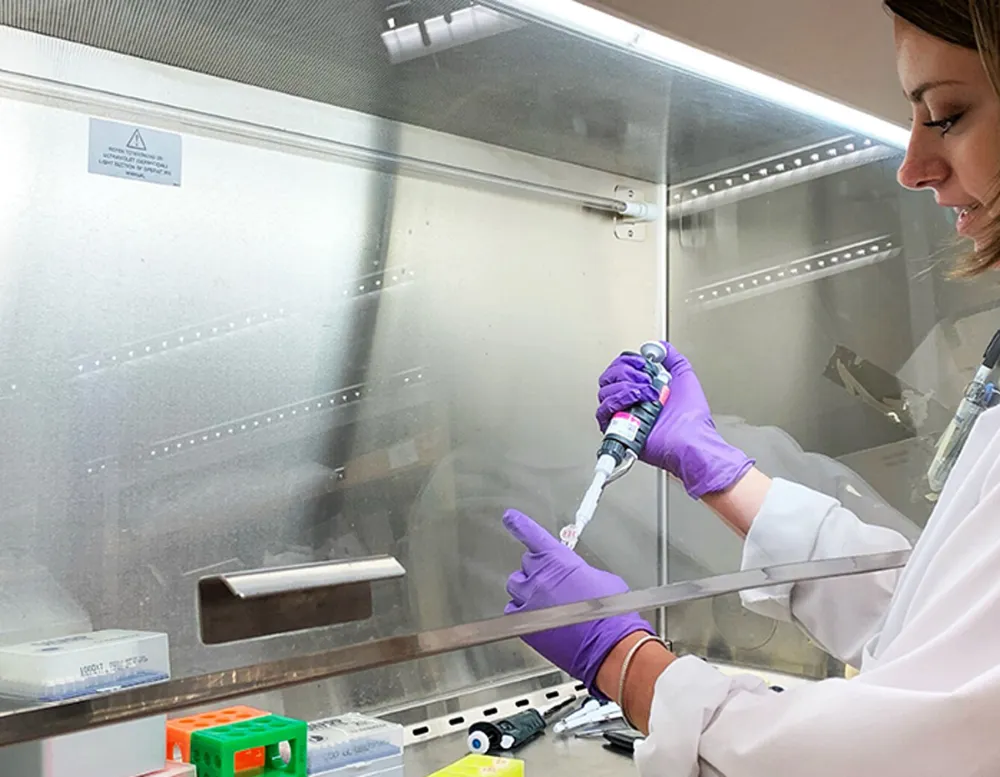
Explore the complexities of living things as a Biology major or minor
This hands-on, experiential program will give you a solid foundation in biological concepts and principles, as well as lab experience and research opportunities.
Majors & Minors
| Program Name | Program Type |
|---|---|
Biology |
Major Bachelor of Arts |
Biology |
Major Bachelor of Science |
Biology |
Minor |
Neuroscience |
Minor |
Why study Biology?
When you study biology at Gettysburg College, you learn to become multifaceted and inquisitive by developing critical thinking and problem solving—enduring skills that employers across all industries value. Moreover, earning a biology degree prepares you for diverse career opportunities, including research and education.
Since the field of biology is vast and interconnected, many graduates perform vital roles by ensuring the safety of our food supply, water systems, and ecosystem. Others go on to graduate school to discover ways to prevent human disease as medical scientists or investigate the origin of a disease as an epidemiologist.
According to the U.S. Bureau of Labor Statistics, professionals seeking employment in life, physical, and social sciences occupations often earn nearly double the median annual wage for all occupations.
Why study Biology at Gettysburg
Opportunities
When you study within Gettysburg College’s Biology Department, you receive the breadth and depth of knowledge from a liberal arts and sciences education. In turn, you’ll develop the critical thinking, communication, and research skills needed to excel in graduate school, professional school, or a range of science careers. Explore your interests and pursue your career success with our bachelor’s degree in biology or through a minor in biology or neuroscience.

Academics
Both the B.S. and B.A. in biology degree programs include a broad range of laboratory and research work, with many opportunities to attend field trips or conduct scientific fieldwork with faculty and peers. Both biology degree programs encourage active participation in labs and seminars to foster key communication skills needed for careers in the sciences.

Community of Experts and Professors
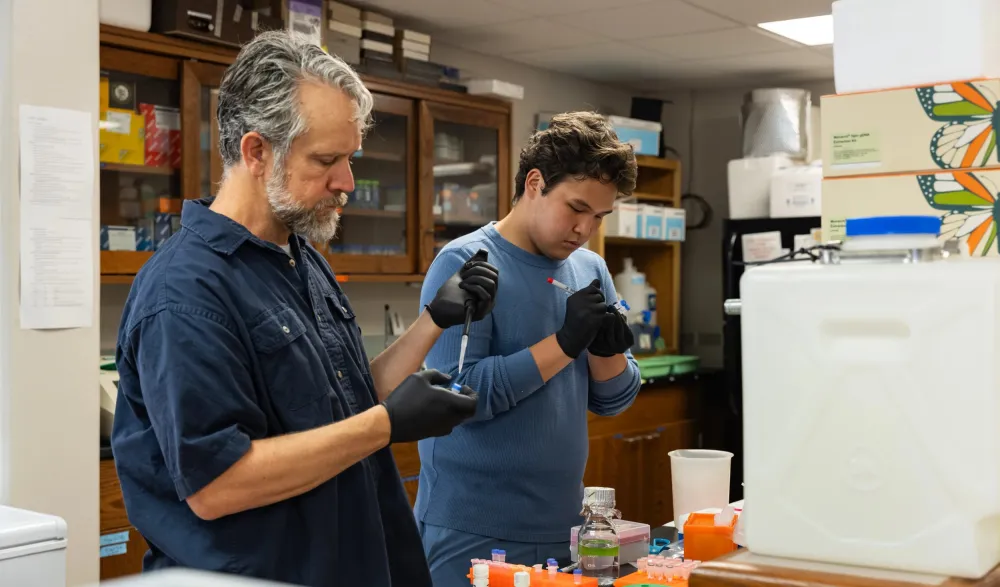
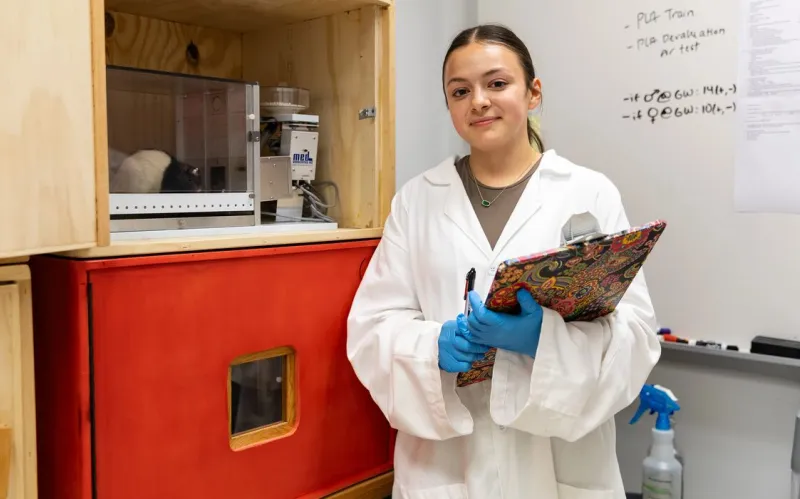
More than 70% of biology majors conduct student research during their time at Gettysburg. Research opportunities in biology are open to all students at any point in their degree program, with faculty members available to help them closely curate their plan. Work within the program may include publishing scientific research or aiding scholars in developing public programming. In addition, students in the department are encouraged to participate in internships, which help them build their résumés and prepare to secure satisfying career experiences after graduation.

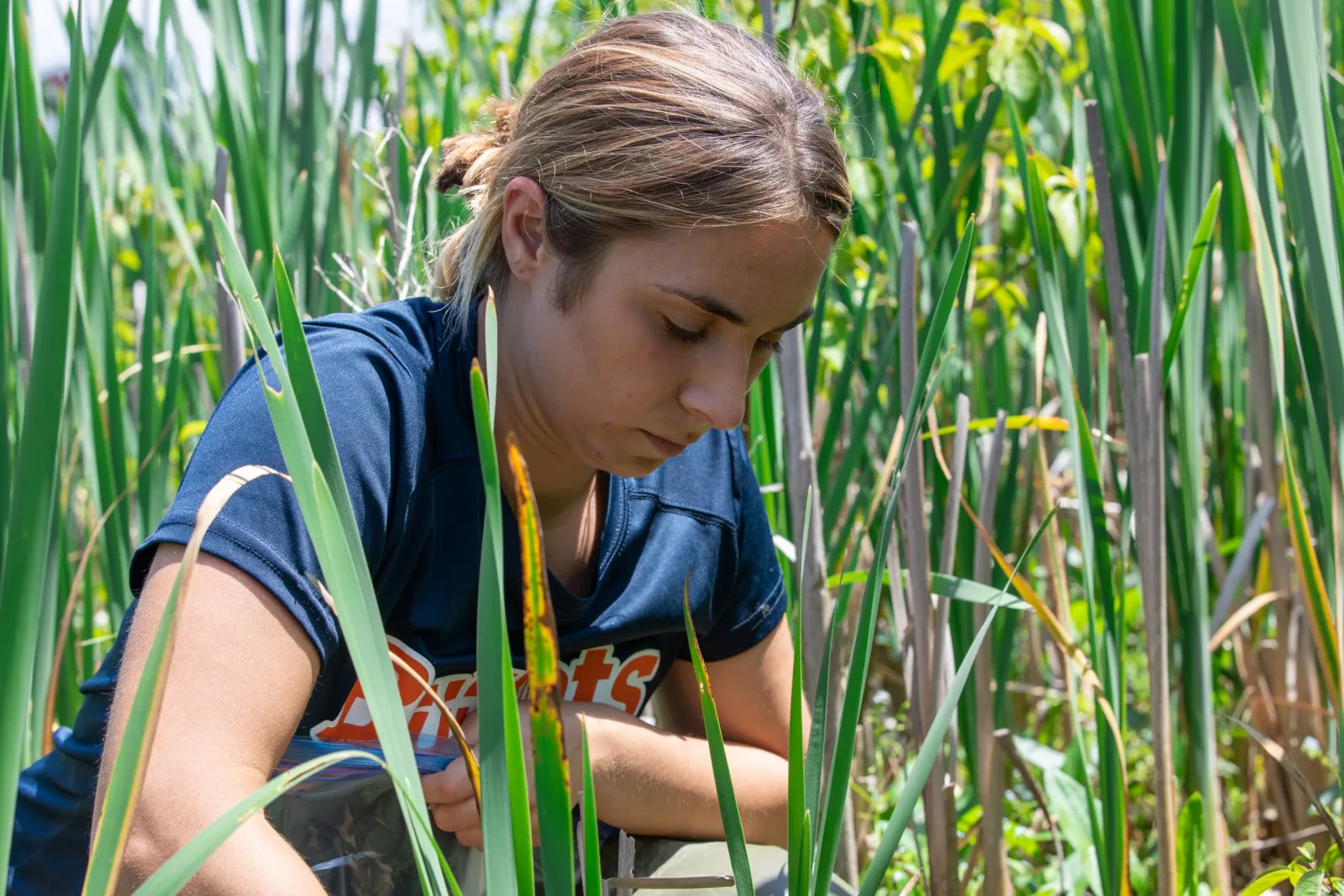
Get involved in student research
From presenting research at national science meetings to co-authoring research publications on emerging diseases, our graduates have a stellar track record of leading research with innovation. Learn what some of our former biology students have achieved through research at Gettysburg:
- Conducted research at the Smithsonian Tropical Research Institute in Panama
- Used genetic engineering to study a novel gene that protects the cytoskeleton
- Discovered that cold stress induces a terminal investment reproductive response in C. elegans
Each research experience is unique since it builds upon your scientific knowledge and provides you with valuable networking opportunities as you progress in your career. You could pursue student-faculty research, cross-disciplinary research with peers, or scientific conferences where you present your research findings.
Finding internships
Along with traditional research, you may also seek an internship. Former students have completed internships at the following:
- Hospitals
- Pennsylvania Department of Agriculture
- Universities such as Cornell, Carnegie Mellon, Thomas Jefferson, and the University of Pittsburgh
- Veterinary clinics
Visit the Center for Career Engagement to view a full catalog of internship opportunities and complete internship application forms.
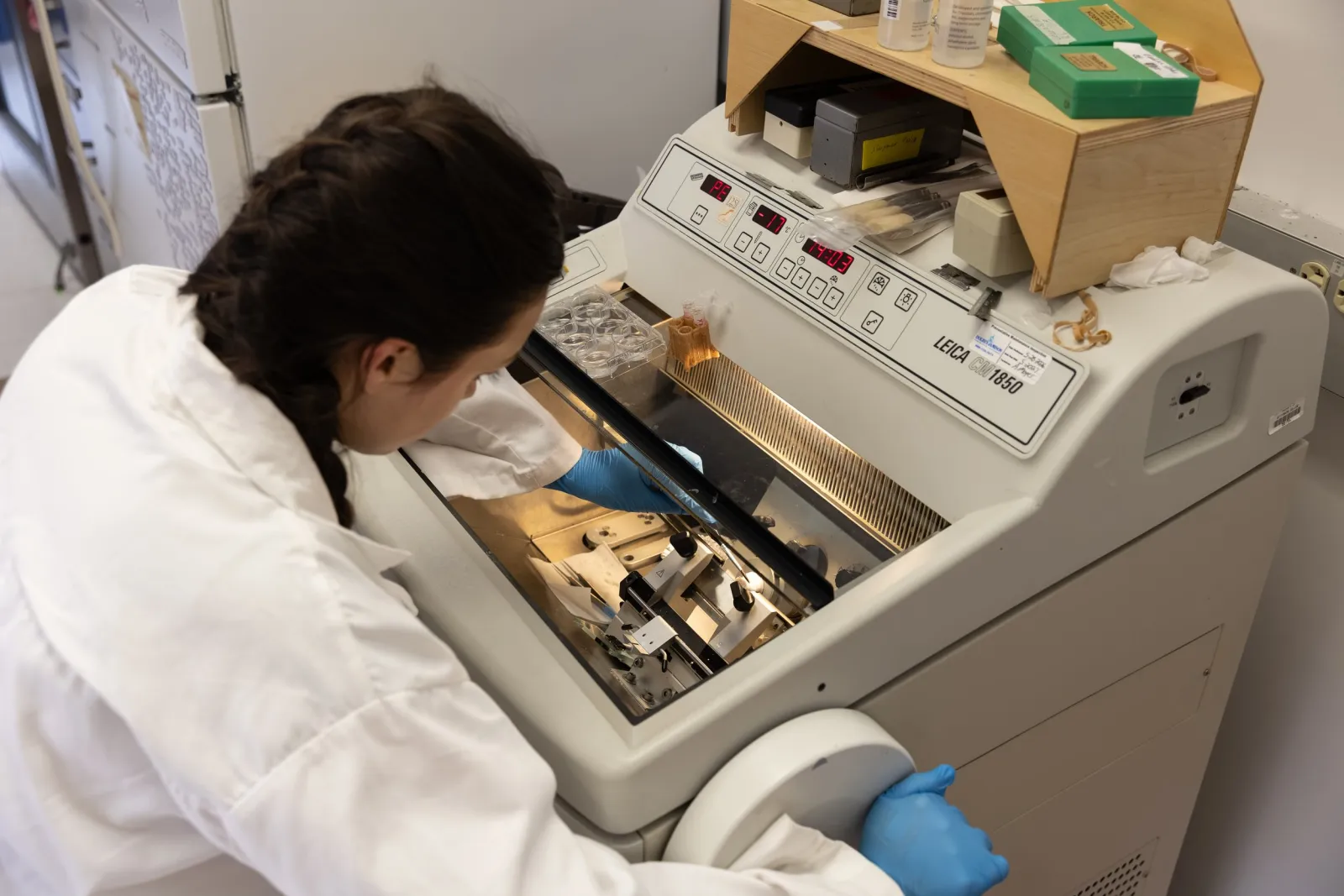
Career preparation
Each program available in the Biology Department ensures you are ready for the next step in your studies and career. With small class sizes, collaborative faculty, and research opportunities, you’re prepared to enroll in graduate study or start your career.
Explore a list of common fields where biology graduates work
- Allied health professions
- Dentistry
- Governmental agencies
- Pharmacy
- Pre-health professions
- Teaching
- Veterinary medicine
The Gettysburg alumni network
To best support you, all Gettysburg biology students have access to the Gettysburg Network through the connectGettysburg platform. More than 33,000 alumni strong, this platform serves as your tool for online engagement, networking, and career mentoring.

Featured Courses
Visit Curriculum tab for a comprehensive list of all available courses
100 Level
Introduction to general biological principles, taught through themes with a focus on topical issues and applications. Topics may include adaptation, bioenergetics, patterns of inheritance, the history of life, ecology, gene expression, and cell biology. Designed for science majors with a high school background in biology, chemistry, and mathematics. Three class hours and one hour of weekly laboratory activity.
200 Level
This course familiarizes students with current and relevant topics in tropical biology. Students learn major concepts in tropical biodiversity, community ecology, and conservation and discuss current research advances in these areas. Students also develop an appreciation for the diversity of life and the processes than contribute to this diversity. This course combines a lecture/seminar section during the Spring semester with a lab section/field trip to Manu National Park in Perú, at the beginning of the summer break. Prerequisite: Bio 111, BIO 112 and permission of the instructor
300 Level
Combined upper-level biology and chemistry laboratory where students design and synthesize organic compounds and determine the impact of structural modifications on these compounds’ biological activity. The semester is divided into two parts: the synthesis, isolation, and characterization of a derivative of a known, biologically active organic compound; and the assessment of its biological activity using in vivo disease models. Capstone course for Biology majors. Two laboratories. Spring semester. Prerequisite: CHEM 204 and BIO 211 or permission of the instructor.
Biology News


With a biology major or minor, you focus on a particular field of study, such as animal behavior, ecology, immunobiology, genetics, or neurobiology.
Through studying organisms, populations, and molecular and cellular biology in our core course sequence, you encounter a range of research techniques and disciplines. The bachelor’s degree in biology curriculum ensures you develop the academic foundation to meet your educational goals.
Students who major in Biology may pursue a Bachelor of Arts or a Bachelor of Science degree. Our majors can focus their studies within the department by selecting a concentration. These concentrations allow students to pursue specific topics and research directions that prepare them for careers in the life sciences. Concentrations range from biomedical, computational, field-based, and lab-based focuses. Our majors thus have a great deal of flexibility to engage in their specific interests through our concentrations. The Department also offers minors in Biology and Neuroscience.
Major and Minor Information
Thirteen courses, nine in Biology, are required for the Biology major, Bachelor of Arts
Four Biology Core Courses
- BIO 111 Introduction to Ecology and Evolution
Grade of C- or higher required. - BIO 112 Form and Function in Living Organisms
Grade of C- of higher required. - BIO 211 Genetics
- BIO 212 Cell Biology or BIO 213 Evolutionary Ecology
Five Biology Elective Courses
- Elective courses should be chosen based on a student’s major concentration.
- Select from BIO 204, 206, 214, 221, 223, 224, 225, 227, 228, 229, 230, 240, 250, 251, 256, 260, 306, 307, 314, 315, 320, 332, 334, 335, 340, 351, 359, 361, 460, and/or 461.
- BIO 212 or BIO 213 may count as an elective if it was not used as a core course.
- The Biology Department recognizes and counts completion of the combination of HS 209 and HS 210 as one Biology elective. A student must complete both to receive one course credit for a Biology elective.
Four Courses in Related Departments
- CHEM 107 or CHEM 107-I
- CHEM 108 or CHEM 108-I
- A Mathematics course. Choose one from BIO 260, MATH 111, 112, 207 (107 prior to Fall, 2026), PSYCH 205. If BIO 260 is chosen to meet the mathematics course requirement, it may not also count a biology elective course.
- One elective, selected from: Chem 203, 204; CHEM/PHY 246; CS 107, 111, ES 223, PHY 103, 104, 109, 110, 111, 112, PSYCH 236, 237, 238, 336
Capstone Experience
- Fulfilled by BIO 307, 314, 320, 334 (prior to Fall, 2025), 335 (prior to Spring, 2026), 336, 340, 351, 359, 460, or 461.
- All of these courses require independent research as well as a research or review paper.
Notes
- All courses must be taken using the A-F grading system, except for BIO 461 which can be taken using the Satisfactory/ Unsatisfactory grading option.
- BIO 290 and BIO 453 do not count towards the requirements of the Biology major.
Fifteen courses, ten in Biology, are required for the Biology major, Bachelor of Science
Four Biology Core Courses
- BIO 111 Introduction to Ecology and Evolution
Grade of C- or higher required. - BIO 112 Form and Function in Living Organisms
Grade of C- of higher required. - BIO 211 Genetics
- BIO 212 Cell Biology or BIO 213 Evolutionary Ecology
Six Biology Elective Courses
- Elective courses should be chosen based on a student’s major concentration.
- Select from BIO 204, 206, 214, 221, 223, 224, 225, 227, 228, 229, 230, 240, 250, 251, 256, 260, 306, 307, 314, 315, 320, 332, 334 (prior to Fall, 2025), 335, 340, 351, 359, 361, 460, 461.
- BIO 212 or BIO 213 may count as an elective if it was not used as a core course.
- The Biology Department recognizes and counts completion of the combination of HS 209 and HS 210 as one Biology elective. A student must complete both to receive one course credit for a Biology elective.
Five Courses in Related Departments
- CHEM 107 or CHEM 107-I
- CHEM 108 or CHEM 108-I
- A Mathematics course: choose one from BIO 260, MATH 111, 112, 207 (107 prior to Fall, 2026), PSYCH 205
- If BIO 260 is chosen to meet the mathematics course requirement, it may not also count a biology elective course.
- Two electives, selected from: Chem 203, 204; CHEM/PHY 246; CS 107 or 111 (not both), ES 223, HS 326, PHY 103, 104, 109, 110, 111, 112, PSYCH 236, 237, 238, 336
Capstone Experience
- Fulfilled by BIO 307, 314, 320, 334 (prior to Fall, 2025), 335 (prior to Spring, 2026), 336, 340, 351, 359, 460, or 461. All of these courses require independent research as well as a research or review paper.
Notes
- All courses must be taken using the A-F grading system, except for BIO 461 which can be taken using the Satisfactory/ Unsatisfactory grading option.
- BIO 290 and BIO 453 do not count towards the requirements of the Biology major.
Six courses are required for the minor.
Biology Core Courses
- BIO 111 Introduction to Ecology and Evolution
Grade of C- or higher required. - BIO 112 Form and Function in Living Organisms
Grade of C- of higher required.
Four Biology Elective Courses
- Four additional BIO courses from those which count toward the Biology major.
- Students selecting upper-level courses to t meet the requirements for the minor must also fulfill any prerequisite that may be required for the course.
- The Biology Department recognizes and counts completion of the combination of HS 209 and HS 210 as one Biology elective. A student must complete both to receive one course credit for a Biology elective.
Notes
- All courses must be taken using the A-F grading system, except for BIO 461 which can be taken using the Satisfactory/ Unsatisfactory grading option.
- BIO 290 and BIO 453 do not count towards the requirements of the Biology minor.
First Year Advising and Registration recommendations
Before you register
- BIO 111 is strongly recommended for students interested in the Neuroscience minor or planning to apply to medical or veterinary school. Taking CHEM 107 alongside BIO 111 in the fall is common and encouraged, though not required. Delaying Chemistry to sophomore year is possible, though it may affect scheduling flexibility in junior and senior years and could limit options like study abroad.
- Prospective Environmental Studies and Psychology majors may also consider BIO 111, though it is not required for either major — see those department guides for details.
- Discuss the Chemistry timing decision with your FY advisor or someone in the Biology Department.
Common first-year courses
Required — Biology, BMB, and Health Sciences majors
- BIO 111 Introductory Biology for Life Sciences (fall)
- BIO 112 Form and Function in Living Organisms (spring; includes weekly lab)
- BIO 111 is offered in three theme-based sections: Cancer Biology, Predator Biology, and Molecules to Ecosystems. All sections fulfill the First-Year Data & Society requirement.
Also recommended — Biology majors
- CHEM 107 General Chemistry I (fall; requires placement exam; required for the Biology major; may be delayed to sophomore year if needed)
- CHEM 108 General Chemistry II (spring)
For students NOT majoring or minoring in Biology (choose one; both fulfill the Natural Science requirement)
- BIO 101 Basic Biology (fall; for non-science majors; stand-alone course with no prerequisites; every-other-week lab; does not lead to BIO 112)
- BIO 102 Biological Basis of Disease: (spring; for non-science majors; no prerequisites; every-other-week lab)
Available Courses
100 Level
Designed for nonscience majors. Course covers selected biological topics related to human diseases and focuses on contemporary problems and their possible solutions. Three class hours and laboratory.
Designed for nonscience majors. Course covers selected biological topical issues and applications. Each section has a different topic, such as applied insect biology (interaction with humans and how our changing world is impacting them) and cancer biology. Three class hours.
Introduction to cell biology, bioenergetics, gene expression, and patterns of inheritance with a focus on important topical issues. Laboratory emphasizes the experimental nature of biological investigation. Students not majoring in biology but who are interested in the health professions may, with a grade of C- or better in Biology 110, enroll in Biology 112. Three class hours and laboratory. Students may not receive credit for both BIO 101 and BIO 110.
Introduction to general biological principles, taught through themes with a focus on topical issues and applications. Topics may include adaptation, bioenergetics, patterns of inheritance, the history of life, ecology, gene expression, and cell biology. Designed for science majors with a high school background in biology, chemistry, and mathematics. Three class hours and one hour of weekly laboratory activity.
Designed for science majors. Morphology and physiology of plants and animals are emphasized. Lecture and laboratory topics include nutrition, energetics, internal regulation, neural and hormonal integration, and reproduction. Prerequisite: Bio 111, or Bio 110 (prior to Fall 18), with a C- or better. Three class hours and laboratory.
One-semester research experience for first-year students. This course alternates between two different topics, one that is lab-based, and the other, which is a combination of lab- and field-work. On even-numbered years students will investigate mechanisms that protect DNA and the cancer-enabling properties of cells in which critical cancer-protective proteins are missing, with a view to understanding “why normal cells get it right every time they divide, and why cancer cells get it wrong every time they divide”. Projects use techniques of genetics, molecular biology, and genetic engineering to investigate how genome instability, marked by loss of cell cycle control and impairment of DNA repair, accelerates cancer progression. On odd-numbered years students will investigate the startling global declines of amphibians (salamanders, frogs, and caecilians). Projects will include work on limb deformities, estrogenic compounds, ecosystem services, emerging infectious diseases, and species "arks." Students will learn techniques in experimental design, modeling, field sampling, histology, quantitative PCR, and project-specific methodologies (e.g. diet analysis, GIS, etc.).
Course covers basic topics in cell biology, bioenergetics, gene expression, and patterns of inheritance with a focus on important topical issues. Designed for nonscience majors. Laboratory emphasizes the experimental nature of biological investigation. Three class hours and laboratory. Students may not receive credit for both BIO 101 and BIO 110.
200 Level
Biology of tropical marine organisms and study of the geological, chemical and physical processes in tropical marine ecosystems. Course requires a 2-week summer field/lab program at a marine research station in the Bahamas (additional costs). In the field, the students snorkel to observe diverse marine organisms in habitats such as coral reefs and rocky/sandy intertidal zones. Prerequisite: Permission of the instructor.
Study of the structure, physiology, and behavior of the major groups of animals representing 99 percent of the animal kingdom. Focus is on functional morphology and evolutionary adaptation. Course includes individual or group research projects. Six hours in class-laboratory work.
This course familiarizes students with current and relevant topics in tropical biology. Students learn major concepts in tropical biodiversity, community ecology, and conservation and discuss current research advances in these areas. Students also develop an appreciation for the diversity of life and the processes than contribute to this diversity. This course combines a lecture/seminar section during the Spring semester with a lab section/field trip to Manu National Park in Perú, at the beginning of the summer break. Prerequisite: Bio 111, BIO 112 and permission of the instructor
Biology of viruses and bacteria, with emphasis on morphology, metabolism, taxonomy, reproduction, and ecology. Laboratory includes isolation, culture, environmental influences, identification, and biochemical characterization of bacteria and their viruses. Three class hours and laboratory.
Paleobiology. Diversity, biology and ecology of ancient life; the major biological and geological changes that had a significant impact on our evolutionary history and the key geological and physical processes that shaped our earth during its 4.5 billion year history. Laboratory component introduces students to the techniques required for the proper collection, preservation, identification and cataloging of fossils; and involves visits to local fossil collection sites and museums. Students are required to develop a personal fossil collection during this course.
Exploration of a particular topic in Biology, chosen by a faculty member
Introduction to the emerging field of bioinformatics, where biology and computer science intersect to interpret and use the rapidly expanding volume of biological information produced by genome sequencing and proteomic exploration of life processes. Application of bioinformatic software tools to the analysis of gene sequences and protein structures is emphasized. Students undertake a laboratory project combining in silico and in vitro approaches to isolate and then analyze a segment of their own DNA. An introduction to computer algorithms used in bioinformatic software is provided. Three class hours and laboratory.
A discipline comprising pure and applied science, which focuses on the preservation of biological diversity. Focus implicitly recognizes that preserving the genetic and ecological features of a species requires preservation of that species' niche. Topics include food web organization, spatial heterogeneity and disturbance, consequences of small population size and inbreeding, captive propagation, demographics of population growth, and species reintroduction and management. Prerequisite: Environmental Studies 211 or BIO 111. BIO 256 and ES 256 are cross-listed.
Designed for students in biology who plan to engage in individualized study and/or research. Topics include the nature of biological data and the statistical procedures to analyze them. Special attention given to experimental design and hypothesis testing. Three class hours and one hour discussion. Credit cannot be received for both this course and Health Science 232, Mathematics 107, Psychology 205, or Economics 241.
Quarter credit internship graded S/U.
Study of animal behavior through readings, discussions, and field and laboratory observations. Phenomena considered range from simple reflex response to complex social organization. Role of behavioral adaptations in the biology of animal species is emphasized. Three class hours and laboratory.
Identification, classification, structural diversity, ecology, and evolutionary relationships of the angiosperms. Course includes field work for collection and identification of local flora. Three class hours and laboratory-field work.
Exploration of environmental effects on fundamental physiological processes and adaptations used by animals to cope with both abiotic factors such as temperature and water availability and biotic forces such as herbivory, predation and competition. Factors determining the distribution and abundance of animals will also be discussed. The history of studies in physiology and ecology will be introduced. Prerequisite: BIO 112 with a C- or better .
Overview of principles of genetics. Topics include chemical nature of genes, Mendelian and non-Mendelian inheritance, gene regulation, genetic engineering, molecular evolution, and population genetics. Three class hours and laboratory. Prerequisite: Bio 112 with a grade of C- or better and Chem 107.
Structure and function of eukaryotic cells. Topics include protein structure, enzyme function, membrane structure and transport, protein sorting, energy transduction by mitochondria and chloroplasts, chromosome structure, cell division and cell-cycle control, cell communication, cell motility, and cell biology of cancer. Three class hours and laboratory. Prerequisite: Bio 112 and Chem 108 with a grade of C- or better in both courses.
Examines how natural selection and other evolutionary processes shape the diversity, social and community interactions, and distribution of organisms. Particular emphasis will be given to the processes of ecological adaptation and mechanisms of speciation. Three class hours and laboratory. This course will include field trips. Prerequisite: Bio111 & Bio112.
Covers basic topics in genome science, focusing on describing and annotating a newly sequenced phage genome obtained by students in the previous fall semester. Designed for science majors. Laboratory emphasizes the experimental nature of biological investigation. Three lecture/computer laboratory class hours. Prerequisite: BIO 111
Exploration of common themes in symbiotic associations between organisms, techniques used to investigate these relationships, and future trends of this increasingly important field of biology. Topics include components of animal behavior, development, genomics, evolution, and ecology. Primarily a lecture format although will also include in-class demonstrations and projects. These projects will occasionally require a greater time commitment than the scheduled class meetings. Prerequisite: Biology 112. Counts as an Organismal course within the BIO major.
This course uses evolutionary theory as a framework to introduce students to insect biology. An emphasis is placed on insect ecology and its influence on major group radiations. Students learn major concepts in insect form and function as well as in the ecology, behavior, development, and conservation of insects. This course also addresses the impact of insects in human society. Laboratories provide students with a hands-on introduction to insect anatomy, identification and entomological techniques. We experience insects in their natural habitats with a series of field trips and a semester-long research project on insect diversity.
Introduction to systematics, distribution, reproduction, and population dynamics of vertebrates. Field and laboratory emphasis on natural history, collection, and identification. Optional trip to North Carolina. Six hours in class, laboratory, and field work.
300 Level
Analysis of the ecology of marine systems. The open ocean, estuaries, salt marshes, beaches, mud and sand flats, seagrass beds, rocky shores, coral reefs, and deep sea are examined. Problems of pollution, beach erosion, and the management of declining fisheries is also presented. Quantitative field work in a variety of coastal habitats is conducted on a required field trip to Duke University Marine Laboratory and the Outer Banks barrier island chain. Three class hours and laboratory-field work. Alternate years. Prerequisite: ES 211.
Study of the application of evolutionary thinking to human health issues. Topics to be covered include evolution of pathogens and virulence; mal-adaptations to modern lifestyles; genetic conflicts associated with reproduction including pregnancy; evolution of aging and age-related diseases. Seminar will address if and when medical treatment or public health policies benefit from incorporating an evolutionary perspective. Prerequisite: BIO 211
Combined upper-level biology and chemistry laboratory where students design and synthesize organic compounds and determine the impact of structural modifications on these compounds’ biological activity. The semester is divided into two parts: the synthesis, isolation, and characterization of a derivative of a known, biologically active organic compound; and the assessment of its biological activity using in vivo disease models. Capstone course for Biology majors. Two laboratories. Spring semester. Prerequisite: CHEM 204 and BIO 211 or permission of the instructor.
Study of the basic mechanisms of information storage and retrieval from DNA and RNA. Topics include genome organization and the regulation of gene expression in prokaryotes and eukaryotes; DNA replication and repair; molecular genetics of cancer and human-inherited disorders; and recombinant DNA technology. Three class hours and laboratory. Capstone course. Prerequisite: Bio 211 and 212. BIO 351 and BMB 351 are cross-listed.
Regulation of basic physiological processes in animals. Unifying principles are studied using a comparative approach. Three class hours and laboratory. Credit cannot be received for both this course and HS 210. Prerequisite: grade of C or better in Bio 212.
Experimental basis for modern neurophysiology – how neurons, synapses, and circuits generate, transmit, and modulate patterns of electrical activity underlying behavior. Specific topics include how action potentials are generated; how synapses relay signals from neuron-to-neuron; neuropharmacology of ion channels and receptors; and plastic changes in synapse structure and function. The course is highly experiential: students learn and apply experimental methods to record and analyze electrical activity in living neurons, and use these methods to design and execute their own independent experiments. Capstone course for Biology majors. Prerequisites: BIO 112, and either BIO 212 or PSYCH 236
An exploration of the biological basis of brain function, including: electrical and chemical signaling of nerve cells; modulation and plasticity of signaling occurring in different behavioral states or during learning; and the structure, function, and development of circuits of interconnected nerve cells involved in sensory perception and motor coordination. Emphasis is placed on the behavioral and clinical aspects of modern neurobiology: how particular properties of the brain underlie specific behaviors, and how malfunctions of neural mechanisms lead to various neurological disorders. Prerequisite: Bio 212 with a C- or better or Bio 112 and Psych 236 both with a C- or better.
Introduction to the vertebrate immune system at the molecular, cellular, and organismal levels. Antibody structure, antigen-antibody interaction, the genetics of antibody diversity, the immune response, and the bases of self/non-self discrimination are emphasized. Three lecture hours plus one hour discussion. Prerequisite: Bio 211, or Bio 212.
Survey of the phenomena and principles of animal development. Major attention is given to the genetic and cellular mechanisms that control cell differentiation and the development of form in several model organisms. Vertebrates are emphasized in the study of organ development. Three class hours and laboratory. Capstone course. Prerequisite: Bio 211 and 212.
The study of the factors that shape the evolution of genes and genomes. The organization, origin, and mechanisms of change of viral, prokaryotic and eukaryotic genomes are explored. Topics include: structure and function of genes, chromosomes, and genomes; the roles of natural selection and chance as drivers of molecular evolution; rates and patterns of DNA and amino acid sequence evolution; molecular phylogeny; reticulate evolution; gene duplication and mobile elements; genome evolution. Prerequisite: BIO 211
Study of the transformation and diversification of populations through time. Topics include history of life, adaptation, selection and population genetics, speciation and extinction, evolutionary innovations, and patterns of diversity. Three class hours and laboratory. Capstone course. Prerequisite: Bio 211.
Study of the physical, chemical, and biological characteristics of inland waters. Topics include nutrient cycling, biological interactions, and effects of human activities. Course includes individual research projects and a number of field trips. Six hours in class, laboratory, and field work. Capstone Course. Prerequisite: Junior or Senior Standing.
Detailed survey of the primary and secondary metabolic processes in living cells. Topics discussed include the overall organization of metabolic pathways, carbohydrate and fatty acid metabolism, biological oxidation and reduction and energy production. Special attention is given to regulation, hormone action, metabolic disorders and disease. Laboratory work includes an independent research project. Three class hours and one laboratory. Spring semester.
BIO 334, BMB 334, and CHEM 334, are cross-listed.
400 Level
Quarter credit internship, graded S/U.
Half credit internship, graded S/U.
Summer Internship graded S/U, counting in the minimum requirements for a major or minor only with written permission filed in the Registrar's Office
Summer Internship graded A-F, counting in the minimum requirements for a major or minor only with written permission filed in the Registrar's Office.
Independent internship experience under the direct supervision of professional personnel in a variety of biology-related areas. Internship may be arranged by the department or the student. Must combine practical work experience with an academic dimension. Library research paper on a subject related to the experience is required. Prerequisite: Approval of both supervisor and department. Contact Center for Career Development for application and further assistance.
Internship counting toward the minimum requirements in a major or minor, graded S/U
Internship counting toward the minimum requirements in a major or minor, graded A-F
Individualized research not counting in the minimum requirements in a major or minor graded S/U
Individualized research not counting in the minimum requirements in a major or minor, graded A-F
Individualized research counting toward the minimum requirements in a major or minor, graded S/U Capstone course
Independent investigation of a topic of special interest, normally including both literature and laboratory research. Directed by a faculty member. Results of investigation are presented to the department. Open to juniors and seniors. Capstone course Prerequisite: Approval of both the directing faculty member and department.
Independent investigation of a topic of special interest, directed by a faculty member familiar with the general field of study. May be used as preparation for enrollment in Biology 460. Prerequisite: Approval of directing faculty member.
Individualized tutorial not counting in the minimum requirements in a major or minor, graded A-F
Individualized tutorial counting toward the minimum requirements in a major or minor, graded S/U
Individualized tutorial counting toward the minimum requirements in a major or minor, graded A-F
Biology
Ready to Do Great Work?
