
Economics
Develop a robust understanding of economics by studying the subject within historical and contemporary contexts.
Learn economics through a micro and macro lens to determine the “how” and “why” of important economic decisions.
Majors & Minors
| Program Name | Program Type |
|---|---|
Economics |
Major Bachelor of Arts |
Mathematical Economics |
Major Bachelor of Science |
Economics |
Minor |
Why study Economics?
A liberal arts degree in economics opens the door to careers in finance, banking, business, government and research. In addition, economics majors frequently enter graduate or MBA programs, and an economics major is a definite advantage in applying to law school.
As a major or minor, you'll study the exchange of and competition for goods and services that influences everything from small-scale community decisions to global geopolitics.
Why study Economics at Gettysburg
Opportunities
Those who earn their bachelor’s in economics at Gettysburg College are prepared for pursuing graduate school for further study or career opportunities.

Academics
Develop a robust understanding of economics by studying the subject within historical and contemporary contexts.

Community of Experts and Professors
As an economics major or minor, you can enroll in a wide variety of classes in various subfields. You could take courses from faculty covering topics such as gender issues in economics, political economy, or international economics.

Economics students have many opportunities to supplement their coursework with activities, organizations and experiences — both on campus and off. These include honor societies, internships, study abroad and more. For example, the American Economic Association sponsors several summer workshops in economic theory and quantitative techniques for minority students with an interest, but not necessarily a major, in economics.
Economics in Action
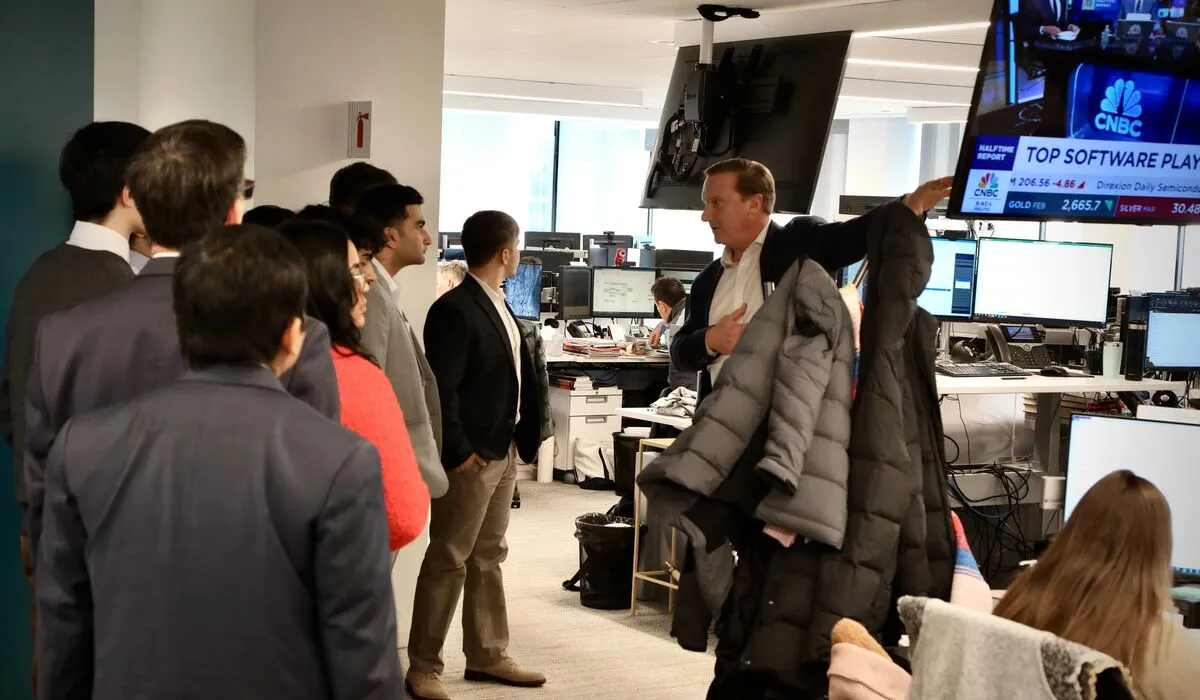
- Students explore life on Wall Street during career trek
- Economics majors find career success across industries
- Rewarding summer opportunities help pave career paths for Gettysburg students
- Economics Prof values the power of personal connections

Gettysburg Lab for Experimental Economics
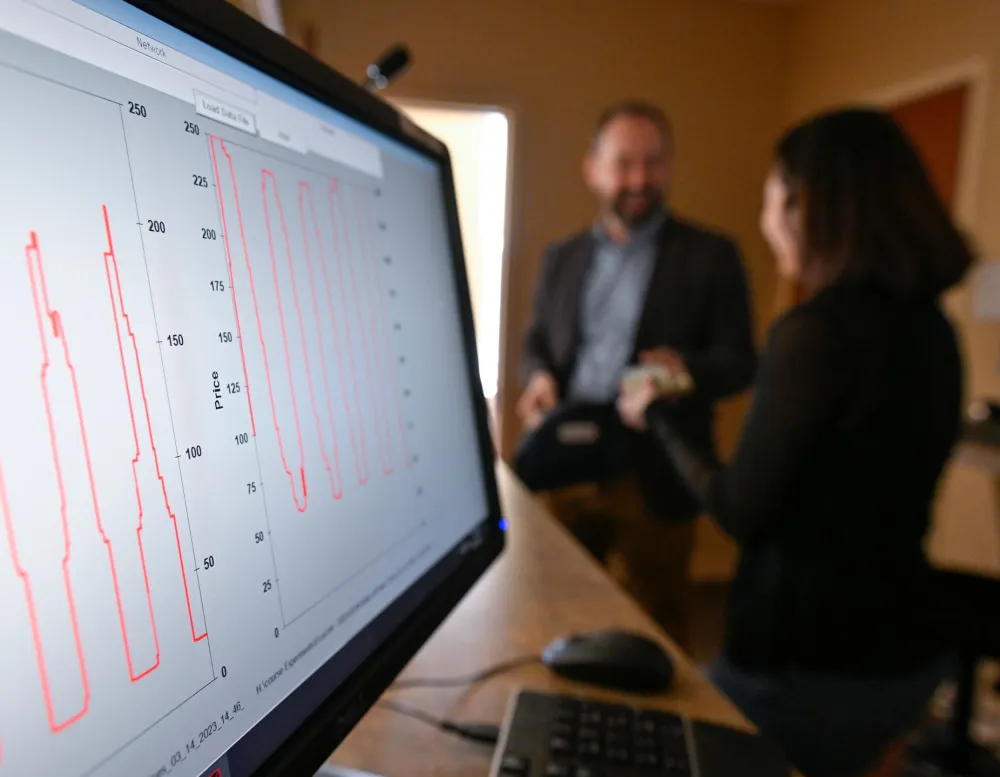
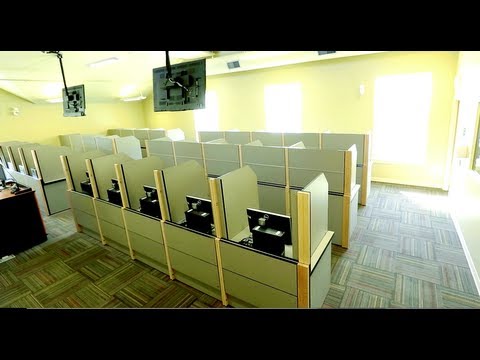
The Gettysburg Lab for Experimental Economics, GLEE, is a dedicated experimental economics lab for research and teaching, which enables our faculty and students to study human decision making in controlled virtual environments.
Study abroad
More than half of all Gettysburg students decide to study abroad to broaden their understanding of topics related to their majors. Economics students have participated in programs in such places as Australia, China, Denmark, Japan, Greece, South Africa, Switzerland and the United Kingdom. Off-campus study programs are also available at schools across the United States, such as American University in Washington, DC.
Featured Courses
100 Level
Courses provide general understanding of economic systems and economic analysis, with emphasis on the operation of the U.S. economy. Topics include the price system, theory of consumer behavior, theory of production, theory of the firm, income distribution, welfare economics, and the micro aspects of international trade.
Courses provide general understanding of economic systems and economic analysis, with emphasis on the operation of the U.S. economy. Topics include national income accounting, employment, inflation, monetary and fiscal policies, aggregate demand and supply analysis, economic growth, the monetary aspect of international economics, and comparative economic systems.
300 Level
Course examines role of money, credit, and financial institutions in the determination of price and income levels. Coverage includes the commercial banking system, the Federal Reserve System, monetary theory, and the art of monetary policy. Emphasis is placed upon evaluation of current theory and practice in the American economy in the context of increased internationalization of financial activity. Prerequisite: Econ 241 and 243.
400 Level
Investigation of different perspectives in economics. Close readings of classic primary texts are used to examine issues in the history of economics and alternative approaches to understanding the contemporary economy. Topics include competition, endogenous growth, technical change, effective demand, money and credit, and economic policy. Prerequisite: Econ 241, 243, 245, 249, 350 and at least one 300-level elective Econ course.
Economics News




Gettysburg Laboratory for Experimental Economics (GLEE)
A unique experimental economics lab like no other, the Gettysburg Laboratory for Experimental Economics offers students and faculty opportunities to study human decision-making in various controlled virtual environments. Equipped with handmade work surfaces that transform from traditional classroom desks to research facility desks, students can actively participate in engaging experiments, from market decision-making to viewing how money influences others.
The Gettysburg Economic Review
The Gettysburg Economic Review is an undergraduate student journal edited and published by the Economics Department at Gettysburg College. It showcases some of the best work produced by students from the Economics Department each year.
Honor societies for Economics majors
Gettysburg College is a chapter of Omicron Delta Epsilon. Select students may engage in undergraduate economic conferences where they present papers to their peers from other colleges.
Pi Lambda Sigma is a social sciences honor society that provides economic majors with support to grow in their academic excellence and network.
Career preparation
Both the B.A. and B.S. in economics degree programs are formatted to ensure you have a solid comprehension of economics, from small-scale community decisions to global geopolitics. This need for career readiness is met through rigorous coursework, hands-on learning, and a valuable capstone seminar that lets you demonstrate your understanding of the world of economics.
Enrolling in the bachelor’s in economics degree program prepares you for success in nonprofit, public, and corporate sectors. Many students enter careers in the fields of banking, business, finance, government, and research.
Strong Gettysburg alumni network
Economics students have access to the Gettysburg Network via the connectGettysburg platform. Serving as the College’s online engagement, networking, and mentoring platform, connectGettysburg offers endless connections for networking with more than 32,000 Gettysburg alumni.
If you’re looking for an engaging, rigorous, and contemporary field of study that explains how the world around you works, you may be a fit for Economics.
As a major or minor, you'll study the exchange of and competition for goods and services that influences everything from small-scale community decisions to global geopolitics. Both of the majors offered in our department—the BA in Economics and the BS in Mathematical Economics—are classified as STEM degree programs by the Department of Homeland Security, providing additional employment opportunities for students on F-1 visas after graduation.
Major and Minor Information
Twelve courses are required for the Economics major, Bachelor of Arts.
Introduction to Economics
- ECON 103 Principles of Microeconomics
- ECON 104 Principles of Macroeconomics
Math Preparation
- MATH 111 Calculus I
Five Core Courses
- ECON 241 Introductory Economic & Business Statistics.
Students should not take if they have taken MGT 235, MATH 207 (107 prior to Fall, 2026), PSYCH 205, or BIO 260. - ECON 243 Intermediate Macroeconomic Theory,
- ECON 245 Intermediate Microeconomic Theory,
- ECON 249 History of Economic Thought,
- ECON 350 Econometrics.
Three Economics Electives
- Three courses from ECON 250-399
- At least two of the three must be from 300-399
One Capstone Experience
- ECON 401 Advanced Topics: History of Economic Thought
- ECON 402 Advanced Topics in Theocratical and Applied Macro and Monetary Economics
- ECON 403 Advanced Topics in Theoretical and Applied Microeconomics
Seventeen courses are required for the Mathematical Economics major, Bachelor of Science.
Introduction to Economics
- ECON 103 Principles of Microeconomics
- ECON 104 Principles of Macroeconomics
Six Economics Core Courses
- ECON 241 Introductory Economic & Business Statistics. Students should not take if they have taken MGT 235, MATH 207 (107 prior to Fall, 2026), PSYCH 205, or BIO 260.
- ECON 243 Intermediate Macroeconomic Theory,
- ECON 245 Intermediate Microeconomic Theory,
- ECON 249 History of Economic Thought,
- ECON 350 Econometrics.
- ECON 352 Advanced Econometrics.
Two Economics Electives
- Two courses from ECON 250-399
- At least one of the two must be from 300-399
Four Math Core Courses
- MATH 111 Calculus I
- MATH 112 Calculus II
- MATH 211 Multivariable Calculus
- MATH 212 Linear Algebra
Two Math or Computer Science Electives
- MATH 225 Differential Equations
- MATH 321 Real Analysis
- MATH 353 Probability and Statistics
- Any other 300-level Math course
- CS 216 Data Structures and Algorithms
- One from CS 107 Intro to Scientific Computation, CS 111 Computer Science, or DS 256 Data Science.
Capstone Experience
- ECON 404 Capstone Seminar in Mathematical Economics
Six courses are required for the minor.
Introduction to Economics
- ECON 103 Principles of Microeconomics
- ECON 104 Principles of Macroeconomics
Two Core Courses
- ECON 241 Introductory Economic & Business Statistics. Students should not take ECON 241 if they have taken MGT 235, MATH 207 (107 prior to Fall, 2026), PSYCH 205, or BIO 260.
- ECON 243 Intermediate Macroeconomic Theory
- ECON 245 Intermediate Microeconomic Theory
- ECON 249 History of Economic Thought
- ECON 350 Econometrics.
Two Economics Electives
- Two courses from ECON 250 and above.
Notes
- Courses taken under the S/U grading option do not count toward the minor.
First Year Advising and Registration recommendations
The Economics department offers a BA in Economics and a BS in Mathematical Economics. Students planning graduate study in Economics are strongly encouraged to pursue the BS degree.
Before you register
- AP/transfer credit in Microeconomics counts as ECON 103: start with ECON 104
- AP/transfer credit in Macroeconomics counts as ECON 104: start with ECON 103. (AP Macroeconomics does not satisfy the First-Year Data and Society requirement.)
- Students receive credit for ECON 103 cannot also receive credit for ECON 105
Common first-year courses
Required: prospective majors (take both, in any order)
- ECON 103 Principles of Microeconomics
- ECON 104 Principles of Macroeconomics
Both courses meet the Social Sciences Multiple Inquiries requirement and are prerequisites for 200-level regional economics courses.
Also recommended—take as early as possible
- ECON 241 Introductory Economics and Business Statistics
- MATH 111 Calculus I (required for the major; prerequisite for some sophomore courses)
Available Courses
100 Level
Courses provide general understanding of economic systems and economic analysis, with emphasis on the operation of the U.S. economy. Topics include national income accounting, employment, inflation, monetary and fiscal policies, aggregate demand and supply analysis, economic growth, the monetary aspect of international economics, and comparative economic systems.
Courses provide general understanding of economic systems and economic analysis, with emphasis on the operation of the U.S. economy. Topics include the price system, theory of consumer behavior, theory of production, theory of the firm, income distribution, welfare economics, and the micro aspects of international trade.
Fundamentals of economics for citizens, businesses, nonprofits, and policymakers, through the lens of social issues. Microeconomics topics include making optimal production and consumption decisions with limited resources, gains from specialization and trade, price coordination, market competition versus market power, consequences of imperfect markets, and common remedies. Macroeconomics topics focus on measurement and determinants of headline statistics like GDP growth, unemployment, and inflation, interest rates, government deficits and debt, and effects of government spending, taxation, and income redistribution. Students that have received credit for ECON 103 cannot receive credit for ECON 105.
200 Level
An examination of the economic history of the United States from the colonial era to the present. Topics include the evolution of economic and political institutions and their impact on growth of the U.S. economy, the economics of slavery and the economic status of blacks in America after slavery, changes in technology from the industrial revolution to the internet, labor unions and the structure of businesses, changes in the distribution of income, central banking and monetary systems, the U.S. in the global economy, and the business cycle. Econ 104 (Principles of Macroeconomics) is a prerequisite, Econ 103 (Principles of Microeconomics) is strongly recommended.
In the transition to a low-carbon world, Green Finance has become an essential focus for education. It plays a crucial role in addressing climate change and mobilizing investments for sustainable growth. This course will concentrate on climate-related risks in finance and investment decisions while integrating Environmental, Social, and Governance (ESG) criteria into those decisions. Students will learn how investing in socially responsible businesses can enhance financial performance and contribute to the development of resilient organizations.
Prerequisite: ECON/MGT 267.
ECON 280 and MGT 380 are cross-listed.
Introduction to economic analysis of health care markets and health policy. In this course, we use economic analysis to understand individuals' demand for medical care and their role in health production, socioeconomic disparities in health outcomes, uncertainty and the role of insurance, adverse selection and moral hazard problems, the roles of physicians and hospitals as suppliers, pharmaceutical innovation and medical technologies, and the role of government programs in the US and internationally. Prerequisite: ECON 103 or ECON 105. ECON 270 and PP 270 are cross-listed.
Emphasis is on financial planning, investment analysis, asset management, and sources and costs of capital. Prerequisites: Econ 103 or 104, and ECON 241 or an equivalent statistics course. ECON 267 and BUS 267 are cross-listed.
Regulation of financial markets and institutions. The course examines risk-taking by financial market participants and attempts by government to regulate in the interests of financial stability. Special attention to the 2007 world financial crisis, the Dodd-Frank regulatory reform act of 2010, and current regulatory reform proposals. Taught from the perspectives of public policy, economics, and business management. Prerequisite: ECON 103, and 104 or ECON/BUS 267. Cross-listed as PP 265, ECON 265, and BUS 360.
This course examines the conduct of monetary policy in the United States and other countries. Students learn about the objectives of monetary policy, the way monetary policy affects the macro economy over the course of the business cycle, and the tools that central banks use. Special attention is paid to the economic challenges currently facing the United States and world economies. Students participate in the Fed Challenge, a competition sponsored by the Federal Reserve System. Prerequisites: ECON 241 and ECON 243
Energy fundamentals and security issues. Course covers technological, economic and political aspects of energy production originating from oil, coal, conventional gas, shale gas, nuclear power, hydropower and other renewable sources. It examines how energy resources affect the national security and shape the domestic as well as global political economy. Topics include national oil companies, government control and regulation, OPEC dynamics, oil reserves, pipeline politics, LNG international trade, water-energy nexus, climate change, critical energy infrastructure, terrorism, energy diplomacy. Prerequisites: Economics 103 or 105 (or equivalent); or permission of instructor. ECON 258 and PP 258 are cross-listed.
In this course, we explore the economic history and development of Africa, focusing on theories, methods, empirical analysis and key debates. We examine the external and internal, institutional and resource-based explanations of the region's development from pre-colonial period to the modern economy. We will consider the role of development practitioners such as international financial and trade institutions, nongovernmental bodies, and global governance institutions.
Africa is a large and diverse continent, better understood through an appreciation of individual country development experiences – many countries on the continent remain underdeveloped while others have achieved emerging status. As such, we will make use of country case studies and current events to better understand the differences and similarities of the effects of both policy responses, resource and institutional constraints. Prerequisite: ECON 103 and 104; ECON 241 recommended. AFS 256 and ECON 256 are cross-listed.
Introduction to issues, terminology, and methods in global health research, with particular emphasis on Latin America. The course focuses on the critical impact of poverty and inequality on health outcomes, due to differential exposure to causes of disease and injury, differential vulnerability in the face of health risks, and differential consequences of exposure and resultant disease and injury. Instruction, discussion, and reading materials will be in Spanish. Prerequisites: Econ 103, and Span 301 or proficiency in Spanish.
Study of economic issues in professional, collegiate, and other amateur sports. The course examines the history and development of the economics of sports. Central themes of the study include public policy, the economic organization of the sports industry, the roles of women and people of color, labor relations, and monopoly and monopsony power. Prerequisites: Economics 103. Recommended: Math 111 or equivalent
Application of economic theory and empirical analysis to gender and LGBT issues, focusing on the US economy. Course explores how changes in family structures, gendered social norms, and macroeconomic conditions affect labor force participation, considers evidence regarding discrimination by identity and related differences in earnings, and evaluates how intersections of gender identity with race and ethnicity, sexual orientation, and social class impact individuals’ economic choices and the effects of public policies. Prerequisite: ECON 103, or ECON 105. ECON 252 and WGS 252 are cross-listed.
Introduction to the history and development of international commerce and its relation to the rise of the capitalist system. Fundamentals of international trade and finance are also elaborated, and these tools are applied to such issues as international business cycles, global competition and technical change, balance of payments and trade deficits, and the international debt crisis. Prerequisites: Econ 103 and 104.
Examination of economic and noneconomic factors accounting for economic growth and development in less developed areas of the world. Various theories of economic growth and development are analyzed and major policy issues discussed. Primary focus is on the study of the development experience in the Third World and the roles of international trade, aid, multinational corporations, as well as the World Bank and the International Monetary Fund, in the formation and application of Third World strategies for economic development. Satisfies distribution requirement in non-Western culture. Prerequisites: Econ 103 and 104.
Study of the development of economic ideas and policies in relation to the evolution of economics as a discipline from its roots in philosophical discourse to its modern form. Schools of economic thought from Physiocrats to neoclassical economics are examined. Emphasis is placed on the ideas of major contributors to economic thought from Plato to Keynes. Prerequisites: Econ 103 and 104. Recommended Econ 243 and 245.
Course uses the methodological tools of economics to examine consumer and producer behavior and economic behavior, both individual and collective, under different input and output market structures. Also analyzes implications of such behavior for general equilibrium and economic welfare. Prerequisites: Econ 103 and 104, Math 111 or the equivalent; or permission of the Econ department.
Examination of classical, neoclassical, Keynesian, monetarist, new classical, and post-Keynesian economics, with particular focus on various theories and policies that relate to the determination of national (aggregate) income and price level, the determination and role of interest rates, and the part played by monetary and fiscal authorities in stabilizing the economy. Prerequisites: Econ 103 and 104, and Math 111 or the equivalent; or permission of the Econ department.
Topics include nomenclature of descriptive statistics; probabilities using the normal, binomial, and Poisson distributions; Chi-square; sampling; estimation of parameters; hypothesis testing; linear regression; and correlation. A student may not receive credit for both this course and MGT 235, Mathematics 107, Psychology 205, or Biology 260. Prerequisites: Econ 103 and 104, Math 111 or equivalent; or permission of the Economics department. Math 111 can be taken concurrently as a co-requisite.
Intensive examination of Latin America, using the framework of economic analysis and political economy to consider economic history, growth, and development. Economic theory provides the primary paradigm within which this region is studied, but consideration is also given to historical events that conditioned the economic outcomes. Reviews the pertinent theory and focuses on application of that theory to specific historical events. Prerequisites: Economics 103 or 104.
Intensive examination of East Asia, using the framework of economic analysis and political economy to consider economic history, growth, and development. Economic theory provides the primary paradigm within which this region is studied, but consideration is also given to historical events that conditioned the economic outcomes. Reviews the pertinent theory and focuses on application of that theory to specific historical events. Prerequisites: Economics 104.
Examination of the origins and development of capitalism and the contribution of Third World peoples and minorities in the U.S. to the process and continued growth of capitalist development. Primary focus is on the contributions of Africa and people of African descent. Prerequisites: Econ 103 and 104.
300 Level
In Financial Econometrics, you will learn the fundamental theories of asset pricing for a few selected asset classes, and the main modeling methodologies to analyze the behavior of these asset classes as time series. What is equally (or maybe even more) important is that you will learn to analyze real-life financial data with ready-to-deploy quantitative modeling techniques in Python, the prevailing programming language in financial modeling and data analysis. Prerequisite: MATH 112, ECON 241, and ECON 243 or ECON 245.
Application of microeconomic theory to the structure of industry. Course considers traditional, as well as recent and interdisciplinary theories of firm and industry behavior, with particular focus on oligopoly and game theory. Course also reviews the economic history of U.S. antitrust and regulatory policies and examines the effect of greater global interdependence. Students evaluate alternative policies for static economic efficiency, technological change, and equity. Prerequisite: Econ 241 and 245.
This course explores the key aspects of energy supply and demand covering issues in electricity, natural gas and oil sectors of the economy. It discusses the role of markets, regulation and deregulation of the industry. The course addresses market design questions related to energy generation, transmission and distribution. It also provides an overview of economic institutions designed to control pollution emissions and examines other public policies affecting energy markets. Prerequisites:Econ 241 and 245. ECON 344 and PP 343 are cross-listed.
Application of advanced economic analysis to environmental problems. New media, technology and data have rapidly enhanced the economist's abilities to study problems in the environment and offer policy recommendations. Topics include national and global resource use, resource valuation, environmental justice, and economic and environmental policy through the frameworks of integrated resource policy and spatial analysis. Economic problems posed by imperfect information, uncertainty, and secondary data sources are considered. Prerequisites: Econ 245 or ES 196.
Advanced statistical theory and the use of computers in data analysis. Topics include some applications of mathematics to economics, hypothesis testing and model specification, multiple regression and the determination of model acceptability. Prerequisite: Econ 241, 243 and 245.
Introduction to the application of calculus and matrix algebra to economics and business. Numerous illustrations of mathematically formulated economic models are used to integrate mathematical methods with economic and business analysis. Prerequisite: Econ 241, 243, 245 and 350.
Study of the application of mathematical economic theory and statistical procedures to economic data. Coverage includes the development of appropriate techniques for measuring economic relationships specified by economic models and testing of economic theorems. Prerequisite: Econ 350, plus one other 300-level course.
Foundations of experimental methodology in the field of economics. Course covers the major types of economics experiments that are utilized to investigate the economic decisions of individuals as well as their interactions in markets and other socio-economic environments. Students design, program and analyze laboratory experiments in order to examine the validity of alternative theories as well as performance and effectiveness of various policy solutions to economic problems. Prerequisites: ECON 241 and ECON 245.
This course examines the conduct of monetary policy in the United States and other countries. Students learn about the objectives of monetary policy, the way monetary policy affects the macro economy over the course of the business cycle, and the tools that central banks use. Special attention is paid to the economic challenges currently facing the United States and world economies. Students participate in the Fed Challenge, a competition sponsored by the Federal Reserve System. Prerequisites: ECON 241 and ECON 243
This course is the natural extension of Econ/Bus 267 Finance. Students learn advanced skills in the area of Financial Economics. Students develop the concept of risk -adjusted returns, how financial assets price, how markets operate and Companies allocate Capital in complete mathematics. They will tackle portfolio optimization models of Modern Portfolio theory, derivatives pricing using the Black-Scholes Option Pricing Model. The course is designed as an advanced preparation for either the CFA or Actuarial exams. Each weekly lesson will incorporate problems contemporaneous with current world events and Financial news, offering excellent training in real world applications. Prerequisite: Econ 267
In Advanced Quantitative Methods for Finance, students will first learn the fundamental theories of asset pricing for a few selected asset classes and the main modeling methodologies to analyze the behavior of these asset classes (both cross-sectional and time series). Students will also learn to analyze real-life financial data with ready-to-deploy quantitative modeling techniques in Python, the prevailing programming language in financial modeling and data analysis.
Prerequisites: Math 112, Economics 241 or equivalent, Economics 243 or Economics 245.
An introduction to real estate finance in the US. The course covers residential and commercial real estate, presenting an analytical framework for decision-making. Focus will be on financial analyses necessary for making informed decisions with regard to real assets by owners, developers, tenants, or lenders. The course provides a strong foundation for personal and professional financial decision-making for real assets. Prerequisite- ECON/MGT 267.
ECON 371 and MGT 371 are cross-listed.
This course provides a rigorous, applied introduction to financial derivatives. We develop pricing and hedging theory using no-arbitrage arguments, binomial trees, and the Black-Scholes-Merton framework for option pricing. We then expand to volatility modeling, interest rate derivatives, credit derivatives, and risk management applications. What is equally important is that you will learn to analyze real-life financial data with ready-to-deploy quantitative modeling techniques in Python, the prevailing programming language in financial modeling and data analysis. Prerequisites: MATH 112, ECON 241, and ECON 243 or ECON 245. CS 107 is recommended.
Examination of economic and noneconomic factors accounting for economic growth and development in less developed areas of the world. Various theories of economic growth and development are analyzed and major policy issues discussed. Primary focus is on the study of the development experience in the Third World and the roles of international trade, aid, multinational corporations, as well as the World Bank and the International Monetary Fund, in the formation and application of Third World strategies for economic development. Prerequisite: Econ 241, and 243 or 245.
Investigation of the relationship between the economy and the environment, conditions for a mainstream theories and policies, including those based on externalities and social costs, property rights, cost-benefit analysis, and discounting, are studied in the light of conditions required for sustainability. Problems and prospects of both market controls and government regulation are considered. Special topics include renewable resources, valuation techniques, accounting for pollution and resource depletion in GDP statistics, and sustainable development. Prerequisite: Econ 245. ECON 341 and PP 341 are cross-listed.
Theoretical and empirical study of the functioning of labor markets, with emphasis on wage and employment determination. Topics include time allocation, wage differences, discrimination, investment in education, mobility and migration, impact of legislation, unions and labor relations, and imperfect markets. Prerequisite: Econ 241 and 245.
Application of economic theory and empirical analysis to gender and LGBT issues, focusing on the US economy. Course explores how changes in family structures, gendered social norms, and macroeconomic conditions affect labor force participation, considers evidence regarding discrimination by identity and related differences in earnings, and evaluates how intersections of gender identity with race and ethnicity, sexual orientation, and social class impact individuals’ economic choices and the effects of public policies. Prerequisites: ECON 241 and ECON 245. ECON 350 recommended.
Course examines role of money, credit, and financial institutions in the determination of price and income levels. Coverage includes the commercial banking system, the Federal Reserve System, monetary theory, and the art of monetary policy. Emphasis is placed upon evaluation of current theory and practice in the American economy in the context of increased internationalization of financial activity. Prerequisite: Econ 241 and 243.
Study of economic issues in professional, collegiate, and other amateur sports. The course examines the history and development of the economics of sports. Central themes of the study include public policy, the economic organization of the sports industry, the roles of women and people of color, labor relations, and monopoly and monopsony power. Prerequisites: ECON 245. Recommended: Math 111 or equivalent
Introduction to principles, techniques, and effects of government obtaining and spending funds and managing government debt. Nature, growth, and amount of expenditures of all levels of government in the U.S. are considered, along with numerous types of taxes employed by various levels of government to finance their activities. Domestic and international implications of government debt are also considered. Prerequisite: Econ 241 and 245.
Role of innovation in the evolution of economic systems. Topics include how profit incentives affect the research and development (R&D) process, the impact of technological change on occupational structure and the distribution of income, the particular market failures that exist in the market for "new knowledge," and what government policies can be used to arrive at "optimal" growth paths.
The course concludes with an empirical examination of the "most important" sources of economic growth. Prerequisite: Econ 241 and 243.
An investigation into political economic and policy problems not directly confronted by mainstream economics. The focus is on the power relations, especially on who gains and who loses in a given set of economic relationships. Examples of significant issues include: the challenge for governments caused by the power of multinational corporations in a globalized world; the implications of inequalities attributable to gender, ethnic, and class relations; the proliferation of speculative financial activities and their implications for productivity; growing poverty in both the rich and the poor countries. Prerequisite: Econ 241, 243 and 245.
Study of international financial markets and their interactions with the macroeconomy. Topics include balance of payments accounting and foreign exchange markets. A theoretical model if the macroeconomy that incorporates international trade and foreign exchange markets is used to address a number of policy issues, such as the operation of fixed exchange rate systems, exchange rate crises, the evolution of the international monetary system, economic integration, and problems in the global capital market. Prerequisite: Econ 241 and 243.
Mathematical analysis of strategic interaction and decision making. Topics include normal form games and Nash equilibrium, dynamic games of complete and perfect information and subgame perfect equilibrium, static Bayesian games and Bayesian Nash equilibrium, and dynamic games with incomplete information and perfect Bayesian equilibrium. Specific topics and applications include: prisoner’s dilemma, duopoly and oligopoly, bargaining, auctions, collective action problems, voting, and public choice. Prerequisite: Econ 241 and 245.
An exploration of advanced topics in modern macroeconomic theory. Topics include neoclassical growth theory, rational expectations, real business cycle and New Keynesian macroeconomic models, the time consistency problem in macroeconomic policy, search and matching models of the labor market. Open to all economics majors but especially recommended for Mathematical Economics majors and those planning to attend graduate programs in Economics. Prerequisites: Econ 243 and 245
An examination of macroeconomic policy from a historical perspective. We study perennial economic controversies and important episodes in macroeconomic history. We draw lessons from history for recent macroeconomic events, in particular, the recession of 2007-2009 and recovery. Prerequisite: ECON 241 and ECON 243.
400 Level
Half credit internship, graded S/U.
Quarter credit internship, graded S/U.
Summer Internship graded S/U, counting in the minimum requirements for a major or minor only with written permission filed in the Registrar's Office.
Summer Internship graded A-F, counting in the minimum requirements for a major or minor only with written permission filed in the Registrar's Office.
Internship not counting in the minimum requirements in a major or minor, graded S/U
Internship not counting in the minimum requirements in a major or minor, graded A-F
Internship counting toward the minimum requirements in a major or minor, graded S/U
Internship counting toward the minimum requirements in a major or minor, graded A-F
Individualized research not counting in the minimum requirements in a major or minor graded S/U
Individualized research not counting in the minimum requirements in a major or minor, graded A-F
Individualized research counting toward the minimum requirements in a major or minor, graded S/U
Topics of an advanced nature for well qualified students. Individual reading and research, under the supervision of a faculty member. A student wishing to pursue independent study must present a proposal at least one month before the end of the semester preceding the semester in which the independent study is to be undertaken. Prerequisites: Permission of supervising faculty member and department chairperson. Offered both semesters.
Individualized tutorial not counting in the minimum requirements in a major or minor, graded S/U.
Individualized tutorial not counting in the minimum requirements in a major or minor, graded A-F.
Individualized tutorial counting toward the minimum requirements in a major or minor, graded S/U
Individualized tutorial counting toward the minimum requirements in a major or minor, graded A-F
Seminar for students writing the senior theses. Each participant completes an original research project under the supervision of a faculty thesis adviser. Students discuss course readings, review research methods, and present and discuss their findings. Prerequisite: By department invitation only.
This course develops the language of mathematics in the context of economics. The course considers the mathematics and economic applications of equilibrium, slopes and derivatives, differentials, optimization (maximizing profits or utility and minimizing costs or expenditures), constrained optimization (e.g., maximizing utility subject to the budget constraint), and integration. Applications include problems in consumer and producer theory, general equilibrium, welfare economics, growth and discounting, oligopoly behavior, game theory, statistics, and econometrics. Prerequisite: Econ 241, 243, 245, 249, 350 and at least one 300-level elective Econ course.
Examination of special topics in advanced microeconomic theory and applications. Particular focus varies, and includes such topics as new household economics, industrial organization and public policy, game theory, information costs-structure-behavior, production and cost functions, welfare economics, and micro aspects of international trade. Prerequisite: Econ 241, 243, 245, 249, 350 and at least one 300-level elective Econ course.
Examination of advanced topics in macroeconomics and monetary theory and applications. Particular focus rotates, and includes such topics as the new neoclassical theory, rational expectations and post-Keynesian theory, monetary issues in international trade and economic development, econometric studies of money, regulation, and banking safety. Prerequisite: Econ 241, 243, 245, 249, 350 and at least one 300-level elective Econ course.
Investigation of different perspectives in economics. Close readings of classic primary texts are used to examine issues in the history of economics and alternative approaches to understanding the contemporary economy. Topics include competition, endogenous growth, technical change, effective demand, money and credit, and economic policy. Prerequisite: Econ 241, 243, 245, 249, 350 and at least one 300-level elective Econ course.
Economics

More In Economics
Ready to Do Great Work?
