

About Sunderman Conservatory
The Sunderman Conservatory of Music at Gettysburg College is a place to find your music.
If music is a part of who you are, if you’re serious, you need opportunities to express it, develop it, and let it grow.
The Sunderman Conservatory of Music is a dedicated place for music inside a liberal arts college, a conservatory embedded in a rich intellectual community. It’s a place of synergy and energy, of concertos and calculus, symphonies and science, history and harmonies, gamelan and German. An exceptional faculty of artists and scholars, a campus culture rich in performance, and opportunities that range from residencies with internationally-renowned guest artists and lecturers each semester to musical experiences abroad for a semester or a summer make Sunderman one of the most distinctive undergraduate music options available.
Gettysburg College offers a Bachelor of Music in Performance, a Bachelor of Music Education, and a Bachelor of Arts with a Major in Music with the option for a Double Major.
Academic rigor. Creative inquiry. Surprising collaborations. Innovative instruction. Unique musical challenges. Immersing students in a curriculum that values the traditions of classical, jazz, and world musics, Sunderman unites professional artistic standards with the intellectual and academic breadth of the liberal arts in an environment of creative inquiry.
"The Gettysburg College Choir most impacted my college experience as it was a constant throughout my time at Gettysburg. Not only did we perform interesting and challenging repertoire, but we also traveled regularly. I’ll always cherish my first GCC tour to Nicaragua — we participated in cultural exchanges, sang interesting music, and met new people. I also made lifelong friends through this ensemble."
Mission
The Sunderman Conservatory of Music provides excellent, comprehensive musical training grounded in the liberal arts for students who seek to make music integral to their lives, whether as a career or a life-long avocation. Honoring our place as a dynamic conservatory within one of the nation's leading liberal arts colleges, we foster rigorous study, creativity, intellectual curiosity, and joy in music.
The Conservatory emphasizes active engagement with a broad range of musical experiences; celebrates musical and cultural diversity; believes in the value of service through the arts; and promotes connections to the larger world.
- We engage the mind and heart through music.
- We provide superior musical instruction to students who wish to dedicate their lives to music.
- We embrace all cultures and inspire students to be musical citizens of the world.
- We believe that all musicians should become passionate educators, and advocates for their art.
- We nurture a lively, collaborative, and accomplished musical community.
- We offer ample opportunities for musical performance.
- We develop a high level of technical facility and musicality in solo and ensemble performance.
- We value tradition while encouraging innovation.
- We serve as a locus of rich cultural activity for the campus, the community, and the region.
- We foster the creative, scholarly, and pedagogical pursuits of our faculty.
Learning Outcomes
Bachelor of Arts in Music
- Students will demonstrate the ability to analyze, both aurally and visually, structural and expressive elements of music.
- Students will be able to identify, explain, and compare compositional processes and the ways they are shaped by diverse social, historical, and cultural forces.
- Students will think, speak, write, and read critically about music, making connections between music and other fields of study within the liberal arts.
- Students will create and perform music, informed by knowledge of historical and contemporary repertoires.
- Students will develop the technical skills for artistic expression in solo and ensemble performance.
Bachelor of Music Education
- Students will demonstrate the ability to analyze, both aurally and visually, structural and expressive elements of music.
- Students will be able to identify, explain, and compare compositional processes and the ways they are shaped by diverse social, historical, and cultural forces.
- Students will think, speak, write, and read critically about music, making connections between music and other fields of study within the liberal arts.
- Students will create and perform music, informed by knowledge of historical and contemporary repertoires.
- Students will develop and teach the technical skills for artistic expression in solo and ensemble performance.
- Students will demonstrate knowledge and facility with music technologies.
- Students will demonstrate facility with multiple forms of assessment.
- Students will critically evaluate the quality of instructional materials.
- Students will create and apply reflective, responsive, and research-based teaching practices that support music education in just, ethical, and equitable ways.
Bachelor of Music (Performance)
- Students will demonstrate the ability to analyze, both aurally and visually, structural and expressive elements of music.
- Students will be able to identify, explain, and compare compositional processes and the ways they are shaped by diverse social, historical, and cultural forces.
- Students will think, speak, write, and read critically about music, making connections between music and other fields of study within the liberal arts.
- Students will create and perform music, informed by knowledge of historical and contemporary repertoires.
- Students will demonstrate a trajectory toward mastery of the technical skills for artistic self-expression in solo and ensemble performance.
- Students will improvise and sight-read with fluency.
- Students will demonstrate and apply knowledge of the fundamentals of pedagogy in their primary area.
Music Minor
- Students will demonstrate the ability to aurally and visually analyze structural and expressive elements of music.
- Students will be able to identify, explain, and compare compositional processes and the ways they are shaped by diverse social, historical, and cultural forces.
- Students will think, speak, write, and read critically about music, making connections between music and other fields of study within the liberal arts.
- Students will create and perform music, informed by knowledge of historical and contemporary repertoires.
- Students will develop the technical skills for musical expression.
Diversity Statement
The Sunderman Conservatory of Music affirms the worth and dignity of all people, identities, and cultures. We condemn acts of violence, hatred, prejudice, and exclusion. In curiosity and compassion with each other, we commit to expanding our repertoires, skills, and understanding in search of more equitable and accessible ways of listening, learning, performing, and teaching. We believe in the power of music to change the world.
(Adopted unanimously by the faculty, May 25, 2022)
Fast Facts
The Sunderman Conservatory by the numbers
- The Sunderman Conservatory is an accredited institutional member of the National Association of Schools of Music (NASM).
- The Conservatory offers 3 music degrees:
- Almost half of the BA in Music students pursue double majors in disciplines that range across the spectrum of the sciences, humanities, and social sciences.
- More than 50 students minor in music in combination with a major in another field.
- On average, 1 out of every 7 students on campus is involved in the Conservatory - taking a class, participating in an ensemble, or taking private lessons.
- Participation in the Conservatory performance ensembles is open by audition to all students on campus.
- Conservatory students are engaged internationally.
- Approximately 50% of Conservatory students study abroad for a semester. Recently, we have had students in Argentina, Austria, Denmark, England, France, Germany, Ghana, Ireland, Italy, Japan, Madagascar, Senegal, Spain, and the United Kingdom.
- Other global experiences include faculty-led summer immersion trips to Bali, Indonesia to study Gamelan, Sicily to study voice, and Germany to study violin and string performance.
- Our ensembles also tour internationally. Recent tours include a College Choir tour to Nicaragua, a Wind Symphony tour to China and Singapore, and a Jazz Ensemble tour to Istanbul for the Istanbul Jazz Festival.
- 100% placement in jobs, graduate programs, or professional school for graduates in Music Education.
- 35% of music majors hold music or music+merit scholarships.
- All auditioning prospective students compete for our music awards: the Sunderman Scholarship, the Wagnild Scholarship, and the Patrick Grant.
- 46% of music students hold merit awards, including the Abraham Lincoln Scholarship, the Presidential Scholarship, the David Wills Scholarship, and the 1832 Founders Scholarship.
- Fall 2010, 182 students registered for applied lessons
Faculty Facts
- Director - administrative appointment with faculty status as full professor
- 11 full-time faculty who hold doctoral degrees in their fields
- 1 full-time coach-accompanist
- 23 adjunct faculty, most of whom are applied instructors and chamber music coaches.
- All hold graduate degrees and have professional experience in their areas of expertise.
Reasons to be a Sunderman Musician
- It's a place for academically engaged musicians.
- You'll get caught up in the creative energy of a growing program with large ambitions.
- An excellent and committed faculty will be there to guide you throughout the four years.
- We provide a remarkable number and variety of performance opportunities.
- You can participate in service learning with a musical twist.
- There are opportunities to pursue interests in composition, ethnomusicology/world music, music history, jazz studies, chamber music, conducting.
- You'll encounter renowned guest artists and lecturers on campus each semester for performances and residencies.
- There are exceptional opportunities for study abroad.
- You'll be able to take advantage of our proximity to Baltimore, Washington DC and NY City for performances and career immersion experiences.
History
Music at Gettysburg College: A Longstanding Tradition
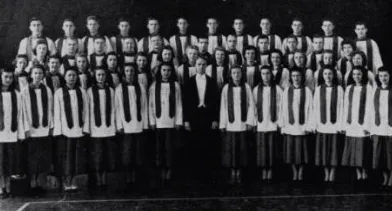
Before there was a Sunderman Conservatory, there was the Music Department at Gettysburg College. And before that department was formed shortly after World War II, there were decades of music-focused activities and groups on campus, including the first a cappella College Choir founded by Parker B. Wagnild. Thanks to a college faculty committed to the installation and growth of music opportunities for all students at Gettysburg - and a generous gift by a remarkable alumnus -- what began as a Glee Club more than a century ago has evolved into the Conservatory of today.
Dr. F. William Sunderman: From Student Orchestra Leader to Conservatory Benefactor
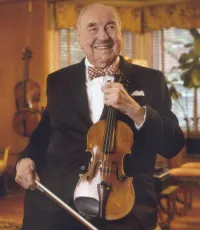
As the seeds of the music department were being planted on campus, F. William Sunderman was front-and-center in the Gettysburg College music scene. In 1918, he led the Army Band on campus, as well as the Student Orchestra.
Fast-forward almost a century, and Dr. Sunderman -- a physician, pathologist, clinical scientist, chemist, toxicologist, author, editor, photographer, lifelong violinist and 1919 graduate of Gettysburg College - bequeathed his alma mater with a $14-million gift to establish the Sunderman Conservatory of Music.
Always a visionary, his intent was to provide talented students with comprehensive classical music instruction and performance training in conjunction with a high quality liberal arts education.
He also gifted Gettysburg College with his music library of over 1,000 scores and parts, as well as a collection of 18th and early 19th century violins and bows.
Over the course of his life, Sunderman played his Stradivarius violin at Carnegie Hall, developed an antidote for nickel carbonyl poisoning and tested it on himself while working on the Manhattan Project, and was one of the first doctors to use insulin to revive a patient from a diabetic coma. Upon his death in 2003, after a lifetime of extraordinary experiences and accomplishments, Dr. Sunderman was the College's oldest alum at 104.
When he enabled the founding of the Sunderman Conservatory of Music at Gettysburg College, Dr. F. William Sunderman left behind a lasting legacy through which his beloved music will continue to fill the air across the campus ... and around the world.
The First 50 Years
- 1900: Early music at Gettysburg College includes the Glee Club and the Guitar and Mandolin Club.
- 1910: College Band and College Orchestra begin; on-campus performance venues include the portico of Old Dorm (now known as Penn Hall).
“The College Band gave a concert [on Friday evening] ... The program was rendered in a pleasing manner and all present considered that the Band is a credit to our school.”
- The Gettysburgian, 1914
- 1925: The Gettysburg College Musical Association is formed to involve faculty in managing and directing student music ensembles.
- 1935: Gettysburg College Choir begins under the direction of Parker B. Wagnild, formerly of the famed St. Olaf Lutheran Choir; auditions are held at Brua Chapel (now Brua Hall). A Music Appreciation group led by Prof. W. Frederick Shaffer of the Greek department begins meeting at the home of Mrs. Robert Marsh, wife of the head of the Biology Department; she volunteers the use of her victrola for the occasion.
- 1936: The Choir sings at the dedication of the Martin Luther memorial in Baltimore; the College Handbook describes the band, under the direction of Bertram H. Saltzer, as “the most popular of the musical organizations on campus.”
- 1937: The choir performs in a variety of venues throughout PA, NJ and MD.
- 1945: The Woman's League of Gettysburg College launches a fundraising drive to raise $50,000 in support of a future Music Department at Gettysburg College.
- 1946: Professor Wagnild announces plans for the introduction of the Music Department, as authorized by the Board of Trustees. Initial courses are planned in Elementary Harmony, Music Dictation, Sight Singing, and Choral Conducting.
- 1950: The Woman's League of Gettysburg College presents $50,000 to the Department and lays the cornerstone of the Fine Arts Building.
Ready to Do Great Work?
