
Gettysburg College welcomes Aaron Astor as Robert C. Fluhrer Professor of Civil War Studies and History

Gettysburg College has appointed Aaron Astor as the Robert C. Fluhrer Professor of Civil War Studies and History. Astor brings two decades of liberal arts teaching experience and expertise in Civil War-era history to a role that will connect his scholarly research with Gettysburg’s historic setting.
Gettysburg College is pleased to announce accomplished historian and scholar Aaron Astor as the new Robert C. Fluhrer Professor of Civil War Studies and History at Gettysburg College. Teaching the past 19 years at Maryville College in Tennessee, he brings with him a wealth of Civil War knowledge within a liberal arts environment.
“This was described as a dream job, and so far, it has been,” said Astor, who also taught at Albion College. “I can’t think of a better place to study the Civil War for a small liberal arts college than here. I find that, by far, it’s the best undergraduate experience, and it’s a real honor to be a part of that. What’s wonderful about this opportunity is not only that Gettysburg itself is at the heart of the Civil War, but Gettysburg College also experienced the Civil War and has leaned into making itself a center of interpreting the Civil War. That’s a powerful thing to be a part of.”
Astor, who is returning home to the mid-Atlantic where he grew up, focuses his research on the divisions between regions, not just physically, like the Mason-Dixon line on the edge of the Appalachian Mountains, but also how people navigate those dividing lines during times like guerrilla warfare, battles in the Western Theater of the Civil War, and political campaigns.
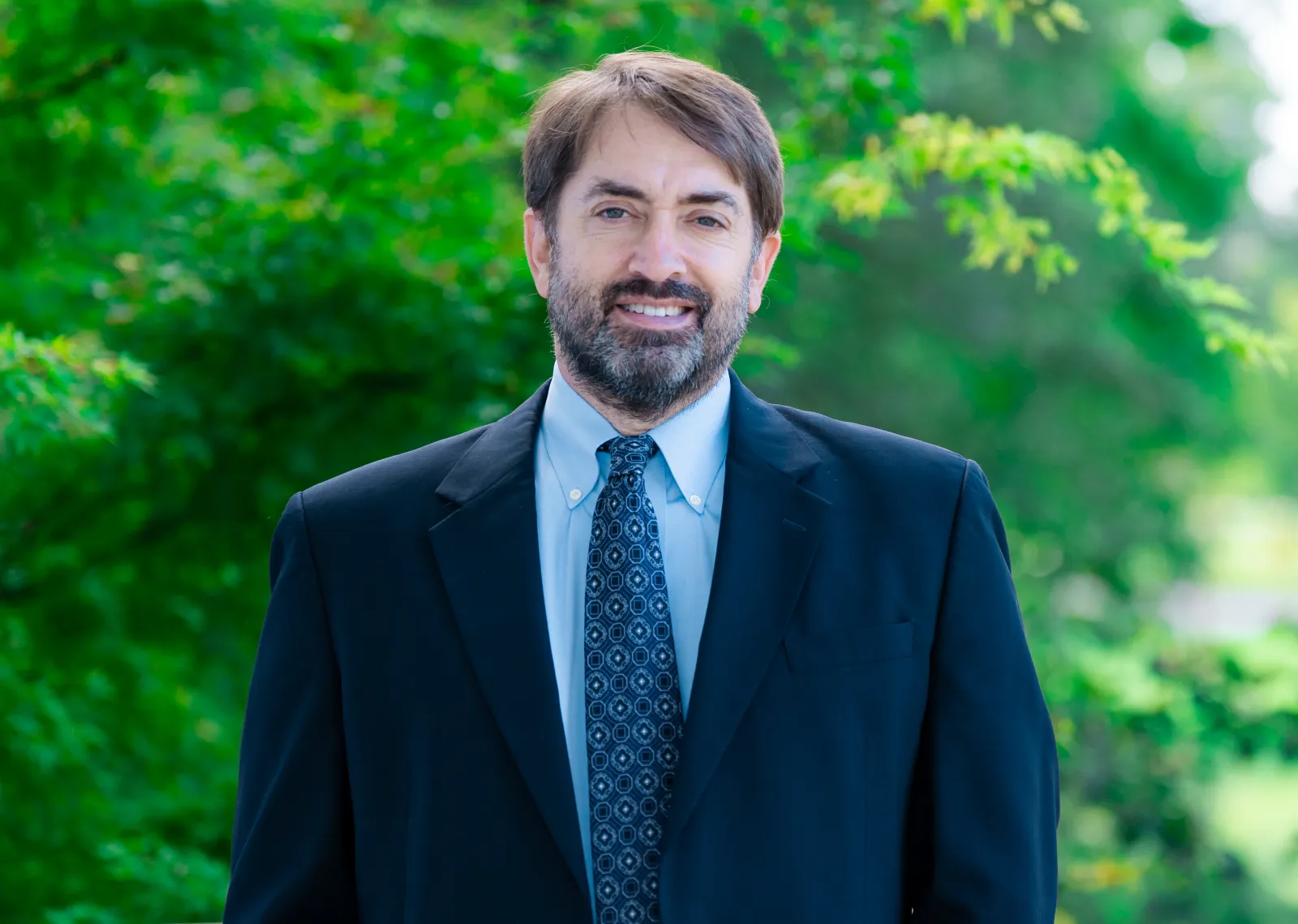
Robert C. Fluhrer Professor of Civil War Studies and History Aaron Astor
“The Civil War is easy to see as two separate regions fighting against each other, but this is a place that’s fluid,” explained Astor, who earned his Ph.D. in American history at Northwestern University in 2006 and bachelor’s degree at Hamilton College in 1995. “This is something that I’ve always embraced in my own research and teaching. It’s how I engage in the public, talking about divided loyalties, the uncertain boundaries between being a solider and civilian and what that means in the context of the Civil War, and the changing status of enslaved people as they’re becoming free.
“The Civil War is a process—a process of the country working through these internal lines,” he continued. “It’s not just an event that begins and ends. It’s a process of rethinking what freedom means. What does citizenship mean? These are elemental questions that we’re still wrestling with.”
Astor has authored several New York Times articles and published books on these research topics, including Rebels on the Border: Civil War, Emancipation and the Reconstruction of Kentucky and Missouri, 1860-1872 (2012) and The Civil War Along Tennessee’s Cumberland Plateau (2015). He has also co-edited the book, Slavery: Interpreting American History (2021). His current book project explores the 1860 presidential election as a grassroots phenomenon from the perspective of four distinct American communities.
“Prof. Aaron Astor is a welcome addition to the History Department, strengthening once again our offerings in U.S. history,” said History Chair Dina Lowy. “He brings with him a passion for and expertise in the American Civil War, local history, and working with newspapers as primary sources. You can feel his excitement about history, this place, and our students every time you talk with him, making him a perfect fit for Gettysburg College. We are fortunate he has joined our community.”
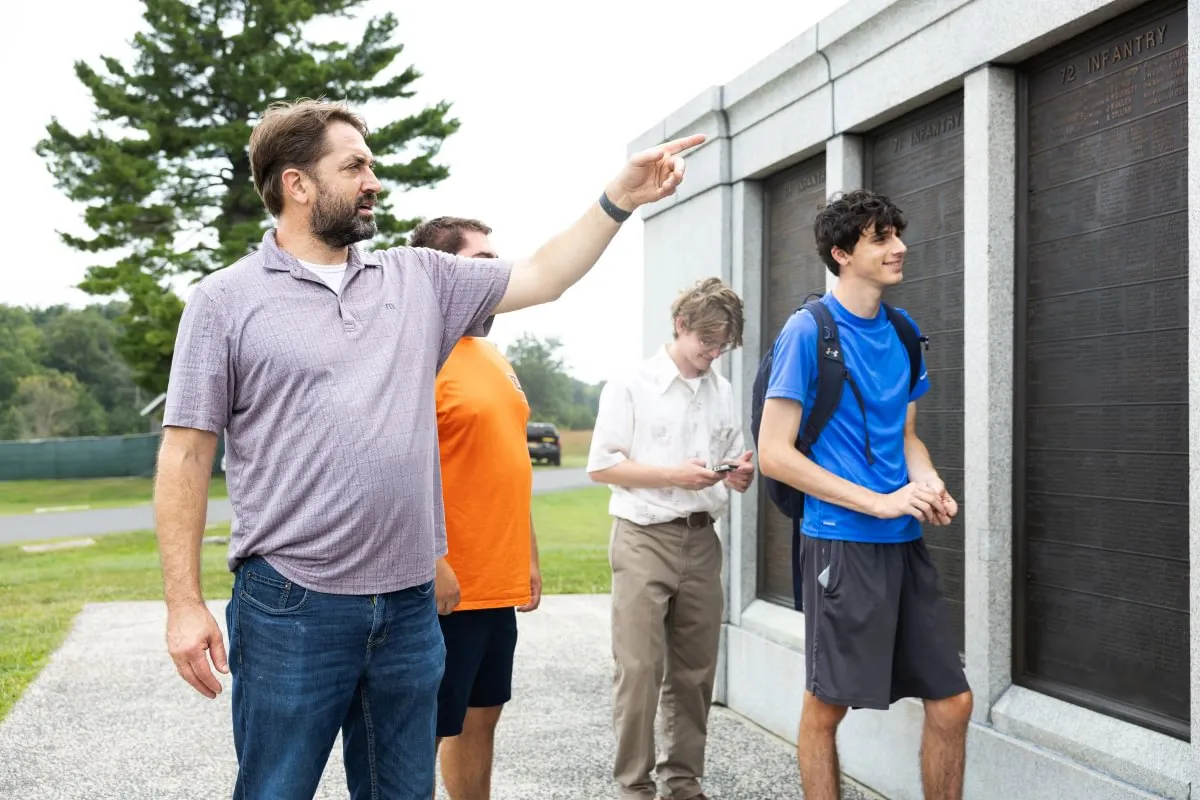
Robert C. Fluhrer Professor of Civil War Studies and History Aaron Astor shares the story of the Pennsylvania Memorial at Gettysburg National Military Park with his students.
After spending the summer attending the Civil War Institute Summer Conference and visiting the battlefield monuments, he participated in the First-Year Walk alongside students, faculty, and staff. For Astor, it was a “powerful” and “sacred” moment experiencing the history of Gettysburg and the College, retracing the same steps taken in 1863 to hear President Lincoln’s Gettysburg Address.
This fall semester, he teaches both introduction and advanced course in Civil War studies, extending his classroom to the battlefield where students can experience history firsthand. During the spring semester, he’s excited to lead a new course, Civil War and The Press, exploring the role of the partisan press during war times. He also plans to include his students in his research and assist students with the Compiler, the Civil War Institute’s scholarly blog.
“We are delighted that Aaron has joined the History Department,” said Gilder Lehrman NEH Chair of Civil War Era Studies and History Jim Downs. “He brings a capacious knowledge of the Civil War era, with particular depth in the history of Pennsylvania, and a real dedication to teaching. I’m especially excited by the plans he is developing to use the Gettysburg battlefield as an extension of the classroom, giving students the opportunity to engage directly with the history they are studying. His presence adds an important dimension to our teaching of 19th-century American history.”
Astor succeeds the late Peter S. Carmichael, who served as the Robert C. Fluhrer Professor of Civil War Studies and director of the Civil War Institute for nearly 15 years. A beloved teacher, mentor, colleague, and nationally respected Civil War scholar, Carmichael left an enduring mark on Gettysburg College. His leadership expanded the reach of CWI’s annual conference, strengthened opportunities for students in public history, and connected thousands of people with Gettysburg and the study of the Civil War era.
Astor’s appointment continues Gettysburg College’s longstanding commitment to Civil War era studies—work uniquely shaped by the College’s location and its connections to one of the most consequential places in American history.