
Building America: Transportation & Health
Take a closer look at American Transportation systems.
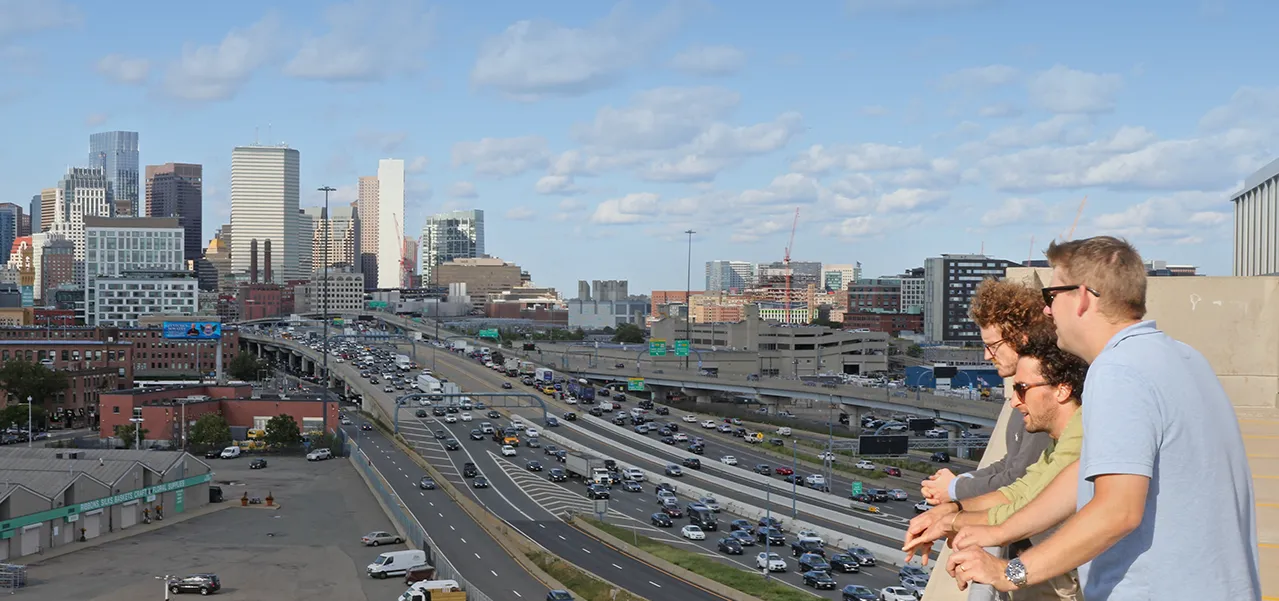
Building America: Transportation & Health is a year-long seminar designed to give students an in-depth look at how Americans travel and the broad societal consequences of that travel. You will meet with transportation professionals, academics, non-profit leaders, and everyday Americans to hear their stories and what they are doing to improve transportation – and reduce its negative consequences – across the US. You will learn about how deliberate transportation policies and highway construction created the unequal world we live in today. You will be challenged to consider the inadvertent consequences of ordinary decisions – how where you live shapes the lives of others, for instance. You will collectively design a policy solution that remedies a particular transportation harm.
Transportation forms the literal connections between everything we do in our lives. We travel to routine destinations like schools, workplaces, and grocery stores. We also travel to doctor’s offices, arenas or stadiums, and restaurants and bars to visit with friends. Without the myriad transportation choices today, we’d be limited to a pretty small geographic area around our homes. Access to a car, bus, bicycle, or subway expands our set of possible destinations. Importantly, though, access to alternative modes of transportation is not equally distributed throughout American society.
At the same time, how we travel has profound consequences for our communities, environment, and health. Highway construction in the mid-20th century destroyed homes and neighborhoods. Transportation accounts for the largest share of greenhouse gas emissions by economic industry, with most transportation powered by fossil fuels. Transportation-related air pollution is a known health hazard and disproportionately harms residents of marginalized communities. This air pollution causes mortality increases for all age groups, higher asthma rates in children, autism spectrum disorder rates in infants and toddlers, and cardio-related hospitalizations among older adults. Transportation also causes nearly 45,000 deaths per year, with nearly 43,000 of these because of vehicle crashes.
In this seminar led by Professor Christopher Rick, we will explore the history of transportation, including President Dwight Eisenhower’s lasting role, and focus on a wide range of policy contexts – rural and urban; cars, buses, and trains; schools, employment, and health care access. We will do as much of our learning “on the move” as we can. We will discuss rural transportation while riding the Gettysburg-Hanover connector and intercity transportation riding Amtrak from Baltimore to Richmond and Syracuse to Newark. As much as we can, we will rely on local public transit to navigate within cities.
Connecting transportation, air quality, and health, we will travel to Baltimore, MD, Richmond, VA, Syracuse, NY and Newark, NJ* to hear from residents of local communities about how transportation-related air pollution affects their lives. We will also install air quality monitors in Richmond and Newark so that environmental justice organizations in these communities can monitor their air quality and advocate for change.
The seminar will conclude with a policy presentation to transportation professionals, industry leaders, and government professionals to propose a policy solution regarding transportation’s impact on American life today.
*cities subject to change
Prospective Applicants
This year-long program is open to rising sophomores, juniors, and seniors at Gettysburg College. Students of all majors with an interest in transportation and health are encouraged to apply. Applicants are expected to be available for all sessions, trips, and activities during the program.
Previous Building America Programs
Fall 2023: Reinventing Education (final report | media coverage)
Spring 2024: Affordable Housing
Ready to Do Great Work?
