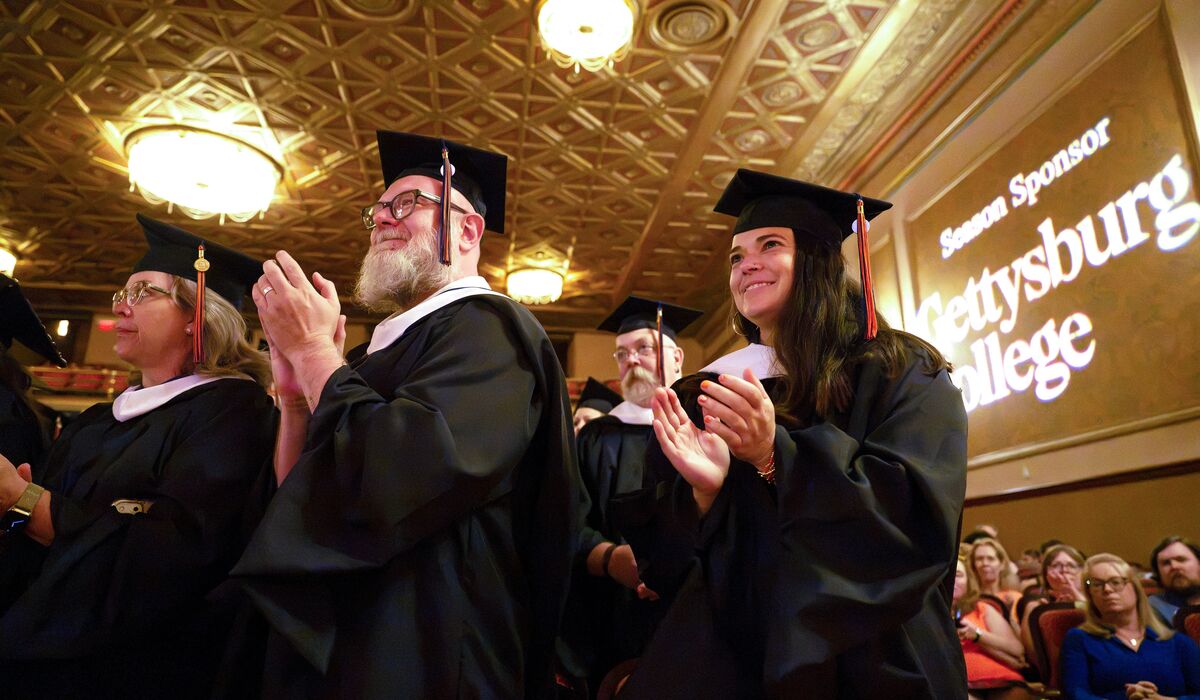
Gettysburg College celebrated the fourth graduating class of its Master of Arts in American History program. Graduates were challenged to bring deeper knowledge, courageous inquiry, and a commitment to truth into classrooms and inspire future generations of citizens.
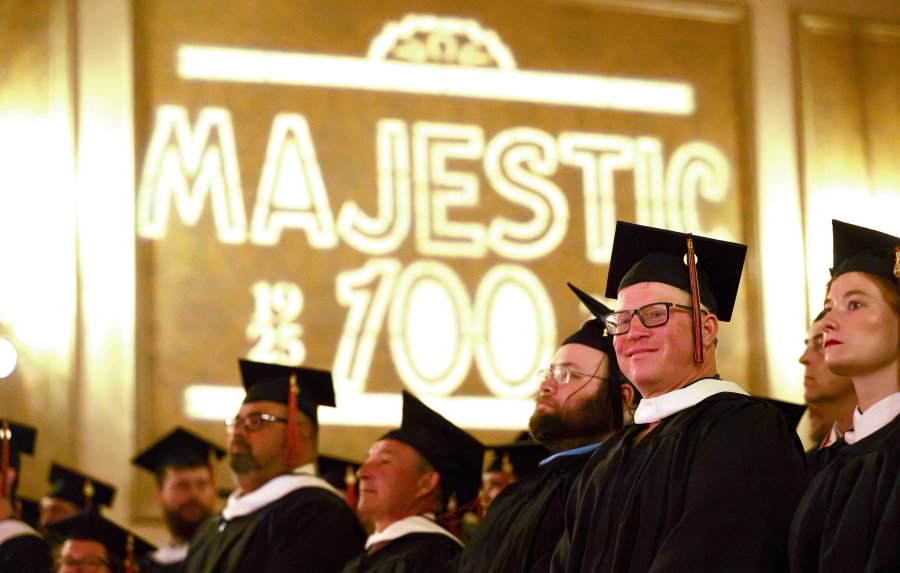
In a place where the nation’s history continues to shape its future, Gettysburg College celebrated the fourth graduating class of the Gettysburg College-Gilder Lehrman Institute Master of Arts in American History program on July 16 at the Majestic Theater.
The ceremony recognized 239 educators who strengthened their knowledge of American history through the fully online graduate program. These graduates are now prepared to bring new perspectives, questions, and insights to schools and learning communities across the country.
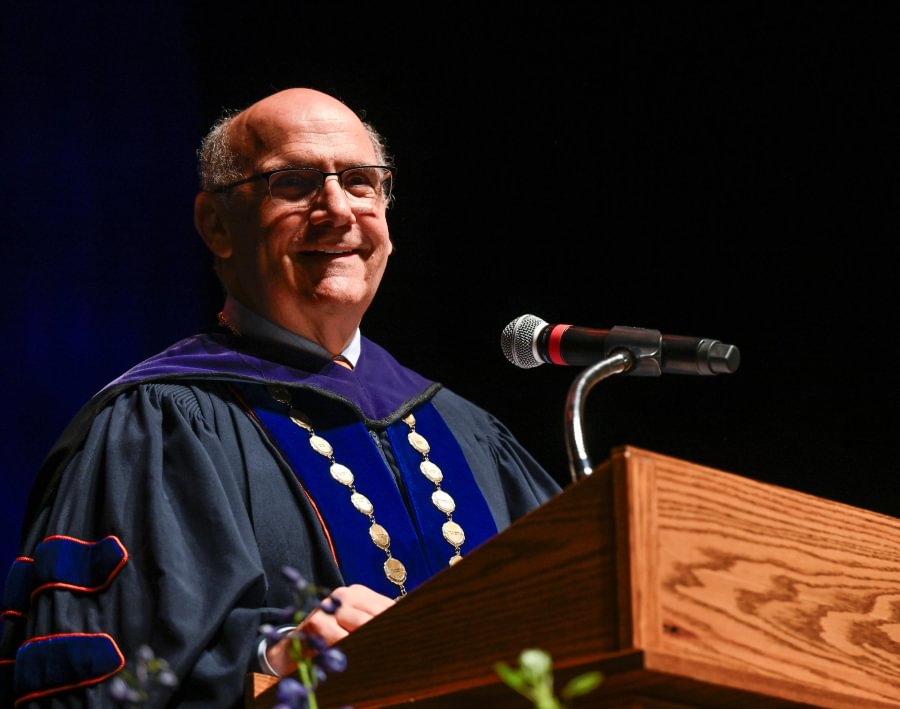
Welcoming the graduates and their families, Gettysburg College President Bob Iuliano reflected on the significance of earning an advanced degree in a town and at a college so deeply connected to the American story.
“I hope you take great pride in what you’ve accomplished and its special significance,” Iuliano said. “I encourage you to take the spirit of Gettysburg with you.”
Launched in 2022, the accredited program serves K-12 educators, community college instructors, district supervisors, museum professionals, and National Park Service employees. Its courses pair the expertise of distinguished historians with opportunities for educators to deepen their content knowledge and enrich the ways they teach American history.
As the United States observes its 250th anniversary, Iuliano invited the graduates to consider the role of vision and courage throughout the nation’s history. The principles expressed in the Declaration of Independence, he noted, represented not simply an achievement but an audacious dream—one that required years of struggle, sacrifice, and perseverance to move closer to reality.
“Be a shining example for your students and your colleagues of what’s possible—and why teaching is so life-changing.”
– Gettysburg College President Bob Iuliano
That same spirit, he said, can be found in Gettysburg, where the events of 1863 altered the course of the Civil War and President Abraham Lincoln later articulated the “unfinished work” still facing the nation in his Gettysburg Address.
“As educators, you are entrusted with so much more than teaching names and dates and battles,” Iuliano told the graduates. “You’re entrusted with helping tomorrow’s leaders understand that our history is the story of us—filled with dreamers whose courage reverberates to this very day.”
He urged the graduates to ask difficult questions, embrace complicated subjects, and demonstrate to their students and colleagues why teaching can be transformative.
“Our world needs dreamers of profound courage in our classrooms,” he said. “Be a shining example for your students and your colleagues of what’s possible—and why teaching is so life-changing.”
James G. Basker, president and CEO of The Gilder Lehrman Institute, introduced Commencement speaker Barbara Perry, the J. Wilson Newman Professor of Governance at the University of Virginia’s Miller Center and co-chair of its Presidential Oral History Program.
Perry began by honoring the teachers who had shaped her own life. She recounted the educators who first recognized and nurtured her abilities and the professors who encouraged her study of political science and opened doors throughout her academic career.
Drawing on former Supreme Court Justice Sandra Day O’Connor’s observation that everyone can name at least one teacher who inspired them, Perry asked the graduates and guests to pause and remember those educators aloud.
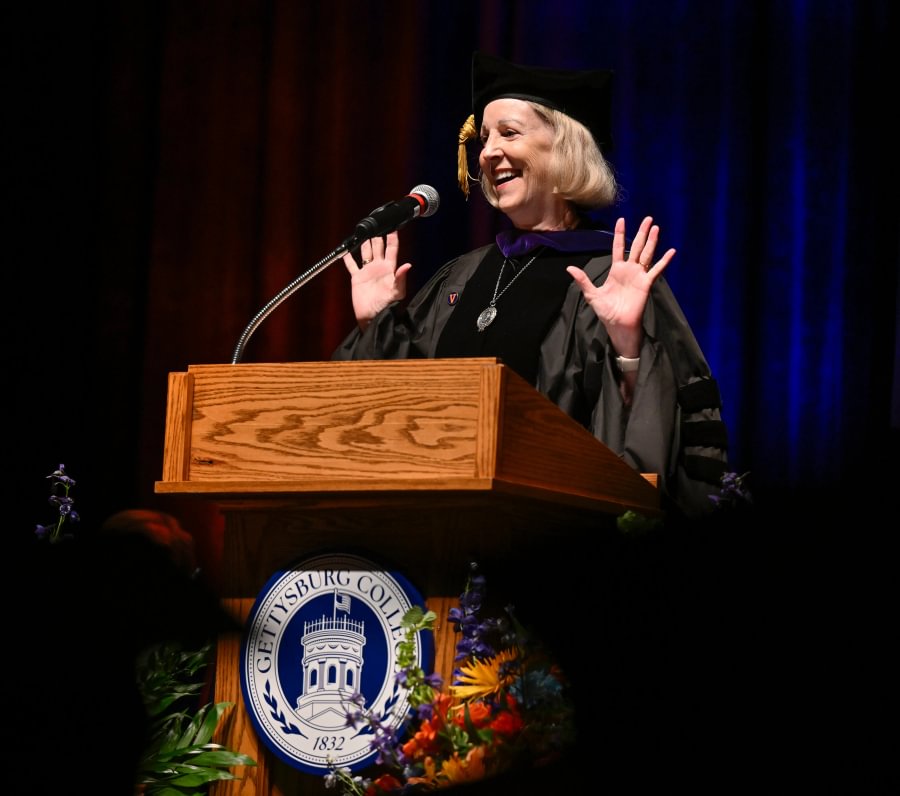
Her message highlighted how teachers can encourage inquiry, stimulate intellectual curiosity, and promote care through learning to their students. That influence, she suggested, now rests with the graduates as they return to their classrooms equipped with the knowledge and insight gained through the master’s program.
Perry then turned to the words of President John F. Kennedy, whose life and presidency have been central to her scholarship. She revisited Kennedy’s 1963 commencement address at American University, in which he called upon people and nations to look beyond their differences and recognize their shared humanity.
In a world divided by international conflict and political polarization, Perry said, Kennedy’s appeal to pursue common ground remains especially meaningful for teachers confronting difficult topics in their schools and communities.
“You have been and are now more so than ever equipped to teach the history of our democratic republic.”
– Barbara Perry, J. Wilson Newman Professor of Governance at the University of Virginia
She also cited Kennedy’s defense of the free exchange of information and Thomas Jefferson’s commitment to following truth wherever it may lead. Together, those ideas offered the graduates a charge: protect freedom of thought, welcome rigorous inquiry, and give students the tools to distinguish truth from falsehood.
“What you share with your students—in addition to the vast knowledge of history you impart to them, and now that is bolstered by all you have acquired with this new master’s degree from Gettysburg and through The Gilder Lehrman Institute—is a commitment to our freedom of thought, as Thomas Jefferson famously expressed it,” Perry said.
“You have been and are now more so than ever equipped to teach the history of our democratic republic,” Perry said, as she positioned the graduates’ responsibility to education amid the founding of the nation 250 years ago and its survival on the fields surrounding Gettysburg in 1863.
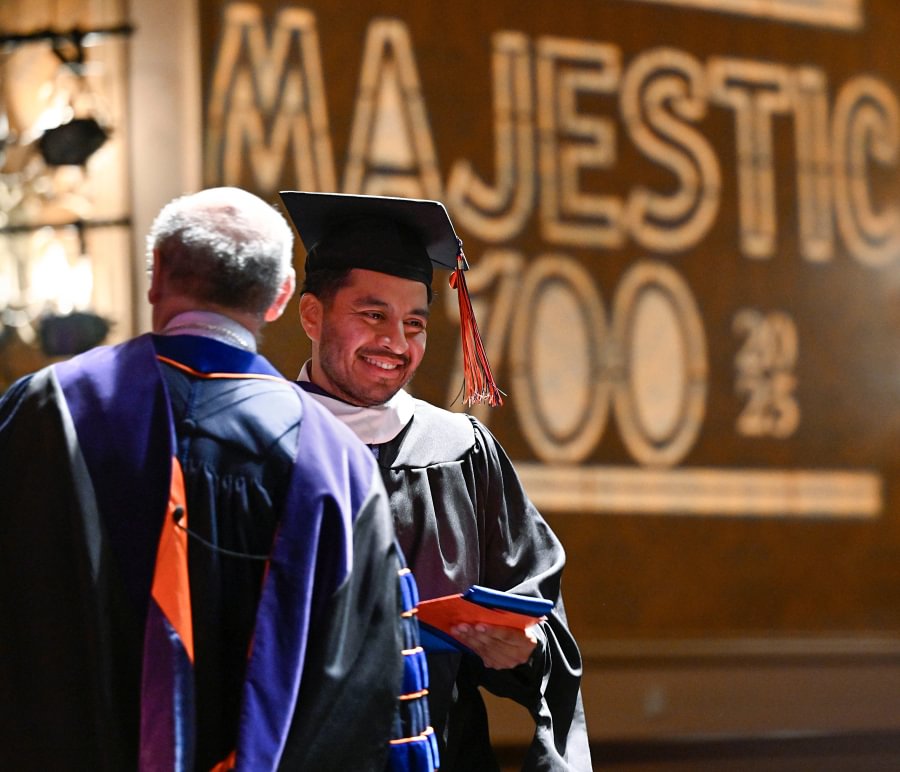
For Zachary Polley ’19, M’26, the ceremony represented both a new milestone and a return home. A history and international affairs double major as an undergraduate, Polley described earning a second Gettysburg degree as “almost surreal.”
Although the master’s program was completed virtually, he found the same academic support, faculty mentorship, and freedom to pursue the interests that defined his undergraduate experience at Gettysburg.
“Gettysburg has felt more like home than pretty much anywhere else I’ve been,” Polley said. “The support, the resources, and the professors—and the way that we had so much leeway in being able to pick and choose how we studied and what we studied—helped us really find what we were passionate about all over again.”
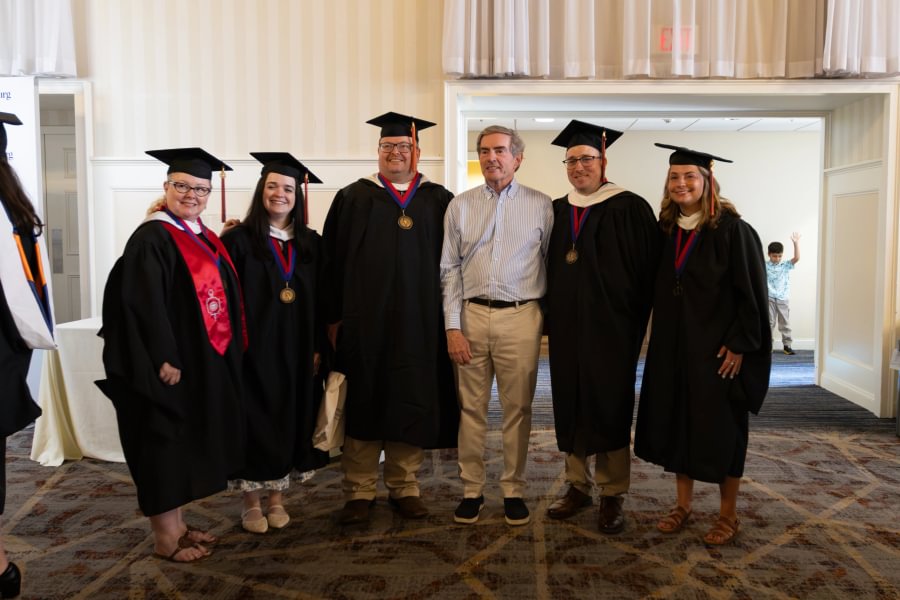
Polley said his two Gettysburg degrees will help him connect historical knowledge with contemporary issues and show future students that studying history has practical value.
“History has always been my passion, and I’ve always had a passion for education,” he said. “I think those all intertwine in a way that I’ll be able to pass on that knowledge to future generations.”
At the conclusion of the ceremony, Iuliano entrusted the graduates with carrying their learning into the lives of others.
“May you encourage your students to step forward with courage and conscience,” he said. “May you challenge them to question, to explore, and to seek truth in all that they do. And may you always inspire them to be the dreamers our world needs.”

Related Links:
External Links:
By Corey Jewart
Photos by Jason Minnick, Alyssa Riegel
Posted: 07/21/26