Approximately 3.4 million people in the United States have epilepsy, according to the Centers for Disease Control and Prevention (CDC). Yet only 70% of individuals with this brain condition that causes recurring seizures will respond to medication, said Brin Freund ’06, a neurologist at the Mayo Clinic.
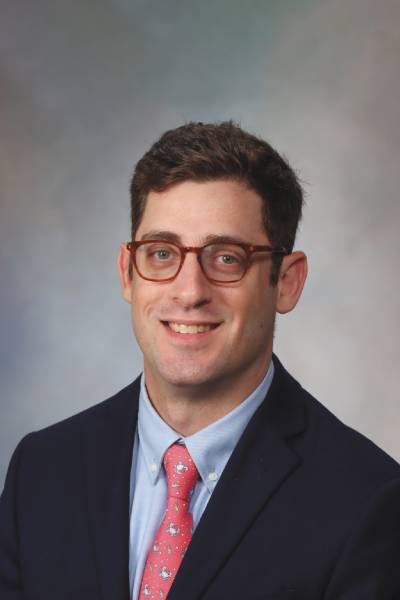
“I partner with patients to manage their epilepsy, and we always hope that medications will stabilize their condition, but 30% of the time, they won’t,” he said.
Freund and the Mayo Clinic are using groundbreaking treatments to improve the lives of patients with epilepsy who don’t respond to medication.
Freund was recently part of a care team that treated a teenager who couldn’t sleep due to multiple seizures each night. She’s now in college and seizure-free thanks to Freund, his team, and a new FDA-approved brain implant called NeuroOne. The device uses minimally invasive depth electrodes to diagnose and treat medication-resistant epilepsy. Freund and his team’s work was featured last year on ABC’s “Good Morning America.”
Treatment for epilepsy that doesn’t respond to medication typically involves brain surgery, which consists of removing or ablating—often by using heat—the area of the brain responsible for seizures. This method can “feel rudimentary,” said Freund, because of the difficulty in determining the exact origin of seizure activity within the brain.
NeuroOne allows Freund and his team to combine seizure location diagnostics and ablative treatments into one less invasive procedure. The procedure’s success can be measured by monitoring the brain afterward.
Before Freund was at the forefront of cutting-edge neurological treatments, he was a teenager impacted by the death of a beloved aunt from breast cancer.
“Losing someone you’re close to in the prime of life sticks with you. Seeing the impact of her care left an impression and inspired my desire to be part of the medical field,” he said. His mother had diabetes, which also motivated him to pursue a medical career.
When looking at colleges, Freund consulted with family friends who are doctors. They advised him to focus on finding a school that could provide a more intimate, personalized experience where he could build deep relationships in small classes and have strong mentors.
“I would challenge you to find a field that has had more technological and clinical improvements over the last 20 years than neurology.”
“I looked at a lot of colleges, but Gettysburg fit the bill perfectly,” said Freund, who was a member of Phi Kappa Psi. He met his wife, Charlotte Pastorius Freund ’03, with whom he shares two children, through his Gettysburg friend circle.
Freund, who majored in biology at Gettysburg, graduated from Temple University School of Medicine and spent four years as a neurologist for the U.S. Navy before joining the Mayo Clinic in 2023.
Before beginning medical school, Freund researched diabetes and cardiovascular disease in animals at Thomas Jefferson University—an interest nurtured by Gettysburg’s support of a senior-year research study. He and a peer wanted to study diabetes in mice, but the project required relatively expensive equipment to measure metabolic activity.
“Gettysburg didn’t hesitate to support us and find the funding. I think about that all the time—how much the College is truly committed to student development,” he said.
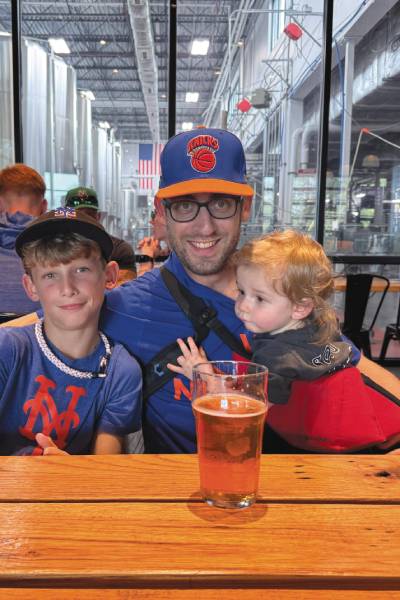
While Freund credits every faculty member in Gettysburg’s Biology Department with providing knowledge, guidance, and support, he acknowledges the transformative mentorship of Biology Prof. Emerita Kay Etheridge.
“I had the best mentor in Dr. Etheridge, for whom I was also a teaching assistant during my senior year. She taught me so much academically, but she also imparted a love of teaching and the skills needed to be a great mentor to others,” he said.
Mentorship has been a cornerstone of Freund’s journey. At the Mayo Clinic, Freund guides medical students as the associate clerkship director. He is also an adjunct assistant professor at Johns Hopkins University School of Medicine.
“I find mentoring and instructing students really fulfilling, and that spark started at Gettysburg. It was always evident how much the faculty enjoyed teaching. I think that sets the College apart, especially from bigger research institutions,” said Freund. He likewise recognizes the value of a liberal arts education in helping him to think critically and become a strong writer.
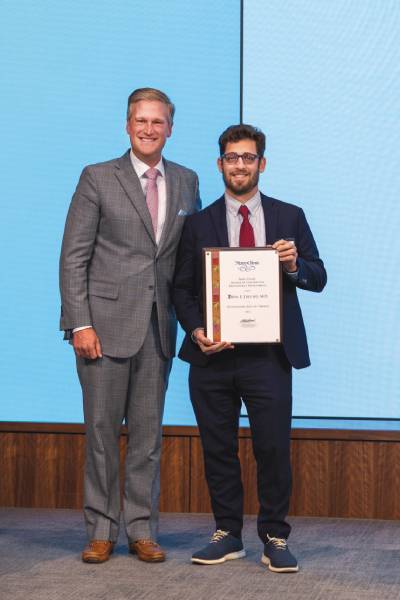
In addition to his work with NeuroOne, Freund is co-authoring a handbook on the electroencephalogram (EEG), a medical test measuring the brain’s electrical activity, with his mentor at the Mayo Clinic, Dr. William Tatum.
As for NeuroOne, the Mayo Clinic continues to be one of only a handful of providers using this technology to give hope to patients with treatment-resistant epilepsy, with Freund on the front lines.
“I would challenge you to find a field that has had more technological and clinical improvements over the last 20 years than neurology,” Freund said. “It’s incredibly rewarding to help restore quality of life to individuals for whom there was previously no treatment available and to help train the next generation who will bring the field even further.”
by Katelyn Silva
Posted: 03/20/26