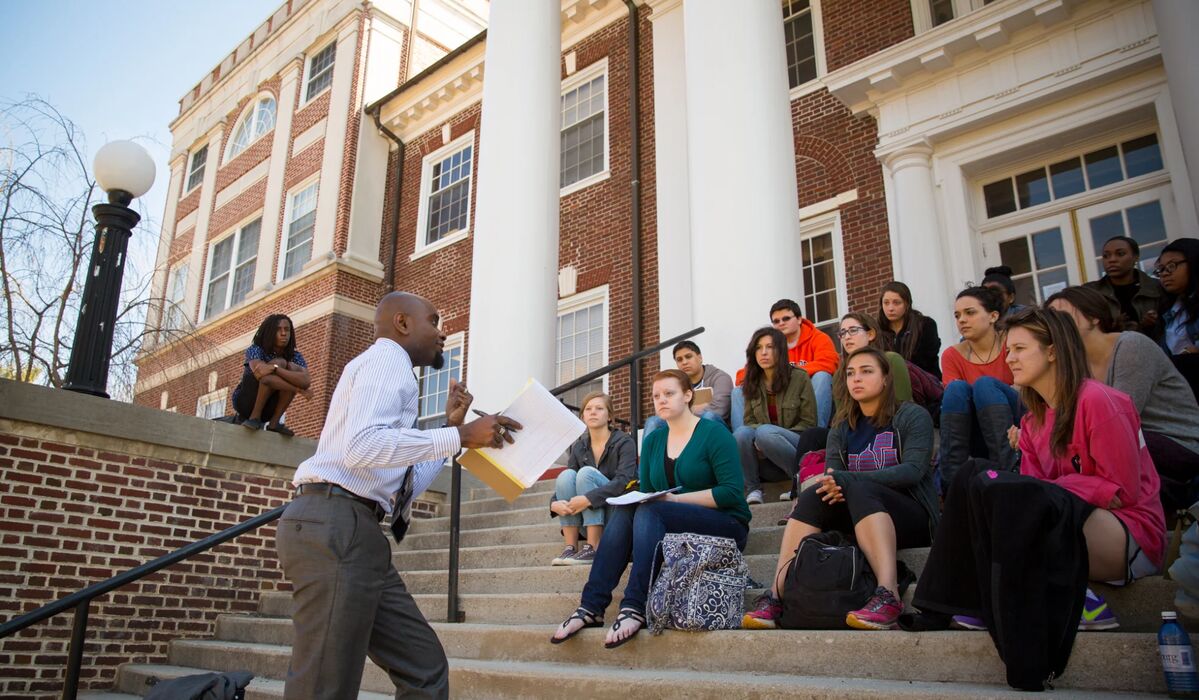
Founded in 1986, the Africana Studies program at Gettysburg College continues to shape critical thinkers and changemakers through interdisciplinary study of the peoples of the African continent throughout the African Diaspora and their enduring impact on society.
For 40 years, the Africana Studies (AFS) program at Gettysburg College has done more than expand a curriculum—it has inspired students to explore history, power, identity, and their responsibility to the world around them.
In classrooms that center the histories and lived experiences of people of African descent, students learn to interrogate systems, challenge assumptions, and connect the local to the global. Each year, the program offers more than a dozen courses and enrolls approximately 250 to 300 students.
But its deepest impact is measured not in enrollment figures, but in transformation.
“I have met some amazing students who have majored or minored in AFS, who care deeply about transforming the world, and who realize that we all must model this transformation,” said Daria L. & Eric J. Wallach Professor of Peace & Justice Studies and Africana Studies Chair Hakim Mohandas Amani Williams. “AFS provides the inspiration and tools for this kind of work.”
As the program marks its 40th anniversary on campus Feb. 27–28, it celebrates not only its longevity, but also four decades of shaping thinkers, leaders, and advocates.

Foundations and vision
Africana Studies began in 1986 as African & African American Studies, brought to campus through the advocacy of Economics Prof. Derrick K. Gondwe, Economics Prof. Emeritus William “Bill” Railing, History Prof. Emeritus Frank Chiteji, and Gettysburg College President Emeritus Charles E. Glassick.
Their work institutionalized a field of study that students and faculty recognized as essential to a liberal arts education. The first course—AFS 130: Introduction to African American Studies—was offered in 1987. Since then, the program has continued to grow across disciplines, inviting students and faculty to engage in history, economics, English, sociology, religious studies, and many more areas of the curriculum.
“Africana Studies has offered courses that simply do not exist anywhere else on campus,” noted Africana Studies Prof. Jennifer Bloomquist, who previously chaired the program. “Through our teaching and scholarship, Africana Studies has functioned for four decades as the Black intellectual center of the College, a role we have carried with care and responsibility.”
In 1992, Prof. Deborah Barnes became the first faculty member hired directly into the program, strengthening its academic foundation. A pivotal evolution came in 2005 under Prof. Mwangi wa Gĩthĩnji, who oversaw the renaming of the program to Africana Studies and guided the establishment of the major. The shift signaled a broader diasporic vision—linking Africa, the Caribbean, Europe, and the Americas in a shared analytical framework.
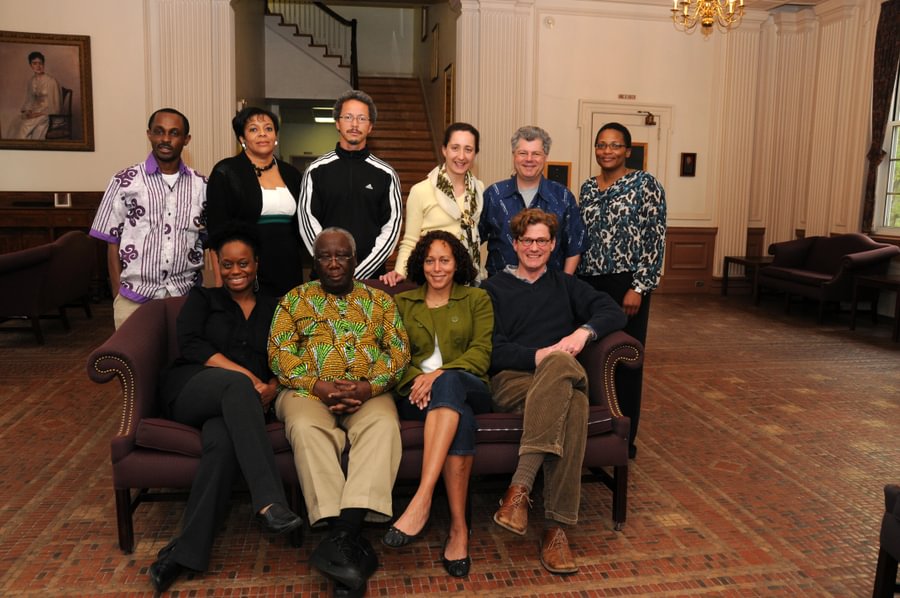
Bloomquist arrived in 2003 as the College’s first Derrick K. Gondwe Fellow, not long after the arrival of History and Africana Studies Prof. Scott Hancock. Hancock, Bloomquist, Williams, and Prof. Abou Bamba have served as program chairs on multiple occasions, guiding the influence and impact of the Africana Studies program across generations of students.
“Working with professors such as Prof. Williams and Prof. Bloomquist inspired my own desire to pursue academia,” said Joseph Recupero ’17, who is pursuing a Ph.D. in anthropology from the University of California-Davis after graduating from Gettysburg with degrees in anthropology and political science. “From them I learned how to approach difficult questions in academic settings, how to infuse passion and excitement as a pedagogy, and to always question my own thoughts or assumptions to become a better educator.”
The Derrick K. Gondwe Memorial Lecture on Social and Economic Justice—approaching its 20th anniversary—continues to anchor its public scholarship. Endowed by William and Gayle Keefer, the annual event welcomes distinguished scholars and public intellectuals, including American political activist, professor, and author Dr. Angela Davis; Black Lives Matter Movement co-founder Ayọ Tometi (formerly known as Opal Tometi); and retired Olympian and professional football player John Carlos.
Yet the history of Africana Studies is not only about milestones. It is about continuity—of purpose, community, and educational impact.

A center for community
From its earliest days, Africana Studies has served as both an academic program and an intellectual home. Through interdisciplinary teaching and scholarship, it has created space for rigorous inquiry grounded in lived realities.
“The coursework and major are interdisciplinary and speak to experiences across the diaspora, and the professors made students like myself, from marginalized communities, feel safe and created a community for us,” recalled Dr. Alexa LaBoy ’18, an Africana studies major who currently works as the assistant director of Centro Latinx at Emory University.
That sense of home—intellectual, relational, and affirming—has shaped generations of students. It is a theme that echoes across alumni reflections, regardless of career path, and resonates with generations of faculty who have found a welcoming community in Africana Studies. According to Bloomquist, Africana Studies has long been home to many Black faculty members at Gettysburg.
“Being part of Africana Studies has been very rewarding for me,” stated Africana Studies Prof. and Economics Chair Linus Mabughi Nyiwul. “It’s provided me with opportunities I would not have had access to if I were solely appointed to Economics. The value of the program within the College cannot be overstated. I would say this is another home for me—my second home here at Gettysburg College.”
Education in action
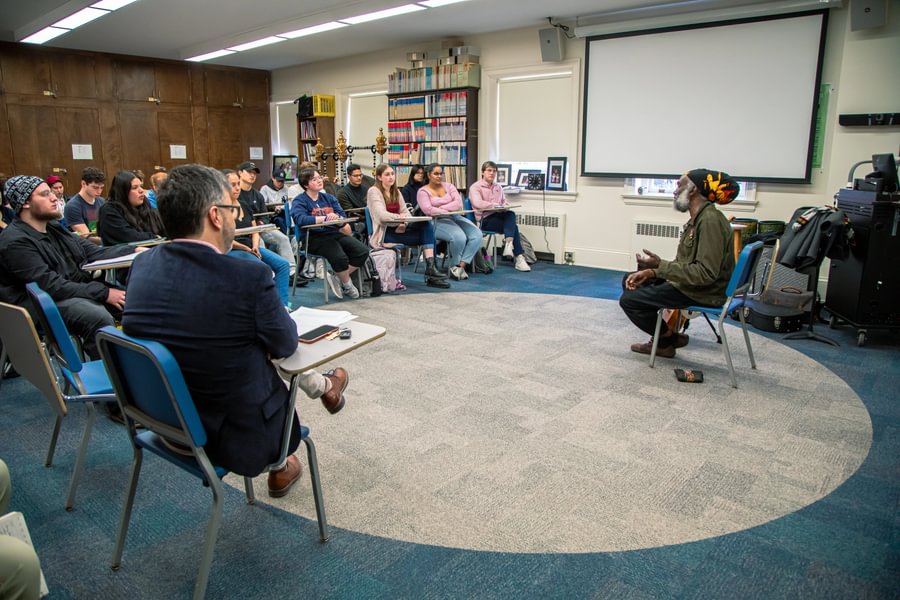
For many students, Africana Studies begins as a class and becomes a lens through which they see the world.
Deonte Austin ’11, who was born and raised in Baltimore, remembers one particular moment in Bloomquist’s African American English course that shifted his understanding of language and identity.
“It was my first time ever hearing the terms ‘African American Vernacular English,’” recalled Austin, who double-majored in Africana studies and women, gender, and sexuality studies. “I remember thinking, ‘Why has no one ever taught me this before?’ It made me realize how language is judged—and how that judgment affects how we see people, including ourselves.”
For Austin, now a senior instructional designer in hospital billing and health information management at Johns Hopkins Medicine, that insight was not merely academic.
“AFS taught me advocacy, problem solving, and critical thinking,” Austin said. “I use those skills every day. When I’m building training materials or thinking about how information is communicated in health care, I’m drawing on what I learned about equity and systems.”
His experience reflects a broader pattern: Africana Studies equips students with analytical tools that travel across industries—from health care to education and public service.
Mercedes Cao ’25 from West Hartford, Connecticut, is pursuing a master’s degree in Pan-African Studies at California State University, Los Angeles. She sees the Africana Studies program as the foundation for her academic and professional ambitions.
“Through these courses, I learned the importance of critical thinking and of consistently questioning the world around us,” she said. “Africana Studies has truly changed my life by showing me the power of education, faculty who care about student learning, and the lasting impact of this field of study.”
Shaping the future
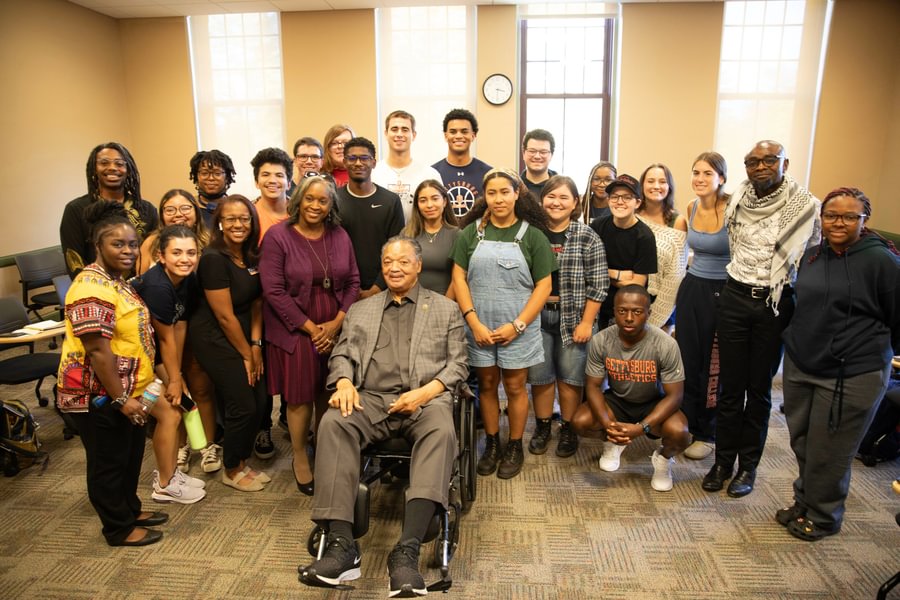
On Feb. 27-28, students, faculty, and alumni will gather for interdisciplinary panels and conversations reflecting the breadth of Africana Studies. Returning speakers include longtime faculty leaders and graduates whose careers in health care, higher education, research, and public service demonstrate the program’s far-reaching impact.
The discussion panels will be held on Saturday, Feb. 28, in the College Union Building. Conversations will focus on the roots of Africana Studies at the College, experiences within the program and career outcomes after graduation, and the future direction of the field.
Forty years after its founding, Africana Studies continues to prepare students to think critically, engage globally, and pursue change with purpose.
“Perhaps the clearest measure of what Africana Studies has meant,” Bloomquist said, “is the enduring strength of our alumni relationships—connections that extend well beyond majors and minors to include countless graduates whose worldviews were shaped in lasting ways by their engagement with Africana Studies at Gettysburg College.”
Explore all of Gettysburg College’s academic programs and discover where your passions can lead.

Related Links:
By Corey Jewart
Photos by Jason Minick, Hang Lian, Abbey Frisco, and Corey Jewart
Posted: 02/23/26