
Prof Path: Randy Wilson

Growing up in the American West, Environmental Studies Prof. Randy Wilson P’20 relished time spent in the outdoors. Through encounters with public lands, forests, and national parks, Wilson initially aspired to be a forest ranger or park ranger.
Although he couldn’t have predicted the pathway his career would ultimately take, he also wouldn’t trade the unexpected serendipities along the way for anything.
After receiving his bachelor’s degree from Humboldt State University and his master’s from the University of Colorado-Boulder, Wilson met and married his wife, Robin. In 1994, the two headed east to Iowa, where they completed their doctoral programs at the University of Iowa—Wilson in geography and his wife in public health. Before finishing her program, however, Robin received an offer for a postdoctoral opportunity at the National Cancer Institute in Washington, D.C. The couple then moved to Frederick, Maryland.
Upon settling in Maryland, Wilson secured a teaching position at Gettysburg College. Since his first visit to campus in 2000, Wilson continues to marvel at the “friendliness” of the College, “how personable, welcoming, and friendly everyone I’ve met has been,” he said. “Gettysburg has a feeling of community about it. It has this global reach and wonderful network.”
For the past 26 years at Gettysburg, Wilson has taught courses covering environmental history and policy, natural resource management, and the geography of the American West. Throughout his more than two decades of teaching, he has worked with countless Gettysburg students on research projects that have tackled challenging and often controversial subjects such as park accessibility and the reintroduction of wolves into national parks.
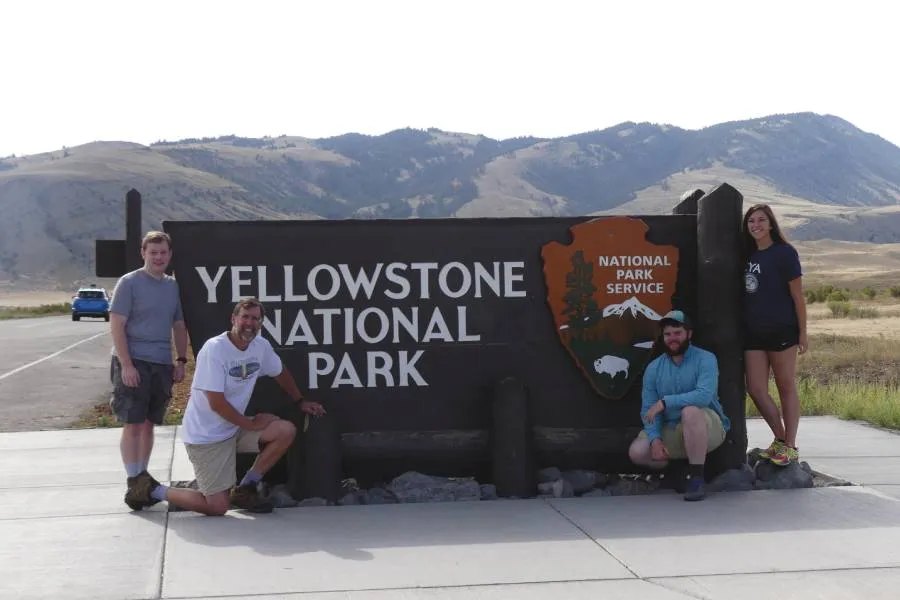
Since 2004, Wilson has brought students to Colorado for his summer field course, The Rocky Mountain West: Physical & Cultural Geography. They have also accompanied him on research excursions to Wyoming, Montana, New Mexico, and Arizona. These ventures allowed students to make their own contributions to environmental studies.
In addition to teaching, Wilson has served as the faculty advisor for Gettysburg’s student-run organic garden, the Painted Turtle Farm, and is a founding member of the Campus Sustainability Advisory Committee. He’s also a member of the Faculty Advisory Committee for the Eisenhower Institute.
As a teacher and scholar, Wilson has consistently maintained an interest in educating people about the importance of public lands and the need to safeguard our environment. His first book, “America’s Public Lands: From Yellowstone to Smokey Bear and Beyond” (Rowman & Littlefield Publishers, 2016), was named an Outstanding Academic Title of the Year from Choice Reviews. The book won the John Brinckerhoff Jackson Prize from the Association of American Geographers.
His latest work, “A Place Called Yellowstone: The Epic History of the World’s First National Park” (Counterpoint, 2024), has also received critical acclaim. In this book, Wilson highlights the park’s significance in American history. He also delves into the cultural and ideological mindsets that have contributed to conflict and tension since Yellowstone was established as America’s first national park in 1872. Early last year, “A Place Called Yellowstone” was named the winner of the 2025 Barbara and David Zalaznick Book Prize in American History by The New York Historical.
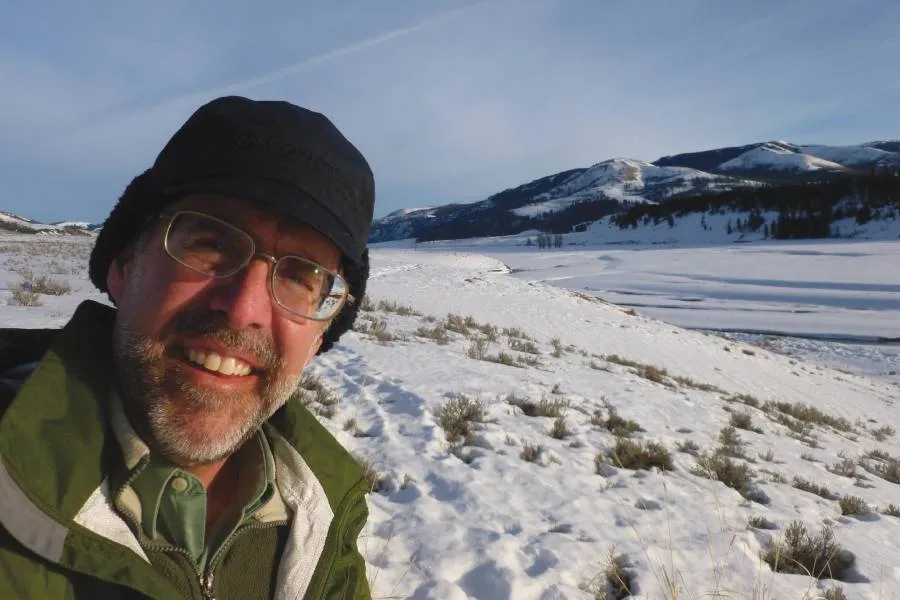
Amid the international and national accolades and Stoles of Gratitude he’s received, Wilson remains humble about his work. Much like the legendary singer-songwriter John Denver, who celebrated nature and exuded a passion for the environment, Wilson communicates to his students the importance of environmental stewardship through his teaching and research.
“I hope that my students not only learn the importance of nature and the environment, but that the knowledge they’ve gained at Gettysburg can make a difference in addressing real-world problems.
“If the work that they’re doing contributes in some way to solving a problem, then there’s a lot of satisfaction in that,” he said. “Above all, I encourage them to have adventures and new experiences, and to say yes to opportunities when they come along because you never know where they’re going to lead.”
5 countries in which he lived, studied, and conducted research abroad
8 years spent researching Yellowstone National Park
9-year period when Wilson worked as a wrangler on a Colorado dude ranch before and after graduate school
16 summer field course experiences he’s hosted for students in Colorado
20,000+ miles traveled by van with students throughout the Rocky Mountains in the West