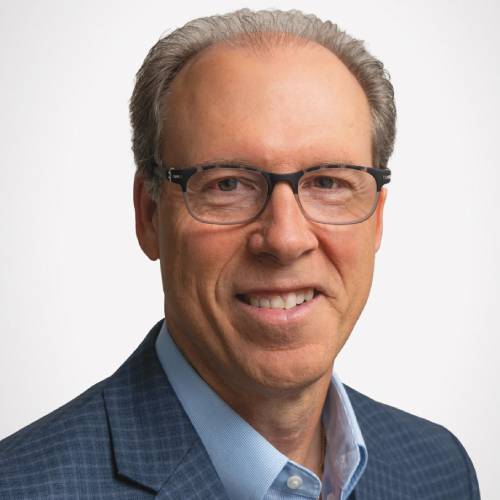
Neil Bryant ’82
Vice president, coaching and leadership development,
Bluepoint Leadership Development
Today, leadership happens one conversation at a time. Long gone are the days when titular authority was equated with leadership. The world and workplace have evolved from that simplistic perception.
With fluid work settings, global cultural integration, and emerging technologies, the ability to orchestrate resources—human and otherwise—to create positive change requires a fine set of skills. These all begin at the interpersonal level. Leadership is a social construct—it is people-oriented. Therefore, there must be alignment between leaders and followers. Exceptional leaders understand themselves and know how to manage their capabilities in ways that enable others to do the same. It’s how great teams achieve common goals.
The root of this dynamic is conversation based on balancing speaking and listening, questioning and curiosity, and genuine appreciation for perspectives. This leads to trust—the foundation for the leader-follower relationship.
Our Garthwait Leadership Center (GLC)is at the forefront of teaching leadership skills to students and alumni. Check it out!

Adrienne (Rahs) Heffelfinger ’12
Senior finance manager at Olympus Corporation of the Americas
“Effective leaders demonstrate empathy of individuals from a variety of backgrounds and experiences, utilizing clear communication and a strong sense of purpose to unify and motivate teams toward common goals.”
The above is an excerpt from a passage I wrote during a retreat with the GLC during my senior year. We were tasked with describing our leadership style and key leader qualities. Having participated in athletics for most of my life, I had consistently assumed leadership roles within my teams. However, it was not until my experiences with the GLC that I truly reflected on and analyzed the qualities required to be an effective leader.
While the above statement, which I wrote more than 10 years ago, remains consistent with my overarching leadership strategies today, I believe that the most successful leaders continually pursue personal growth and self-reflection. Applying insights into practice equips you to inspire and influence those around you, while leading with integrity and accountability.

Mary Huegel ’26
Biochemistry and molecular biology major
I have always had an innate desire to lead. In everything I do, I seek upward growth and never settle for disengagement. Whether serving on the volleyball team’s leadership council, working as an organic chemistry teaching assistant, managing staff as an Ortenzio Fitness Center coordinator, leading as vice president of Sceptical Chymists, or acting as director of academic affairs in Alpha Delta Pi, I consistently pursue leadership opportunities.
Leadership varies across disciplines. Running an experiment demands level-headedness and attention to detail, while leading on the court requires energy and inspiration. I cannot act like a research assistant on the court any more than I can shout ace cheers during a muscle incubation. A good leader must be adaptable, adjusting to best guide those around them.
Leading does not come with overt glory. Mottos “leaders eat last” and “give more, expect less” summarize the selflessness of a leader. The true reward is inspiring growth in others. Gettysburg volleyball emphasizes leaving the program better than you found it. I strive to extend that mindset into all my campus involvements, forming leaders of tomorrow.
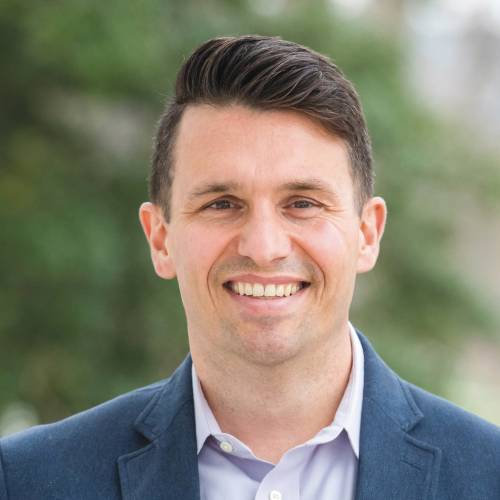
Andy Hughes
Executive director of the Garthwait Leadership Center
The purpose of leadership is change. Leaders and followers participate in the process of leadership to respond to or to ignite change. How this leadership happens looks different depending on how power is used.
Traditional notions of leadership as command and control, or power-wielding, are still pervasive today. Organization hierarchies have flattened over time, but we continue to accept that the power of leadership sits at the top.
Rather than power-wielding, what if leadership became power-giving?
At Gettysburg, we prepare students to lead through empowerment “toward effecting change for the greater good.” For nearly two centuries, we’ve embraced this mission and emerged as a national leader in promoting leadership for public purpose. As we celebrate the 15th anniversary of the GLC, I believe we are more committed—and better equipped—than ever to develop students and alumni who lead this way.
We believe in a type of leadership that serves for and with others. Leadership grounded in action. Leadership that is consequential. Leadership that empowers. Leadership that endures.
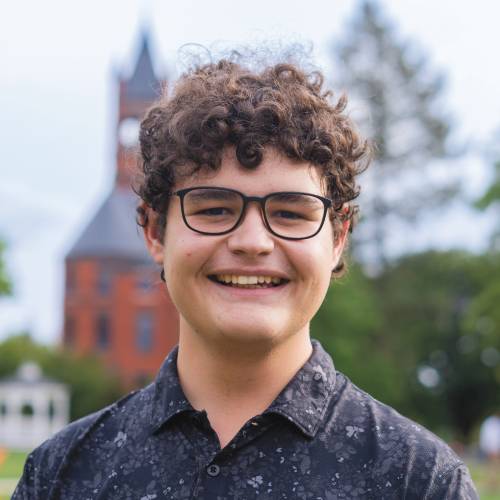
Alfredo Roman Jordan ’26
Physics major, mathematics minor, Student Senate president
To me, leadership is about connection. Serving in the Student Senate has shown me that leaders are not just decision makers; they are bridges. On one side are students who want their concerns heard, and on the other are administrators who guide the College. Leadership is about bringing those voices together, making sure both sides understand each other, and making sure no one feels left out.
A lot of the time, that means listening first. It means paying attention to what students are experiencing and then sharing that honestly with administrators. It also means helping administrators explain the reasons behind policies so that students know they have been considered. When that bridge is working, trust grows, and progress follows.
At Gettysburg, I have learned that leadership is not about standing above others but about standing in the middle, helping people meet in the middle, and keeping the conversation going.