Housed within Special Collections and College Archives at Musselman Library are objects whose presence reflects hundreds of years of rich historical context. From rare books and handwritten letters to works of art and campus artifacts, the significance and memories associated with these materials are preserved at Gettysburg.
In this issue, we’re highlighting five of the oldest items in our collections. Each offers a glimpse into a different era of history. Together, they remind us that history can be studied by examining objects that have endured the passage of several centuries.
Oldest Map: Septentrionalium Regionum Description (1570)
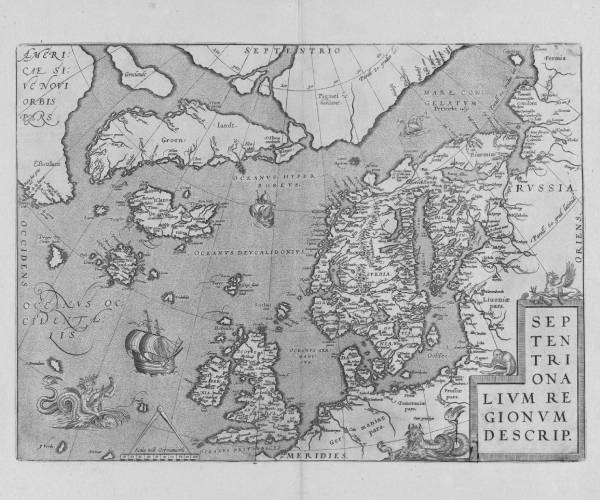
Created in 1570, this engraved map of the North Atlantic comes from Abraham Ortelius’s Theatrum Orbis Terrarum, often considered the first modern atlas. It depicts regions including Greenland, Iceland, Scandinavia, and the British Isles, as well as mythical islands such as Saint Brendan’s and Frisland. The map reflects how early cartographers blended exploration, imagination, and belief into their work. The map is part of the Stuckenberg Map Collection, willed to the College in 1901, along with personal papers and furniture by John H.W. Stuckenberg. Stuckenberg was a chaplain who served with the 145th Pennsylvania Volunteers during the Battle of Gettysburg. He and his wife, Mary, the first president of the Woman’s General League at Gettysburg College, are buried in Gettysburg National Cemetery.
Oldest Asian Art Object: Bronze Jue (1700-1050 BCE)
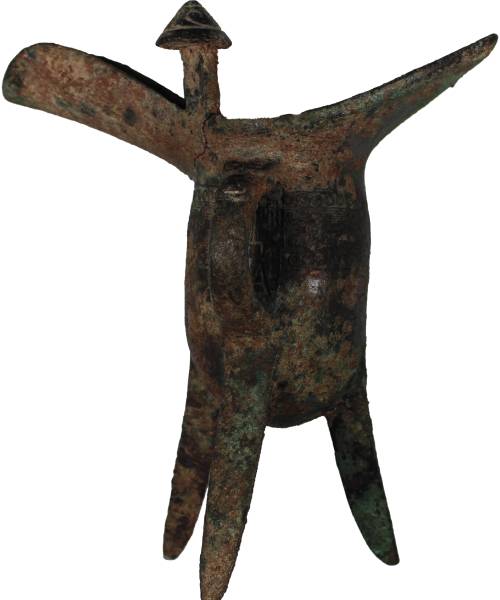
This bronze Jue, dating to China’s Shang dynasty, is a ritual wine vessel once used by elite members of society during sacrifices and ceremonial offerings. Its restrained decoration, animal motifs, and patina reflect the deep spirituality and cosmological beliefs of early Chinese Bronze Age culture. Its presence in Special Collections highlights Gettysburg’s commitment to not only preserving objects but also using them for research and teaching today. This piece, along with most of the objects in the Asian art collection, was given to the College by the estate of Prof. Emeritus of Education Frank Kramer, Class of 1914.
Oldest Book: Biblia Sacra (1475)
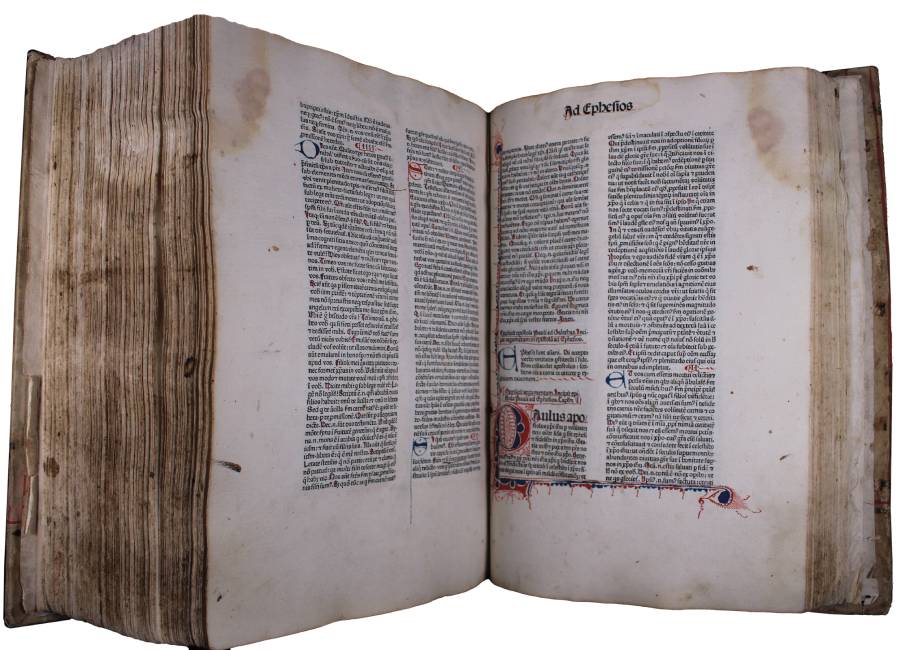
Printed in Venice in 1475, this Biblia Sacra is the oldest book in Gettysburg College’s collection. The work contains outstanding examples of rubrication, a practice of adding colored text and ornamentation to manuscripts to guide readers. Produced only decades after the invention of the printing press, it represents a pivotal moment in the spread of knowledge across Europe. This book was one of more than 20,000 volumes donated to Gettysburg College by Rev. Jeremiah Zimmerman, Class of 1873, when the College’s first library building, Schmucker Library, opened in 1929.
Oldest Letter: Charles O’Hara to Edmund Burke (1778)
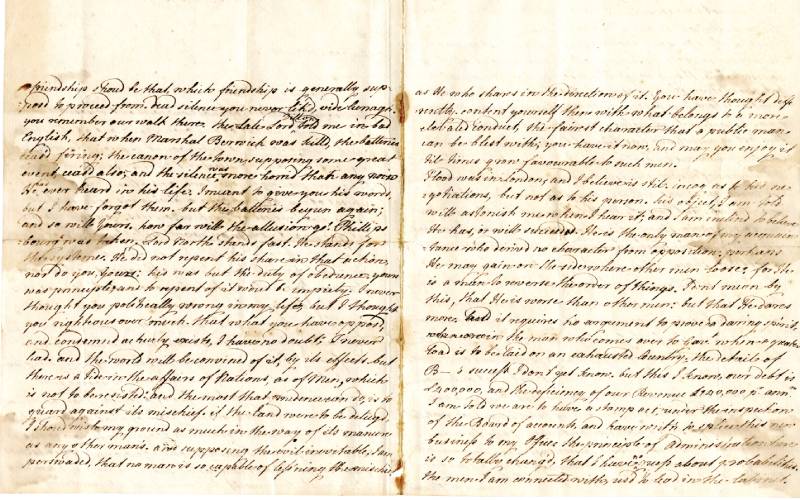
Written on Sept. 11, 1778, this correspondence from Charles O’Hara to statesman Edmund Burke is the oldest letter in Gettysburg’s collection. The letter discusses Irish politics, a subject of particular interest to Burke, who was Anglo-Irish, and O’Hara, who was Irish. Burke served in the UK Parliament, and O’Hara served in the Irish Parliament until the Act of Union, the 1707 legislation that united the Kingdom of England and the Kingdom of Scotland into the Kingdom of Great Britain. In 1994, Special Collections and College Archives purchased the collection of Edmund Burke correspondence.
Oldest College Artifact: Stevens Hall Lock and Key
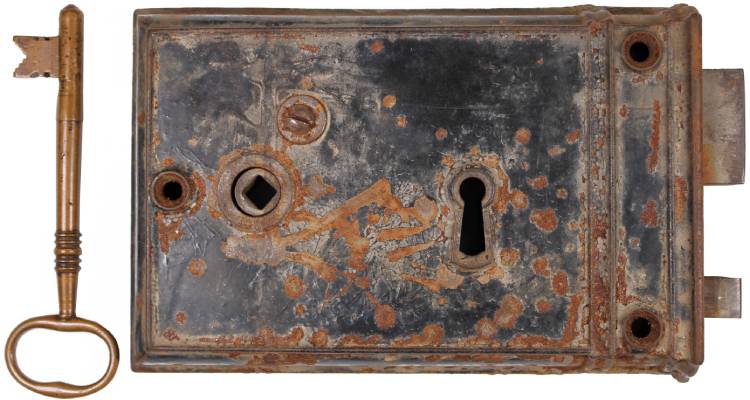
This lock and key from Stevens Hall, which was originally built in 1868 and once served as a preparatory school for the College, are among the oldest surviving physical artifacts connected directly to Gettysburg College. Stevens Hall is named for Thaddeus Stevens, one of the College’s founders and author of the 14th Amendment of the U.S. Constitution.
by Awa Diop ’29
Photography provided by Gettysburg College Special Collections and College Archives, Musselman Library, and Wali Muhammad ’28
Posted: 03/24/26