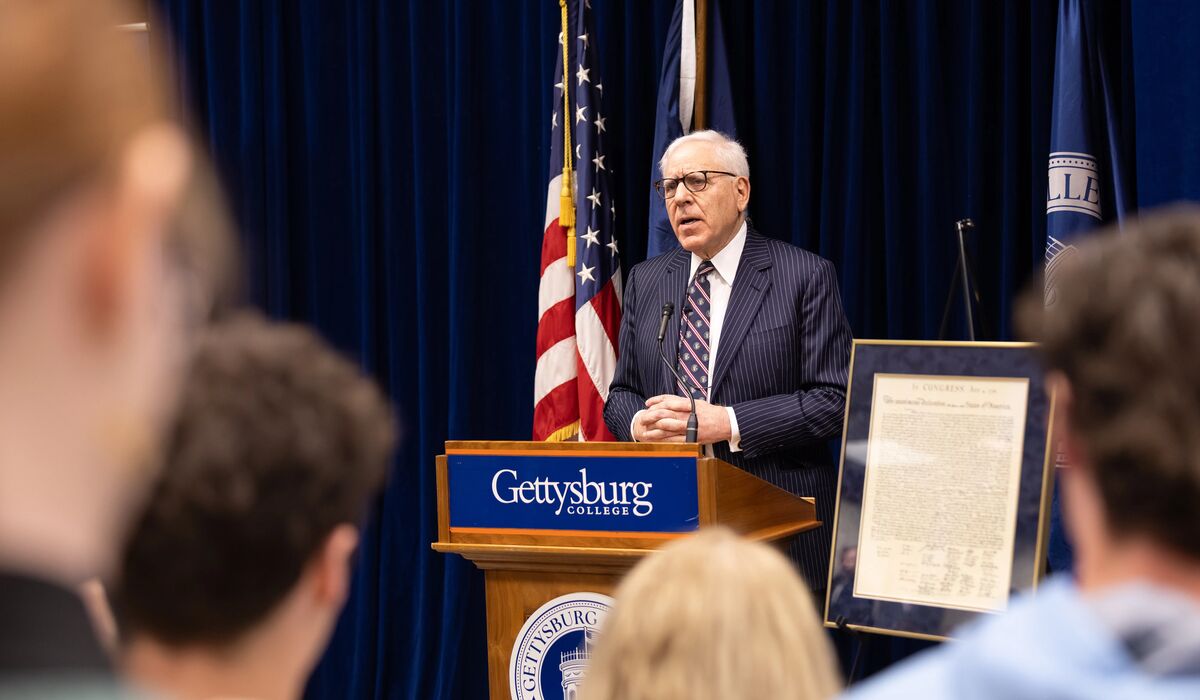
David Rubenstein, co-founder of The Carlyle Group and owner of the Baltimore Orioles, headlined the Eisenhower Institute’s 24th annual Blavatt Lecture at Gettysburg College, connecting the enduring lessons of the Declaration of Independence to leadership, service, and civic responsibility.
Philanthropist, historian, investor, and Baltimore Orioles owner David Rubenstein encouraged Gettysburg College students to reflect on the nation’s founding ideals—and their own responsibility to lead with purpose—during the 24th annual Blavatt Lecture, hosted by the Eisenhower Institute on Tuesday, Feb. 3, in Mara Auditorium.
Addressing a packed audience of students, faculty, alumni, and community members, Rubenstein delivered what he jokingly described as “everything you need to know about the Declaration in 30 minutes.” He launched into a lively, unscripted history lesson that traced the origins and enduring relevance of the Declaration of Independence.
At the heart of his talk was the document’s most famous line, “we hold these truths to be self-evident, that all men are created equal.” Rubenstein called it “the most famous sentence in the English language,” one that has inspired generations around the world to pursue liberty and self-government.
“What we’re really celebrating,” Rubenstein said of the nation’s 250th anniversary this year, “is the fact that this country broke away from tyranny and gave us the right to be free.”
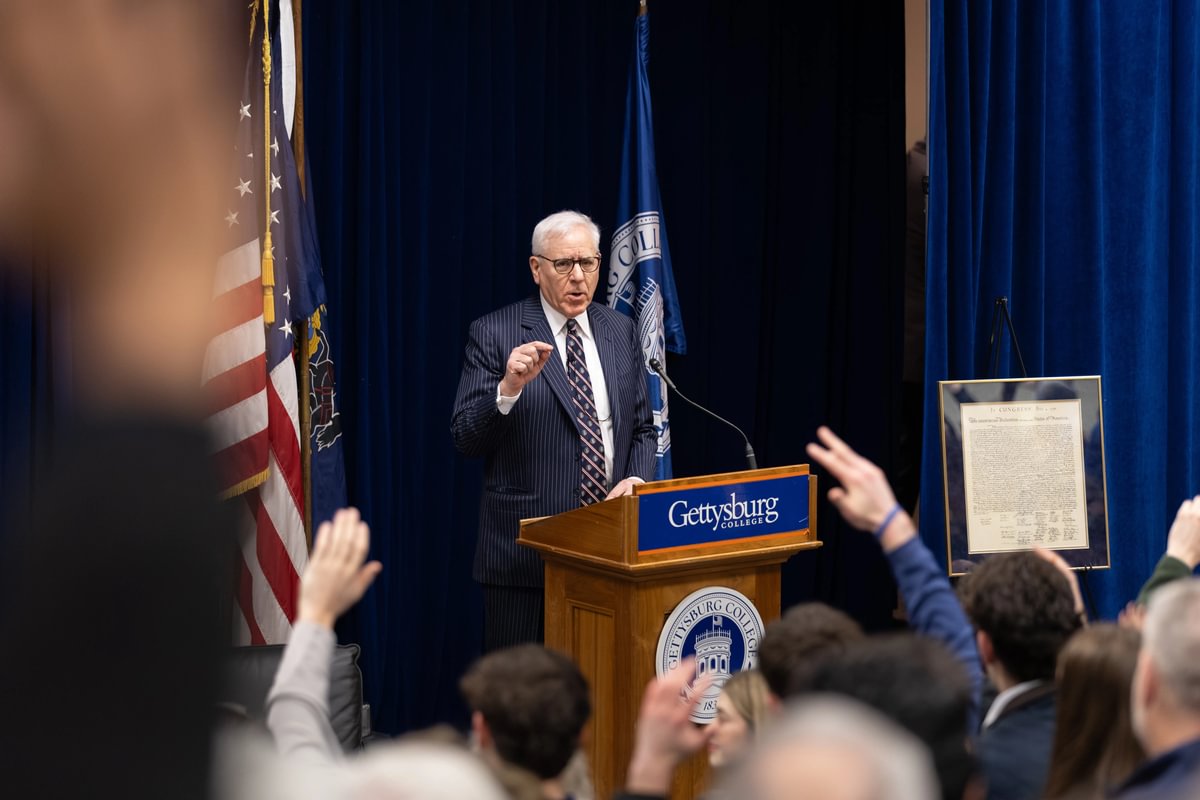
For a campus steeped in history and civic engagement, the message resonated. Rubenstein emphasized that understanding the past is essential to shaping the future, noting that studying history helps societies “avoid the mistakes of the past and repeat the good things.”
Eisenhower Institute Executive Director Tracie Potts said Rubenstein’s visit aligned seamlessly with Gettysburg’s mission to prepare students for lives of leadership and service.
“David Rubinstein understands that we need to know how we got here to effectively chart where we’re headed as a nation,” Potts said. “He’s used his influence and resources to preserve and educate on American history.”
“In just over an hour, he gave a detailed history lesson on the Declaration of Independence, then chatted with me about everything from growing up in Baltimore to how to properly assess risk,” she added. “Students heard invaluable advice on careers and leadership from one of the world’s most successful entrepreneurs. I’m thrilled that he chose Gettysburg for his first event celebrating America’s 250th anniversary.”
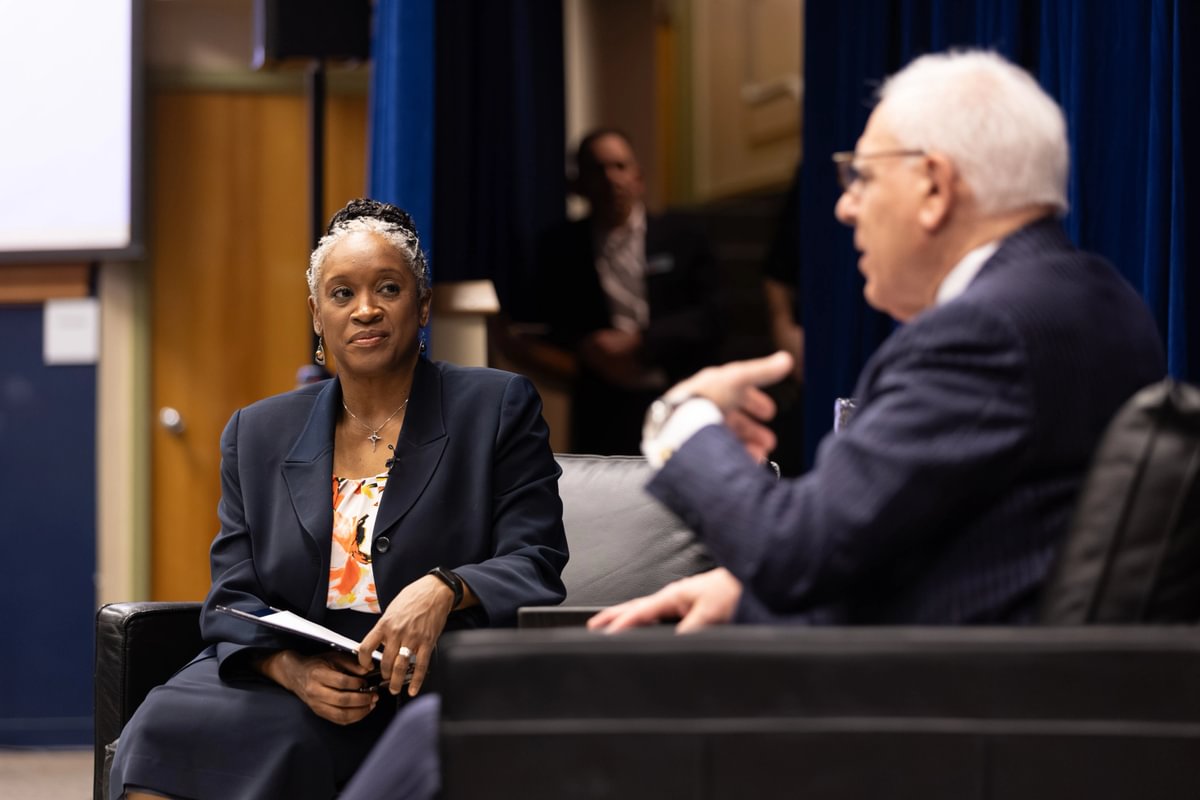
Throughout the evening, Rubenstein also shared personal reflections on growing up in a modest Baltimore home and how early limitations fueled his drive. “There’s an advantage to growing up without much—you’re more driven,” he said.
His story of building success through persistence and later giving back through philanthropy reinforced his belief that leadership begins with service. That message resonated with Joey Blank ’29 of Reisterstown, Maryland, who saw reflections of his own upbringing in Rubenstein’s journey.
“As a resident of Baltimore County, it was inspiring to hear the words of a philanthropist with origins from my locality,” Blank said. “Mr. Rubenstein’s anecdote of his rise to affluence piqued my ambition, showing that anyone, regardless of background, is capable of success. By listening to Mr. Rubenstein’s discussion of obstacles he faced, I have developed a sense of confidence in overcoming future hurdles and continuing towards my goals.”
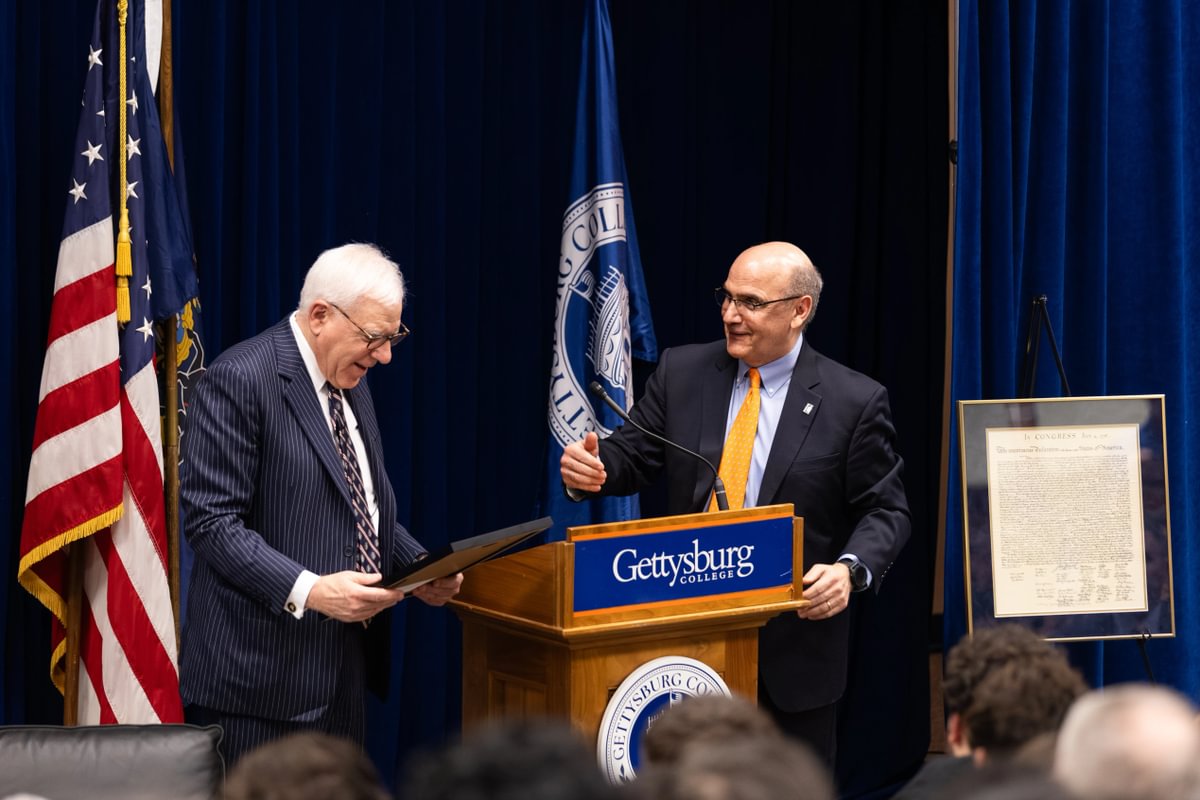
Student-athletes also connected with Rubenstein’s storytelling and his ties to baseball. Tex Detroyer ’27, a mathematical economics major, Orioles fan, and pitcher from New York City said one moment in particular stood out: Rubenstein’s explanation of why Americans celebrate July 4 rather than July 2—the day Congress actually voted for independence—as an example of how history is remembered and intentionally preserved.
“I think it was really interesting to hear the story of how we remember July 4th instead of July 2nd,” Detroyer said. “It’s a reminder that historical events do not ingrain themselves. It’s an intentional effort by all of us to keep alive the memories and efforts of those that came before us.”
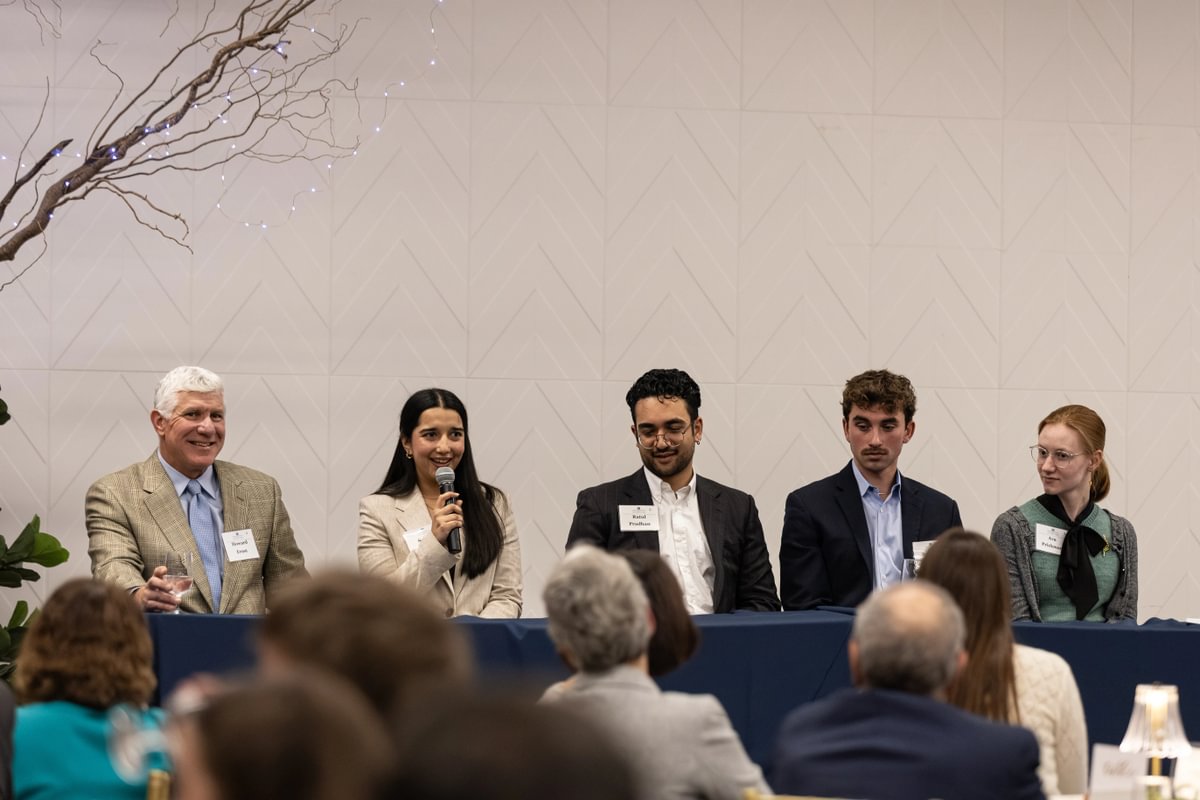
Before the lecture, Rubenstein dined with an assortment of representatives from the campus community, including college administrators, members of the Board of Trustees, alumni donors and friends of the college, faculty, staff, and students in the Atrium. After the meal, several students joined a panel discussion focused on leadership and growth. For Saleha Iftikhar ’26, a computer science major from Pakistan, participating in the panel marked a personal milestone.
“Being on the panel felt like a full-circle moment for me personally,” Iftikhar said. “I came to Gettysburg as a very shy and unsure first-year student. Sharing my leadership journey and how Gettysburg College has transformed me as a student and a leader was incredibly meaningful, especially reflecting on how the support and belief of my supervisors and mentors played a role in that growth.”
Inaugurated in 1996, the Blavatt Lecture is made possible by the generosity of Mr. and Mrs. Ronald Blavatt of Owings Mills, Maryland. Their sons graduated from Gettysburg College, as did their spouses: Jeffrey ’88 and Kelly Blavatt ’03, and Jason ’90 and Amy Blavatt ’91.
“The lecture itself was also really engaging. As an international student, it was really interesting to learn more about U.S. presidents and the significance of celebrating the country’s 250th anniversary,” Iftikhar said. “Hearing Mr. Rubenstein share his personal background felt inspiring. I am grateful to the EI for offering us this opportunity.”
Closing the evening, Rubenstein left students with a simple charge rooted in both philanthropy and citizenship: Use your time and talents to improve the world around you. “Philanthropy means loving humanity,” he reminded the audience. “You can make more money. You can’t make more time.”
For many in Mara Auditorium, the lecture served as both a history lesson and a call to action—one that reflects Gettysburg’s commitment to preparing students not only to study the past, but also to help shape what comes next.
Related Links:
External Links:
By Corey Jewart
Photos by Tyler Caruso
Posted: 02/09/26