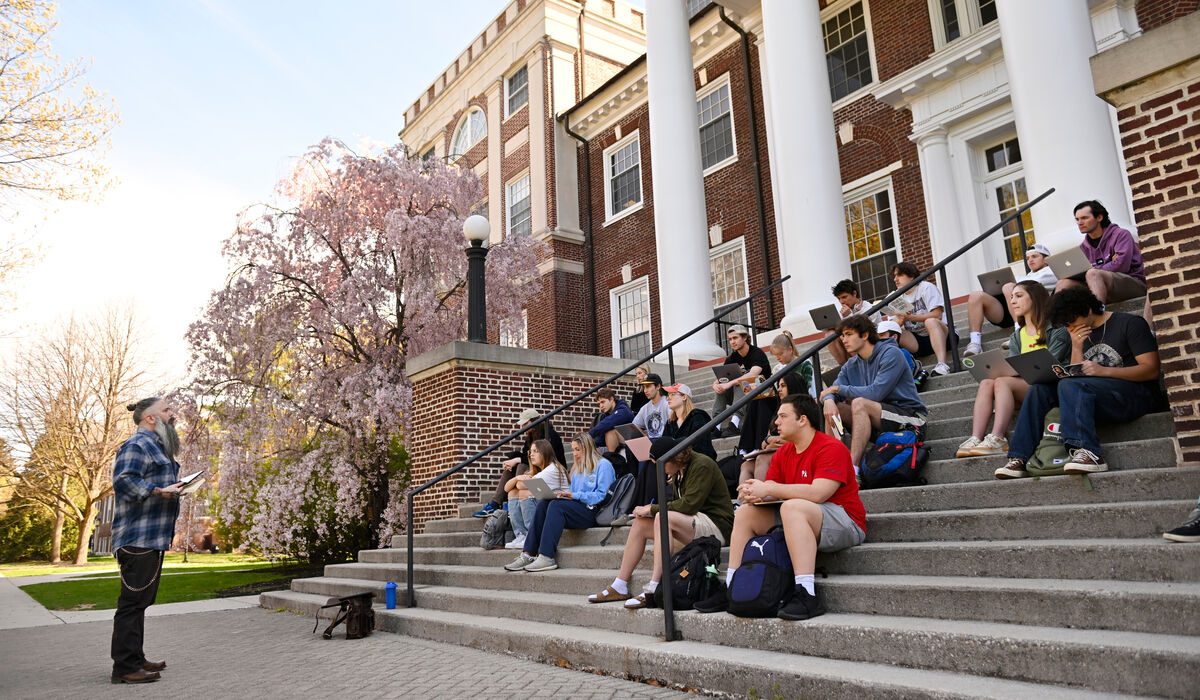
As you embark on your Gettysburg College education, you’ll find opportunities to expand your knowledge and skills at every turn. For many students, creating their own major has allowed them to custom-design their own curriculum.
Interdisciplinary Studies (IDS) Chair Vernon Cisney, who began teaching at Gettysburg in 2012 and moved to the IDS Department in 2018, notes that interest in creating individualized majors has rapidly grown over the years. Within the last five graduating classes—from 2021 to 2025—more than 70 students graduated with an individualized major.
Examples of Individual Majors from the Classes of 2021–2025
|
|
Source: Gettysburg College Interdisciplinary Studies Department

When students meet with Cisney to talk about pursuing an individualized major, he encourages them to consider a few questions: Why did you choose to take certain classes? What about them appealed to you? What did you like and dislike about them? How did your work in these classes speak to you and your interests?
Gettysburg students who develop an individualized major care deeply about personalization, placing it at the very heart of their education. “You are being asked to take ownership of your entire curriculum,” Cisney reflected.
Although other colleges and universities have IDS programs, very few liberal arts institutions—if any—offer dedicated faculty members who teach within IDS like Gettysburg College.
Pursuing interests with a personalized major
Lilly Ball ’26 of Midlothian, Virginia, is one of many Gettysburg students who have chosen to declare an individualized major. Her major—forensic and criminal psychology—combines subjects in philosophy, psychology, sociology, and interdisciplinary studies. For Ball, her courses include Abnormal Psychology, Criminal Trial Advocacy, and Social Psychology.
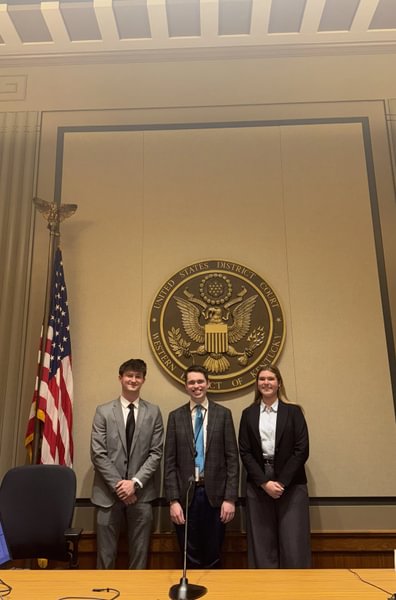
“I received immediate support from the department when I expressed my potential interest in pursuing an IDS major,” Ball said. She credits Cisney and Psychology Prof. Kathy Berenson for offering advice, guidance, and opportunities for reflection as she completed her coursework.
“I think that the IDS path sets every student up for success. It encourages and requires each student to look at their specific focuses through a multifaceted lens, which is important for everyday life,” she said. “An individualized major allows you to pursue your interests as a personalized major, which is an amazing opportunity you should consider!”
After graduating from Gettysburg, Ball plans to attend law school and eventually work as either a criminal defense attorney or a criminal prosecutor.
Seeking initiative and independent thought
Max Stone ’28 of Westminster, Massachusetts, found his interests in the fields of history, philosophy, and political science. Upon speaking with Cisney—who taught Stone’s First-Year Seminar entitled Plato, Personhood, and Popcorn—he discovered how he could pursue studies in these fields of interest without having to triple major.

Stone’s desire to create an individualized major grew during the fall and spring semesters of his first year. A participant in Gettysburg College’s Guided Pathways program, Stone ultimately decided to declare his individualized major in the philosophy of history.
“It considers the different ways that history should be studied, how it should be used to inform decisions, and what purpose history serves,” he explained.
Stone acknowledges Cisney and Prof. of War and Memory Studies Ian Isherwood ’00, director of the Civil War Institute, for providing the insights and support he needed to solidify his plan of study.
As he looks beyond Gettysburg to law school, Stone sees the initiative and independence of creating his own major as useful experience for future decision making.
“Reading philosophy and history, and making connections between those two is very helpful for law studies,” he said.
Broad interests for building careers
Meriem Hamioui ’25 pursued an individualized major based on her multilayered academic goals.

“While I initially explored political science and economics as standalone majors, I found that neither fully captured the intersection of trade, development, international organizations, and political economy that I wanted to study,” she said. “Through the IDS program, I designed an individualized major in international political economy, which allowed me to intentionally combine these fields into a coherent academic framework aligned with my intellectual interests and professional goals.”
At Gettysburg, Hamioui took courses in microeconomics, macroeconomics, international trade, comparative politics, international law, global conflict management, and development. She also studied abroad in Japan, where her courses covered global politics and international law.
After graduating from Gettysburg, Hamioui secured a position as executive assistant to the Consul General at the Embassy of the Hashemite Kingdom of Jordan in Washington, D.C. In this role, Hamioui supports diplomatic operations and oversees Jordan’s engagement in the 2026 FIFA World Cup.
“The independence and long-term planning required by an individualized major strengthened my research, writing, and synthesis skills, which I rely on heavily in my professional work,” she said.
Hamioui encourages students considering an individualized major to be ready to apply “self-direction, reflection, and a willingness to take ownership of your education,” she said. “When done well, an individualized major equips students with flexibility, depth, and confidence that translate powerfully beyond Gettysburg.”
Cultivating critical thinking
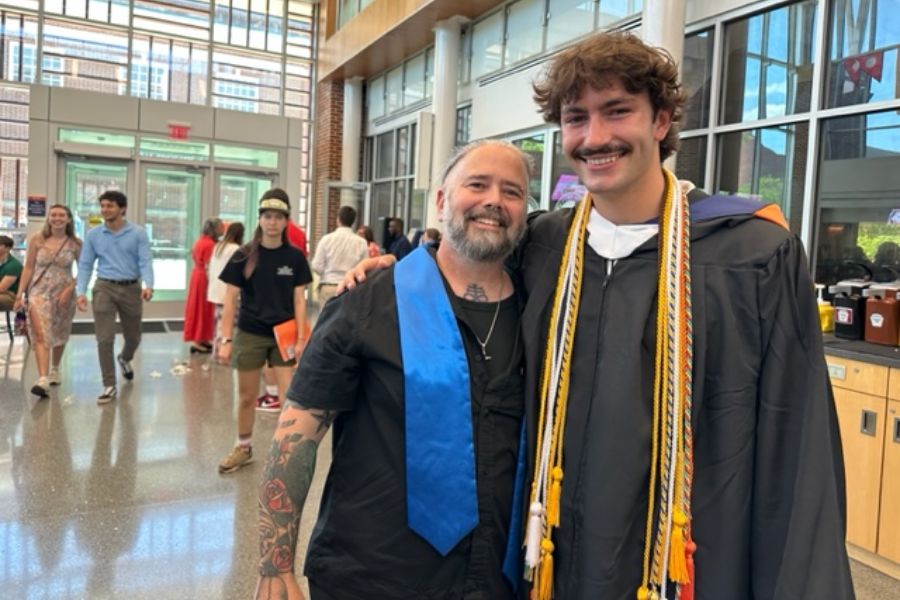
Ryder Hobbs ’25 found anthropology, art, cultural studies, literature, philosophy, psychology, and sociology fascinating subjects, but he struggled to combine these interests into a program of study.
At Gettysburg, Hobbs turned to Cisney and Philosophy Prof. Steve Gimbel for support. They helped Hobbs identify courses and create an academic plan that led to his self-designed major, postmodernism and the human condition.
Hobbs, who is applying for admission to Ph.D. programs in philosophy, believes his IDS major will help him stand out from other applicants who are traditional philosophy majors. “It demonstrates that I am confident in designing my own education and academic projects, and, thanks to my independent studies with Prof. Cisney, that I am experienced in working on collaborative research with faculty,” he said.
Hobbs encourages current Gettysburg students who are interested in two or more contrasting areas of study or specializing in a specific area of a discipline to take advantage of the flexibility an IDS major can provide.
“You will find that although fellow IDS majors are on their own path, they will share the same inspiration and passion that drives the creation of each individualized major,” he said. “In a time where critical and holistic thinking is a precious resource, there is no better way to cultivate this at Gettysburg than to create your own major.”
Learn more about designing an individualized major at Gettysburg College.
Related Links:
By Michael Vyskocil
Top two photos by Jason Minick; additional photos provided by sources unless otherwise noted
Posted: 03/06/26