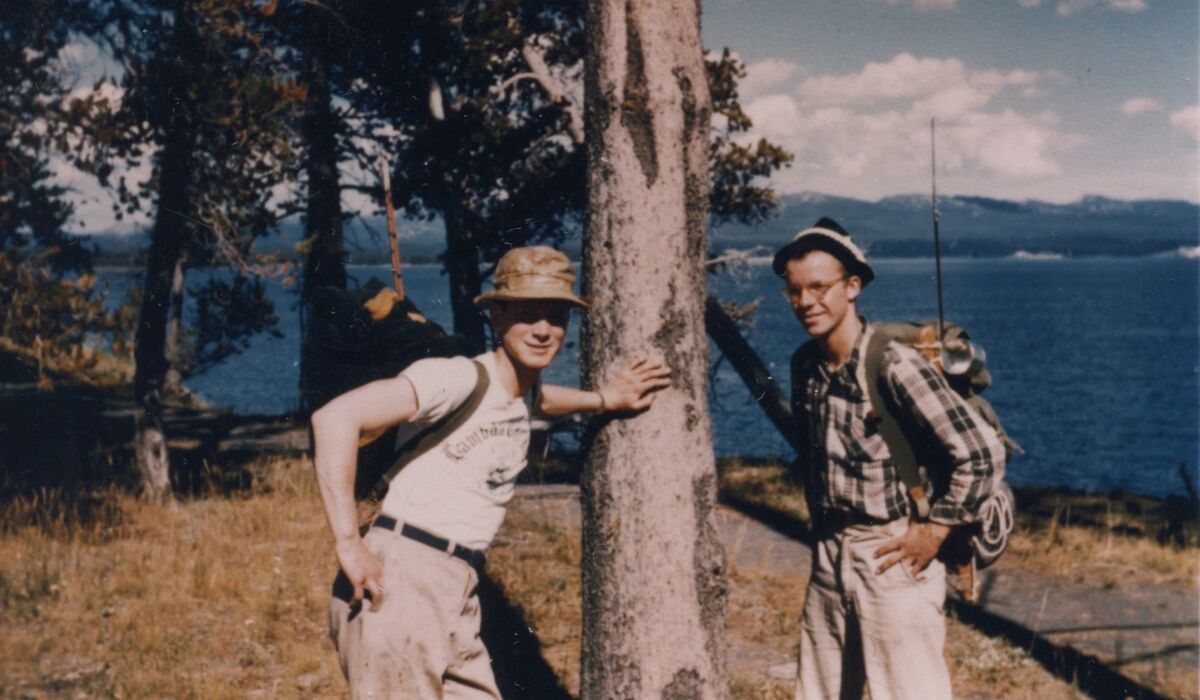
Bob Schultz ’57 reflects on his decades-long friendship with Nobel Prize laureate Michael Bishop ’57—from Gettysburg classrooms to Yellowstone adventures—and the enduring reminder that the connections students make in college can shape their lives in unexpected ways.
Long before Michael Bishop ’57 became a Nobel Prize–winning scientist, he was the first-year roommate, fraternity brother, traveling companion, and friend of Bob Schultz ’57.
After arriving at Gettysburg College in 1953, Bishop, from Goldsboro in rural York County, Pennsylvania, and Schultz and Fred Stroehmann ’57, both from Williamsport, Pennsylvania, shared a room in Pennsylvania Hall. All three roommates later joined Lambda Chi Alpha together and became part of a circle of students eager to reshape the College community.
At the time, Schultz had no way of knowing that Bishop, who passed away in March, would one day transform scientists’ understanding of cancer and receive the 1989 Nobel Prize in Physiology or Medicine. Bishop was simply Mike—a curious, driven classmate whose friendship became one of Schultz’s most meaningful Gettysburg connections.
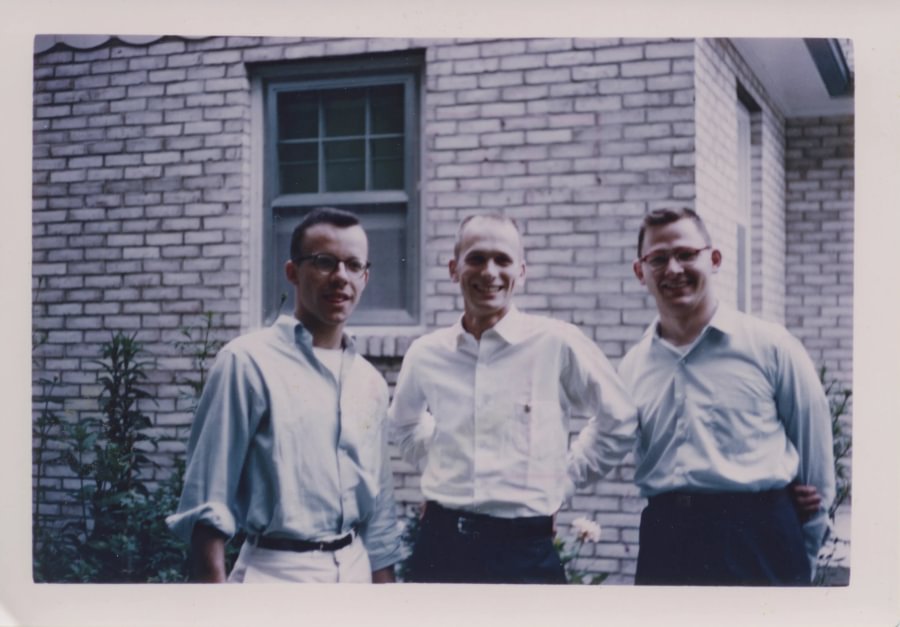
Despite following different academic paths in philosophy and chemistry, respectively, Schultz and Bishop developed a strong bond through experiences on campus and off. One of their biggest on-campus accomplishments was being leaders of the movement to establish an Honor Code at Gettysburg in 1955. They joined with several others writing in the Gettysburgian to promote a proposal based on trust and responsibility.
The two also drove to Miami for a national Lambda Chi Alpha convention, where they lobbied against the fraternity’s policy excluding Black members.
“In those days, the line of the national fraternity was as long as our ‘brothers’ in South Carolina and Georgia and so on, cannot admit Black members, then the fraternity as a whole has to be against Black members. We went down and lobbied to the contrary,” Schultz recalled.
Yet the memories Schultz described most vividly came from two summers spent far beyond the boundaries of campus and Pennsylvania. In 1955 and 1956, he and Bishop drove old cars west on Route 30 to Yellowstone National Park, where they worked at nearby gas stations pumping fuel, fixing tires, and servicing visitors’ cars. They condensed their work into four days each week, leaving three days to explore.
“We had three days to chase the bison, to look for the coyotes, to climb,” Schultz recalled. “Oh, those were a real highlight for both of us.”
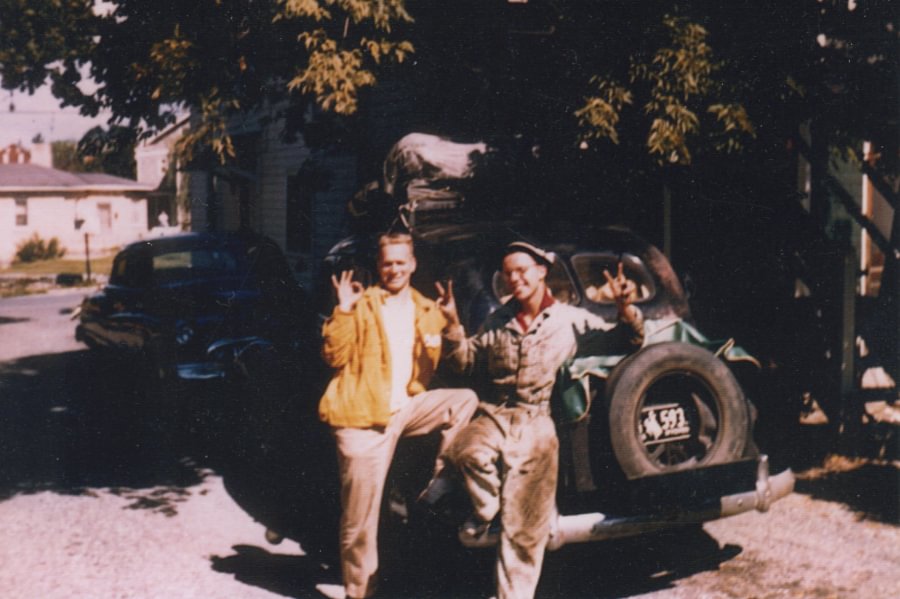
The friends climbed each of the four Yellowstone mountains that had fire towers at their summits. Bishop regularly arrived first.
“I came to realize that Mike always got to the top of those mountains and their fire towers before I did,” Schultz said. “And I’ve figured out that’s why he won the Nobel Prize and I haven’t won any Nobel Prizes.”
The joke conveys Schultz’s admiration, but his memories also reveal the young Bishop’s personality. He loved fishing, long hikes, intellectual exploration, and a good laugh. Schultz remembered the trip to Yellowstone as “such a rich experience” and recalled Bishop entertaining visitors with playful stories about bears being brought back to the park by train each summer.
Their post-Gettysburg pathways led them in different directions. At Harvard Medical School, Bishop’s interests pivoted from direct patient care to medical research, and eventually he accepted a teaching and research position at the University of California, San Francisco in 1968. Bishop later served as chancellor of the institution from 1998 to 2009. Schultz, in the meantime, joined the Navy, earned a doctorate in philosophy, and spent 35 years teaching at Lycoming College, University of Denver, and the University of Washington Bothell.
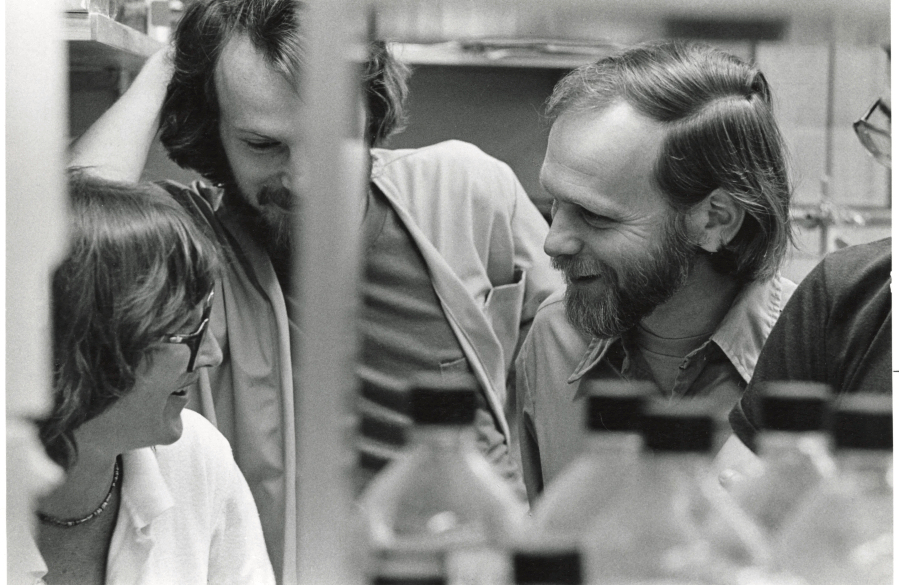
Their bond nevertheless continued. After Bishop won the Nobel Prize in 1989, he spoke with Schultz and his wife, Phyllis, about the ceremony in Sweden and having his parents and sons beside him. What Schultz remembered most was Bishop’s humility despite his rise to fame.
To Schultz, Bishop was never only a Nobel laureate. He remained the friend who shared a first-year room, challenged injustice, crossed the country in an old car, and climbed mountains beside him. Decades later, Schultz and Bishop renewed their friendship in their retirement years, initiating regular conversations on Zoom to talk about their Gettysburg professors, wilderness adventures, and current interests across philosophy, science, and politics.
“Back in the 1950s, we Gettysburg students were encouraged to aspire to become liberally educated adults and lifelong learners,” Schultz said. “I treasure having been such a longtime friend of Mike Bishop, a truly remarkable exemplar of realizing exactly that aspiration, and of becoming an inspiration for us all.”
For today’s students, Bishop and Schultz’s friendship is a reminder that the people you meet at Gettysburg may accomplish extraordinary things—and that the relationships formed along the way may become accomplishments of their own.
Related Links:
By Corey Jewart
Photos courtesy of Robert Shultz ’57
Posted: 08/18/26