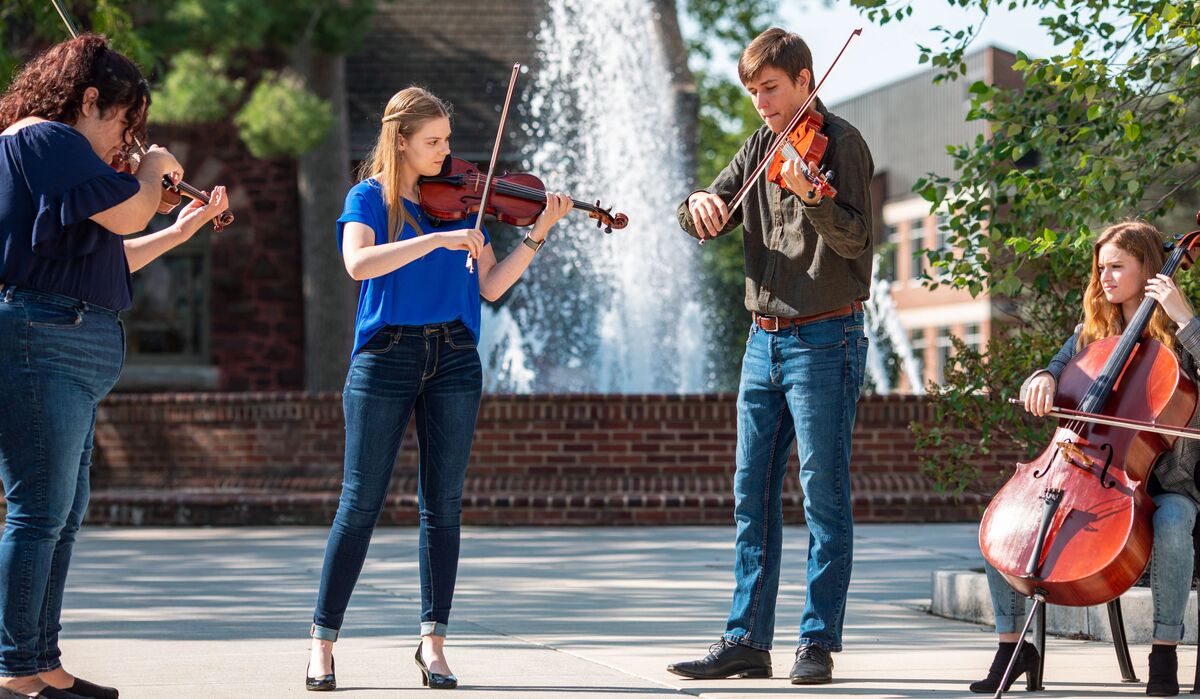
For more than a century, music has shaped the Gettysburg College experience. As the Sunderman Conservatory marks 20 years, that legacy continues—connecting generations through a liberal arts approach that inspires creativity, community, and lifelong impact.
On any given day at Gettysburg College, music drifts across campus—through open practice room windows, rehearsal halls, and performance spaces—carrying with it more than melody. It unites history, community, and a legacy shaped by generations of students, faculty, and alumni who have invested in its future.
As the Sunderman Conservatory of Music celebrates its 20th anniversary at Gettysburg, the voices from students and musical instruments reflect more than two decades of growth. They echo a tradition more than a century in the making, one sustained not only by performance, but also by a shared belief in music’s place at the heart of a liberal arts education.
A tradition takes shape
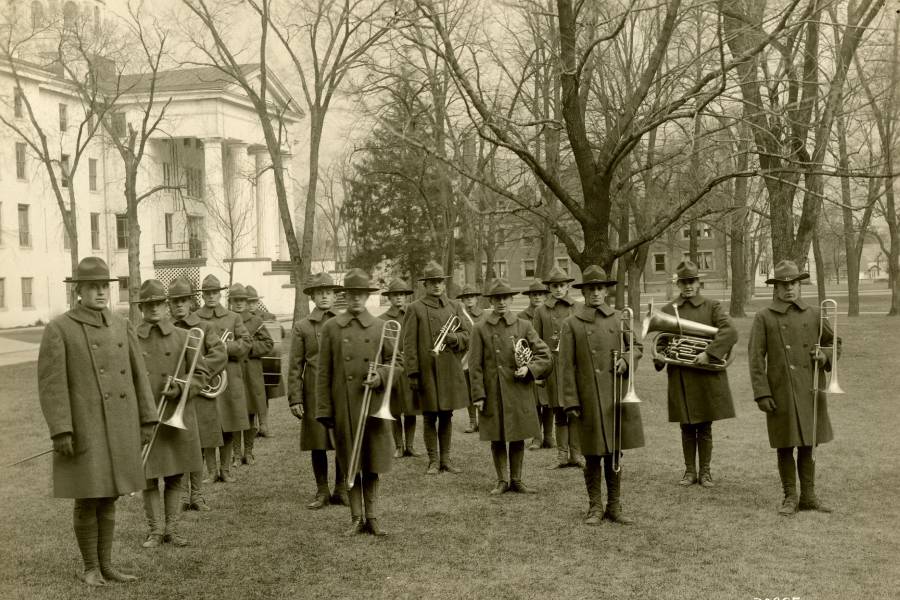
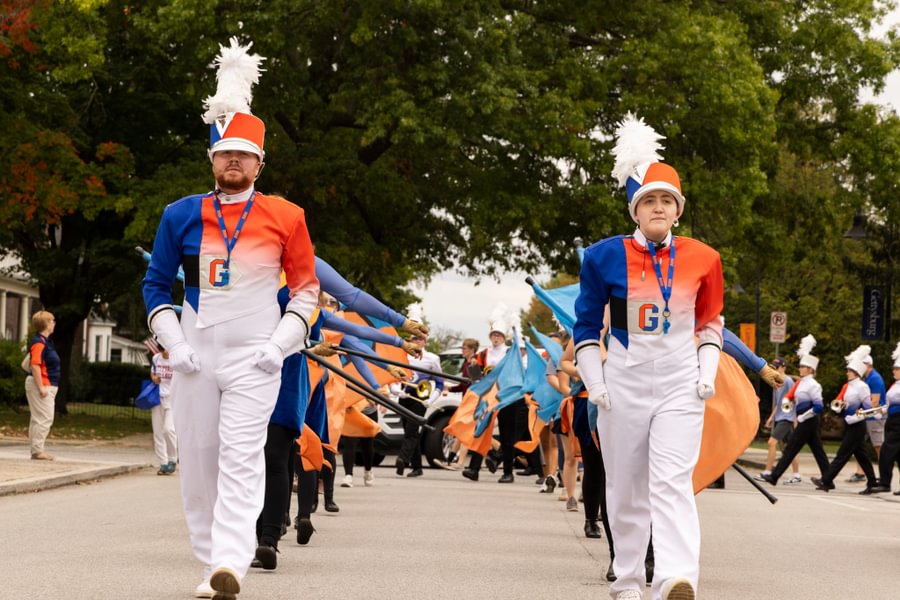
Music has been part of Gettysburg’s identity since the 19th century, when student ensembles like the glee club and orchestra first took shape. Those loose-knit student-run organizations evolved, becoming integral parts of the campus community. The Marching Band was one of the earliest examples, debuting in 1910 and marking the beginning of a tradition that continues today as a testament to the enduring role of music in campus life.
A generation later, Gettysburg’s musical foundation found a new direction with the arrival of Parker Wagnild in 1935. A graduate and former member of the renowned St. Olaf College Choir, Wagnild set out to build something lasting and impactful at Gettysburg.
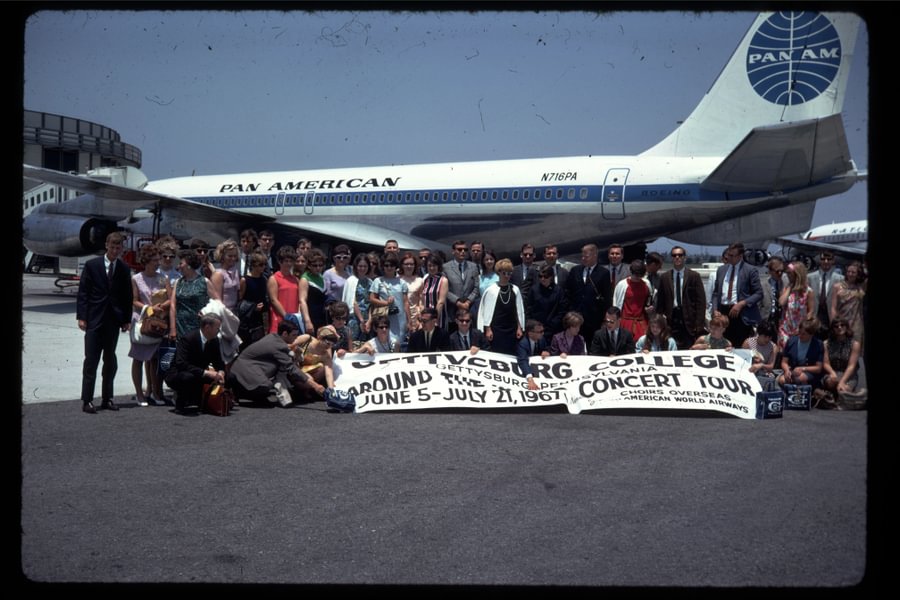
Under his leadership, the College Choir grew in both ambition and reach, establishing an annual touring tradition that began with regional performances and quickly expanded beyond into international and world tours in the decades that followed. Those experiences broadened students’ musical and cultural perspectives while strengthening the program’s reputation.
By the mid-1940s, music at Gettysburg had become both an artistic and an academic pursuit, with coursework in harmony, dictation, sight-singing, and conducting anchoring the curriculum. Even then, the approach was clear: music was not meant to stand apart from a Gettysburg education; it was meant to deepen it.
A community built through music
Through the decades, dedicated music faculty have carried on and strengthened Wagnild’s enduring legacy, including long-time instructors Prof. Emeritus Kermit Finstad (1970-99), Prof. Emeritus Michael Matsinko (1976-2005), Prof. Emeritus Norman Nunamaker (1963-1997), Prof. Emeritus Dexter Wekel (1962-88), and Prof. Emeritus Robert Zellner (1968-98).
“Music helps people connect to others and express themselves in ways that can change the world.”
– Alice Broadway ’14
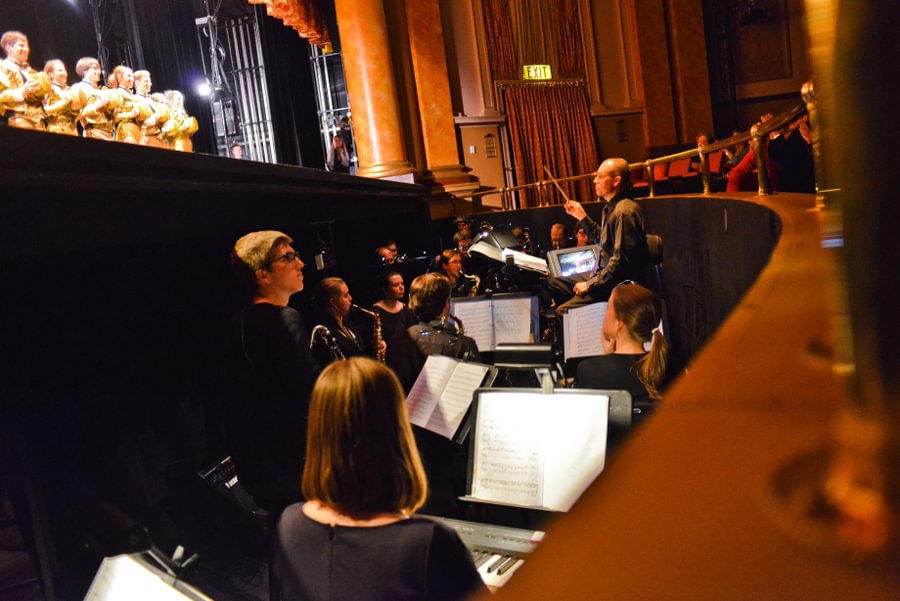
When John “Buzz” Jones arrived on campus in 1989, he aimed to continue the institution’s high standard of excellence by expanding performing ensemble opportunities and strengthening participation. The evolution of the music department into the Sunderman Conservatory of Music occurred under his watch as department chair and later as conservatory director. Jones wanted accessibility to music ensembles to remain open to the entire campus community, as it had decades prior.
“We’re a highly selective liberal arts school that welcomes students who play in orchestra, band, or the jazz ensemble and were not music majors,” Jones said. “I enjoyed teaching so many students who were from other majors that excelled at music. It really helped broaden the liberal arts perspectives within ensembles and classes.”
Chris Johnson ’98, a history major who is now a Pennsylvania social studies teacher in the Central Bucks School District, recalled the openness and availability of music at Gettysburg as a determining factor in his college selection process.
“Prof. Jones reached out to me and showed me that a vibrant music community existed there and that I didn't need to be a major to be a significant part of it,” Johnson said. “A couple of visits to campus confirmed this and, within very little time, Gettysburg leaped from not being on my radar to my clear No. 1 choice for college.”
That community included Chris’ future spouse, Sherry (Stevens) Johnson ’98, who majored in anthropology and sociology, as well as Spanish. For Sherry, the weeks of practice with the Marching Band created an instant community.
“Having music in common with other students helped me meet people at school,” recalled Sherry, a program manager at Vanguard. “I remember a tentative first visit to the Writing Center as a freshman, where I was warmly greeted by a senior in the flute section. She and I are still friends!”
A transformational vision
That enduring philosophy would take on a new form through the vision of F. William Sunderman, Class of 1919. A physician, scientist, and accomplished violinist, Sunderman embodied the integration of music and scholarship during his time as a student, when he led both the Army band and student orchestra. In 2003, his $14 million bequest would establish the Sunderman Conservatory of Music, reshaping what music at Gettysburg could become.
That commitment led to facility improvements in Schmucker Hall, renovating the third floor to accommodate a growing faculty presence and providing practice spaces for students and staff. In the years following the gift, the number of full-time faculty members doubled, and the number of music majors and minors increased threefold.
Rather than replacing what came before, the Conservatory expanded it—building on a foundation shaped by generations who believed in music’s role within the liberal arts.
“Music helps people connect to others and express themselves in ways that can change the world,” said Alice Broadway ’14, a music education major and now a Pennsylvania elementary music teacher in the Mechanicsburg Area School District.
Broadway continued, “Gettysburg College and the Sunderman Conservatory prioritizing programs and supporting their faculty and students in musical fields shows a dedication to larger ideas, and a desire to lift up the humanity in society.”
Expanded opportunities in music
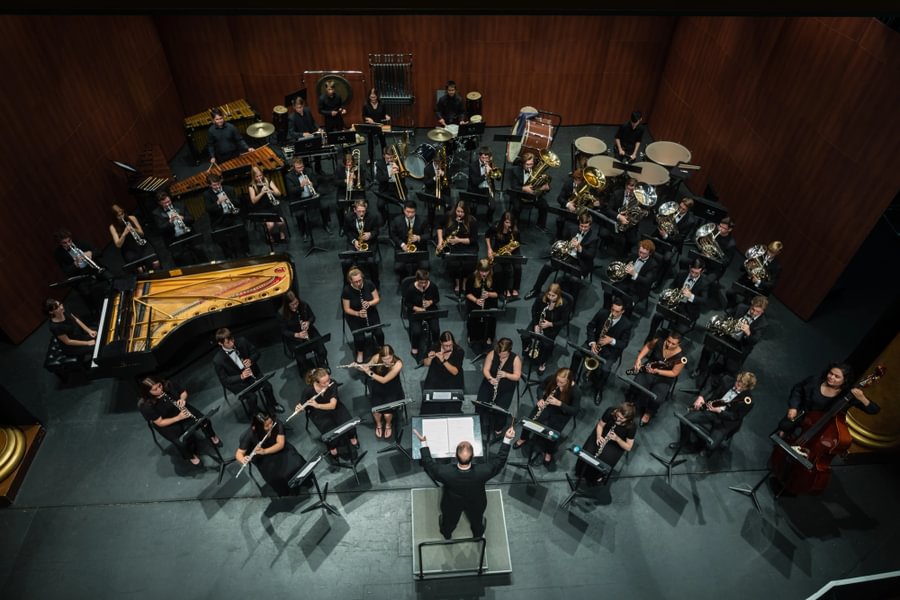
More than 300 students have graduated with music degrees since 2006, joined by nearly 150 students who pursued music minors. With more than 60 courses and 15 ensembles, the Conservatory offers opportunities that span performance, scholarship, and creative exploration.
“Our goal is to support all students in making music integral to their lives, whether as a career or a lifelong avocation,” said current Sunderman Conservatory Director and Music Prof. James Day. “Students do this through a blend of curricular and co-curricular experiences that celebrate musical and cultural diversity and help them forge connections with the larger world.”
“Without a doubt, my time at Gettysburg shaped who I have become, and it will always hold a special place in my heart.”
– Gretchen Carlson ’09
For Scott Kaliszak ’16, a Pennsylvania music education major and now director of Secondary Orchestras at Dallastown Area School District, that environment was both rigorous and transformative. Learning from Jones, former Music Education Prof. Brent Talbot, and Director of Bands and Music Prof. Russell McCutcheon gave him the confidence and skills to lead his own music program, which has seen more than 250 musicians sign up to play for the middle school and high school orchestras.
“Music education was the most meaningful and difficult part of my entire education,” he said, noting the high expectations that defined his experience. “Working with expert teachers and musicians each morning helped me develop a well-rounded knowledge of every instrument.”
Gettysburg College was the top choice for Gretchen (Michelson) Carlson ’09, thanks in part to the stories she heard from her grandmother, Jean (Foellner) Michelson ’59. Carlson, who arrived on campus during the Conservatory’s inaugural year in 2005-06, capitalized on the expanded opportunities to pursue her own career path in music and now teaches students as a professor of music at Towson University in Maryland.
“I am very grateful to have had the opportunity to study music within a robust liberal arts environment, as well as to study closely with excellent faculty in small, practice-oriented classes,” Carlson said. “Without a doubt, my time at Gettysburg shaped who I have become, and it will always hold a special place in my heart.”
Carrying the music forward
As the Sunderman Conservatory marks its 20th anniversary, its future is being shaped not only by its students and faculty, but also by a continued tradition of alumni stewardship.
That legacy will be celebrated April 17–18, when students, faculty, and alumni gather for a weekend of performances and events. The weekend will include concerts by the Symphony Orchestra and Jazz Ensemble, a recital featuring alumni and student performers, a career panel discussion, and campus receptions designed to reconnect the Conservatory community.
At the same time, new investments are enhancing the spaces where that work takes place. A recent $3 million gift from the late Sidney Ehrhart ’50 established new scholarships and led to significant renovations to Paul Recital Hall, improving acoustics and performance conditions for students and ensembles. Like Sunderman before him, Ehrhart shared the belief that music at Gettysburg is worth sustaining and strengthening.
“I see our 20th anniversary celebration as the beginning of a new chapter for the Conservatory and the College,” said Day, “one in which we build stronger relationships with our alumni, actively connect our students to evolving career opportunities, and outwardly celebrate the accomplishments of our students, faculty, staff, and alumni.”
Join the next generation of musicians and changemakers in the Sunderman Conservatory of Music.
Related Link:
By Corey Jewart
Photos by Peter Francis ’21, Doug Huber ’06
Posted: 04/15/26