
Jordan Rudess brings AI, artistic innovation to Gettysburg College residency
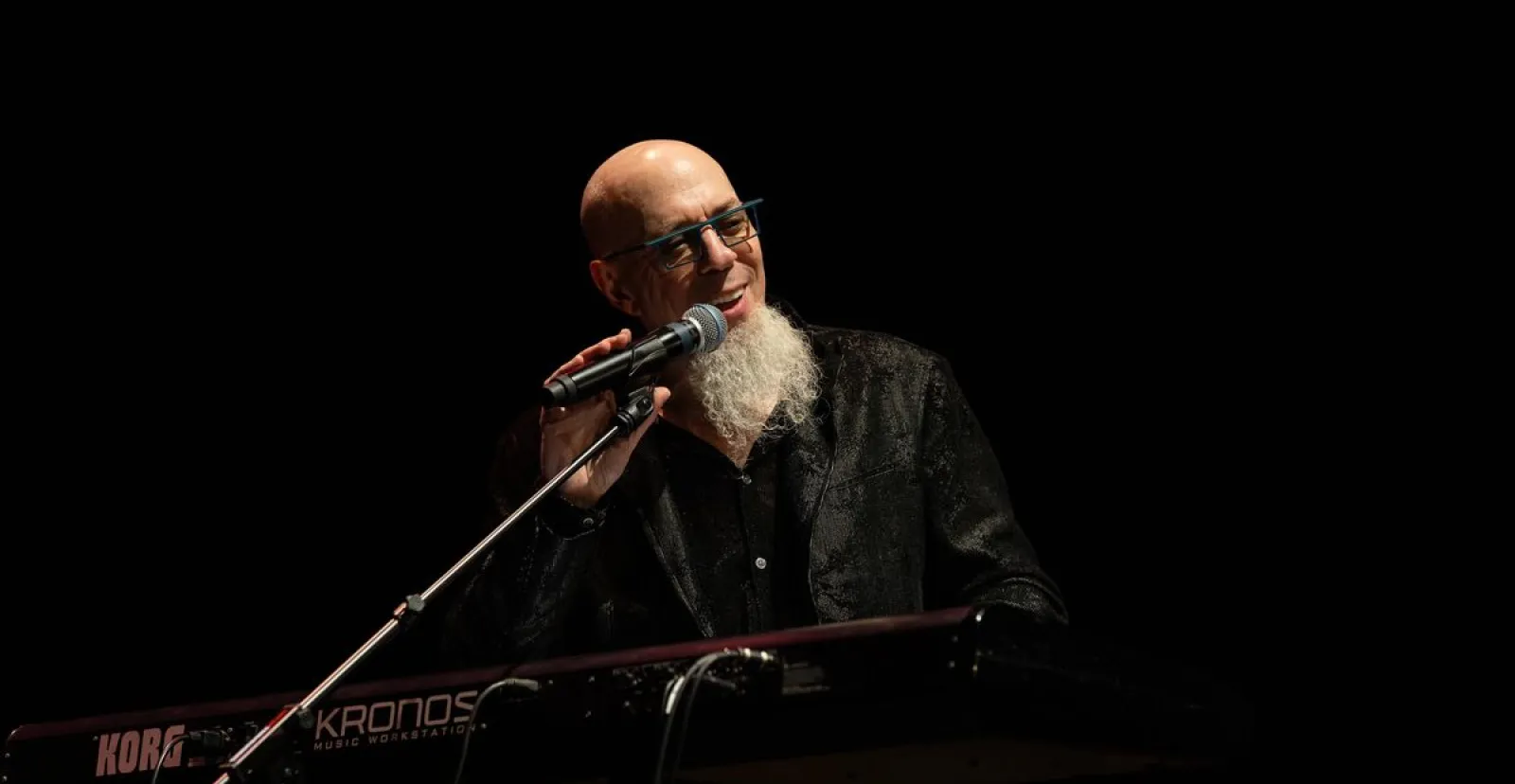
Through classes, collaborations, and performances, Jordan Rudess inspired students and the community to approach emerging technologies with curiosity, expanding creative possibilities and reinforcing the College’s commitment to innovation, dialogue, and integrative learning.
Jordan Rudess’ recent residency at Gettysburg College offered a vivid demonstration of how music, technology, and the liberal arts can intersect to inspire new ways of thinking. Hosted through the Ann McIlhenny Harward Interdisciplinary Fund for Culture and Music, the multi-day visit centered on the theme “AI and Data in the Arts,” inviting students, faculty, and the broader community to explore how emerging technologies are reshaping creative practice.
A keyboardist for the Grammy Award-winning progressive rock band Dream Theater, Rudess brought both technical expertise and artistic curiosity to campus from March 24-26. Throughout his residency, he emphasized the importance of engaging thoughtfully with artificial intelligence, not as a replacement for creativity, but as a tool to expand it.
“I feel like the most important thing to do is to become educated and familiar with what’s going on,” Rudess said. “If you’re an artist, you can look at these tools and say, ‘OK, I understand them. This is how I can use them.’”

AI as a tool for artistic expansion
That mindset shaped a series of interdisciplinary engagements across campus. Rudess visited classes in sociology, education, computer science, digital media, and music, demonstrating how AI-driven tools and musical innovation can be applied in a wide range of contexts.
“My time here at Gettysburg College has really all been about showing the students what I’m working on,” Rudess said, explaining his work in AI-assisted music and physical modeling. “I always encourage everybody to check it out, and then make decisions how you want to use it, or how you want to react, or what it means to the world and what it means to each person.”
“These experiences at Gettysburg College allow me as a musician to explore every avenue of performance, education, and experience.”
– Nick Alimo ’27
For Sunderman Conservatory of Music Prof. César Leal, who is serving as co-chair of the Ann McIlhenny Harward Interdisciplinary Program for Culture and Music alongside History Prof. Scott Hancock, Rudess’ residency exemplified the power of interdisciplinary learning at the heart of Gettysburg’s liberal arts mission.
“Jordan was an ideal artist for this moment because he showed us, in a very real way, how music can bring people together across disciplines and perspectives,” Leal said. “He embraced what we do in the liberal arts and spoke thoughtfully about its potential to create shared understanding, not just within music, but across the entire academic and public sphere.”
Connecting with the community
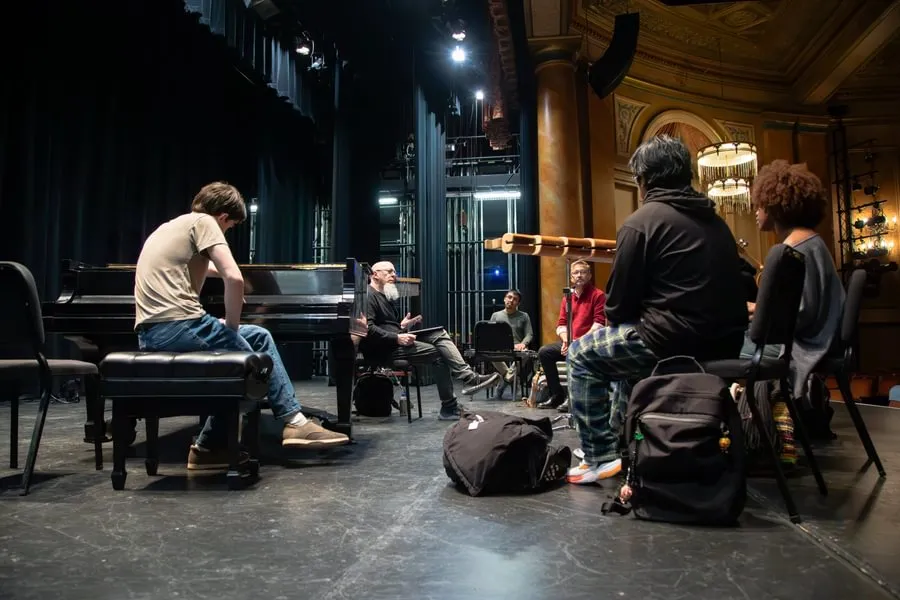
Leal highlighted the depth of Rudess’ engagement with the campus community. Rather than limiting his visit to performances, Rudess immersed himself in daily campus life—joining classes, sharing meals, and collaborating with students and faculty.
“That level of presence matters,” Leal noted. “It reflects the kind of environment we are working to cultivate, one where artists are not simply invited to perform, but to participate, to connect, and to become part of a larger conversation.”
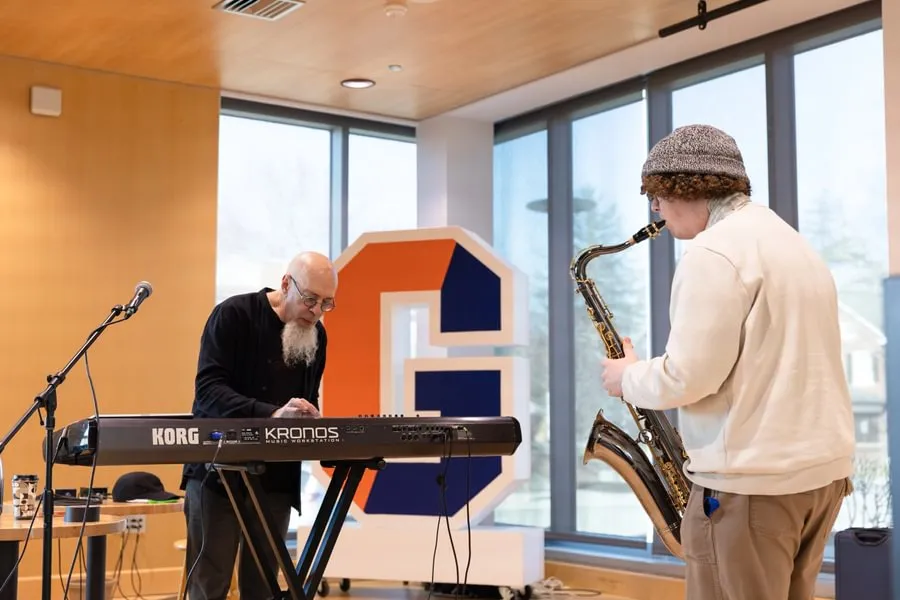
Nick Alimo ’29, a music education major from Frederick, Maryland, described the residency as both inspiring and enlightening. A longtime Dream Theater fan, Alimo attended one of the public demonstrations in the College Union Building (CUB) Junction, watching as Rudess blended his musicality with technology before joining him on stage for a quick jam session.
“As a music education student, I stay open to the thoughts and ideas of advancing technology in music, and his presentations were interesting and informative to anyone seeking more on advancing music technology,” Alimo said. “These experiences at Gettysburg College allow me as a musician to explore every avenue of performance, education, and experience.”
A dynamic performance at the Majestic Theater
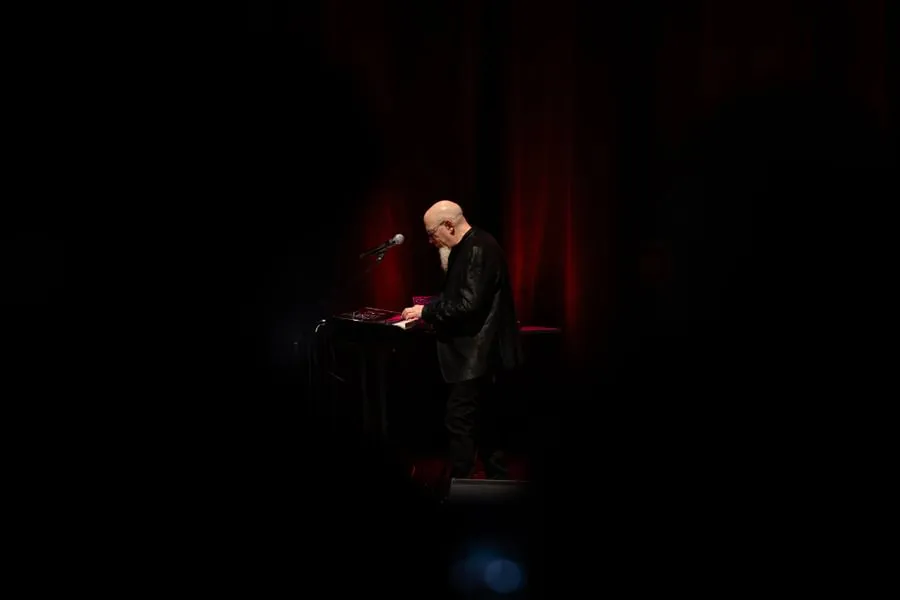
The residency’s emphasis on exploration culminated in a free concert at the Majestic Theater. The concert brought together campus and community audiences, offering a dynamic performance that blended virtuosic musicianship with cutting-edge technology.
Included in the event was an AI-driven musical partner, JamBot, modeled on Rudess’ own innovative playing style and created through a partnership with Prof. Joe Paradiso and the Massachusetts Institute of Technology (MIT) Media Lab’s Responsive Environments Group.
During the concert, Rudess blended his classical training and progressive style by playing a range of songs spanning work by Johann Sebastian Bach, Greg Lake, and Dream Theater on the piano, keyboard, and his own musical application, GeoShred.
“I think it’s the most powerful way to respond to what’s going on with things like AI, which can be so powerful and can be frightening,” Rudess said. “But the way that I look at them, I see them as an opportunity to become more creative myself, and I welcome the opportunity to steer these technologies into positive places for musicians.”
The future of arts and innovation at Gettysburg
Envisioned by Ann McIlhenny Harward’s husband, Don Harward, the Harward Fund was made possible through generous contributions from the Endeavor Foundation. The fund supports programming dedicated to understanding music’s role in exploring and understanding culture, a topic that was central to Ann’s mission as a musician and educator.
“Programs supported by donors are essential to this work,” Leal emphasized. “They allow us to bring in artists who can engage with complex and timely ideas, such as artificial intelligence, while also helping us return to something more fundamental. They create the conditions for listening, dialogue, and reflection and shape how we think, how we interact, and how we learn from one another.”
As Gettysburg College continues to expand the reach of the Harward Interdisciplinary Fund, Rudess’ residency stands as a model for how artists can engage meaningfully with both campus and community.
“At the center of it all is the vision that Don Harward set in motion,” Leal noted. “By grounding the program in music, something that resonates across experiences and backgrounds, he created a powerful point of entry. Our goal is to build on that foundation, to expand its reach, and to continue fostering spaces where meaningful conversations can emerge naturally and thoughtfully.”
Learn more about how we prepare students to thrive in a world marked by change and adaptation.
Related Links:
- Ann McIlhenny Harward Interdisciplinary Fund for Culture and Music
- Gettysburg Approach
- The Majestic Theater