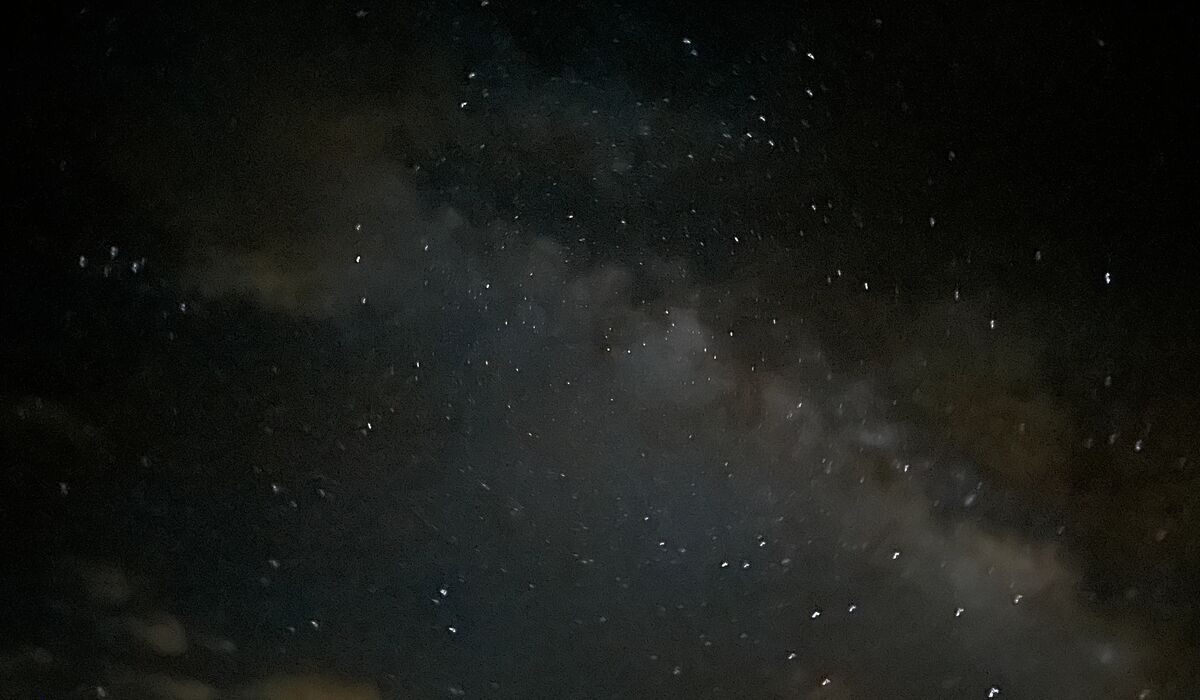
Physics alumna Sophia Marrone ’25 spent the summer after graduation working in astronomy outreach at Valles Caldera National Preserve. She collaborated with National Park Service rangers to deliver public stargazing programs and educational outreach, applying communication skills she developed at Gettysburg College.
Gettysburg College physics alumna Sophia Marrone ’25 spent the summer following her graduation working in astronomy outreach at the Valles Caldera National Preserve in Jemez Springs, New Mexico. Marrone collaborated with National Park Service rangers to design and deliver educational astronomy programs for visitors.
“Waking up in the Valles Caldera National Preserve was like a dream,” Marrone said. “Living on the preserve for the summer brought unbelievable views and experiences.” She described mornings that began with elk outside her cabin and evenings where, on clear nights, “you could catch a glimpse of the Milky Way with your naked eye.”
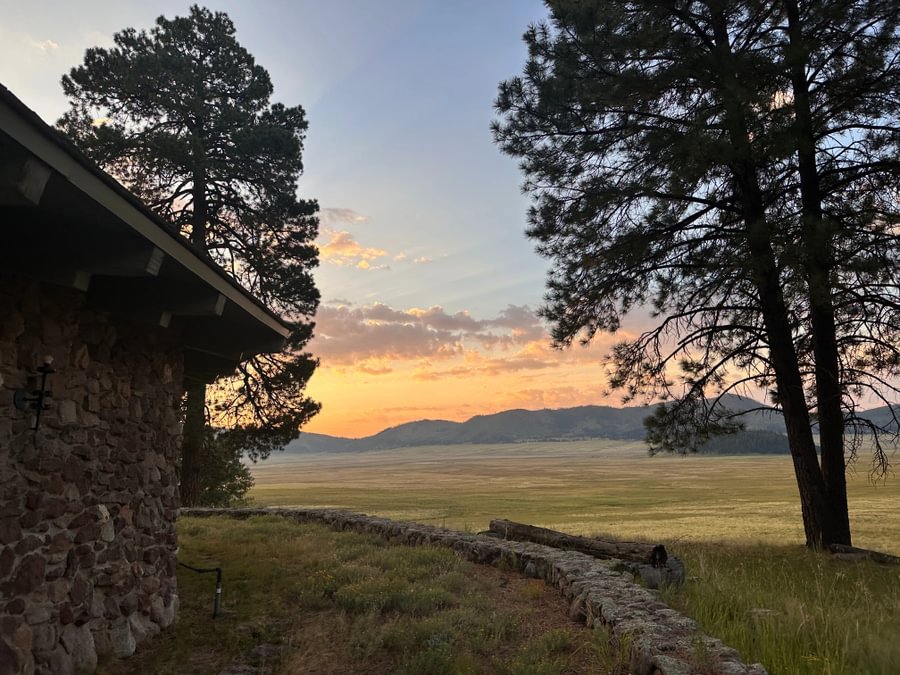
On a day-to-day basis, Marrone worked on programming for upcoming events and created new informational materials alongside park rangers. Regular public programs included moonlit hikes, stargazing events, and astrophotography workshops. One major highlight of the summer was the preserve’s 25th anniversary as a national park, during which Marrone gave three presentations on astrophysics topics and led an extended stargazing program. She also presented a planetarium show at the Pajarito Environmental Education Center.
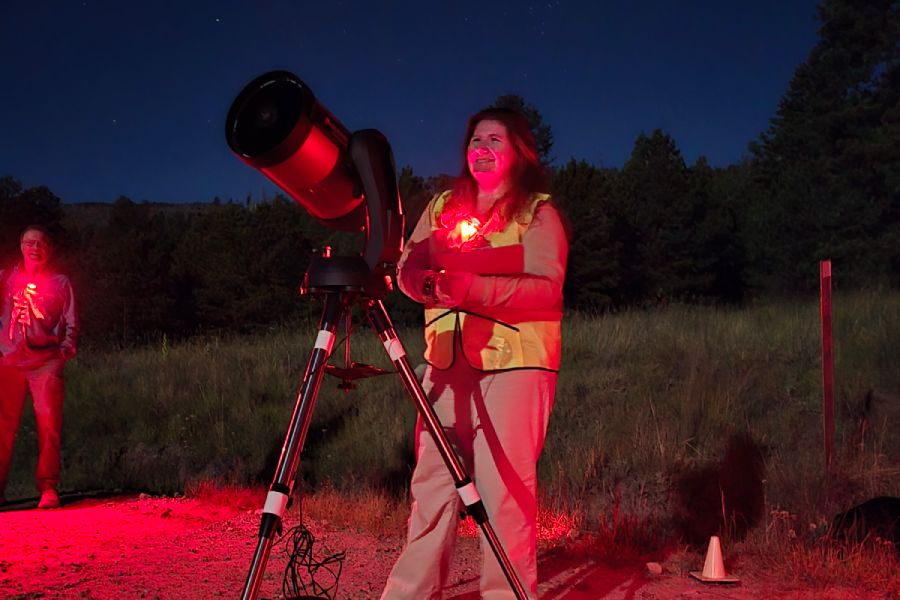
Astronomy outreach at Valles Caldera is deeply tied to both historical and modern contexts. Marrone explained that many Native American groups who passed through the region developed their own cultural stories about the night sky. “Astronomy differs across cultures, and this holds true for the many Native American groups that have passed through the preserve,” she said.
In modern times, astronomy remains important as light pollution—partly due to the preserve’s proximity to Los Alamos National Laboratory—has increasingly affected sky visibility. Marrone’s outreach focused on both the historical significance of astronomy at the preserve and the importance of protecting dark skies.
One of the most rewarding aspects of the internship, Marrone said, was seeing visitors engage with astronomy. During a stargazing event held for the anniversary celebration, she recalled interacting with a young child who stayed with her throughout the program, asking “thousands of questions about the night sky.” She added, “I loved seeing the same passion I had for the night sky reflected in others.” Coming from an observational astronomy background, she also valued the opportunity to discuss light pollution with visitors, noting that she had experienced its effects firsthand during research work near urban observatories.
The internship presented challenges as well. Because many programs relied on clear skies, weather occasionally limited visibility. Marrone and the ranger team adapted by developing alternative programming, including a newly installed information screen that allowed them to digitally demonstrate the night sky, similar to a planetarium experience. She also described adjusting her teaching style to accommodate a wide audience with varying levels of background knowledge.
“Dr. Milingo helped teach me everything I needed to know to run this observatory and study the night sky,”
– Sophia Marrone ’25
Marrone credited her internship preparation to several experiences at Gettysburg College. Although she did not take formal astronomy courses, she worked with Physics Prof. Emerita Jacquelynne Milingo during her first year through the Cross-Disciplinary Science Institute at Gettysburg (X-SIG) to restore and operate the Gettysburg College Observatory. This experience helped her secure a research internship at Villanova University the following summer, where she worked in their observatory on exoplanets and variable stars. “Dr. Milingo helped teach me everything I needed to know to run this observatory and study the night sky,” she said.
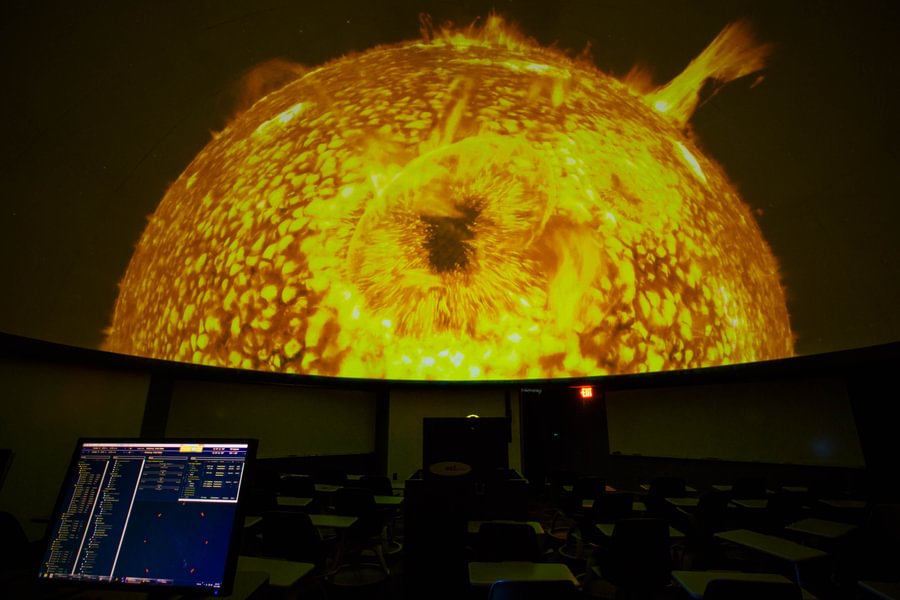
Marrone later served as an astronomy teaching assistant and lab instructor and worked at Hatter Planetarium with planetarium director Ian Clarke, where she created her own planetarium show. “This experience taught me the most about how to present information to an audience and how to create educational materials,” Marrone said.
Reflecting on her experience, Marrone encouraged Gettysburg students interested in astronomy outreach to explore opportunities both on campus and beyond. She highlighted the College’s planetarium as a valuable starting place and emphasized that outreach work is open to students from all majors. Above all, she advised students to remain open to unexpected paths and to look broadly when pursuing internships in science communication.
Lay the groundwork for a rewarding career in physics at Gettysburg College.
Related Links:
External Links:
By Awa Diop ’29
Photos courtesy of Sophia Marrone ’25
Posted: 02/24/26