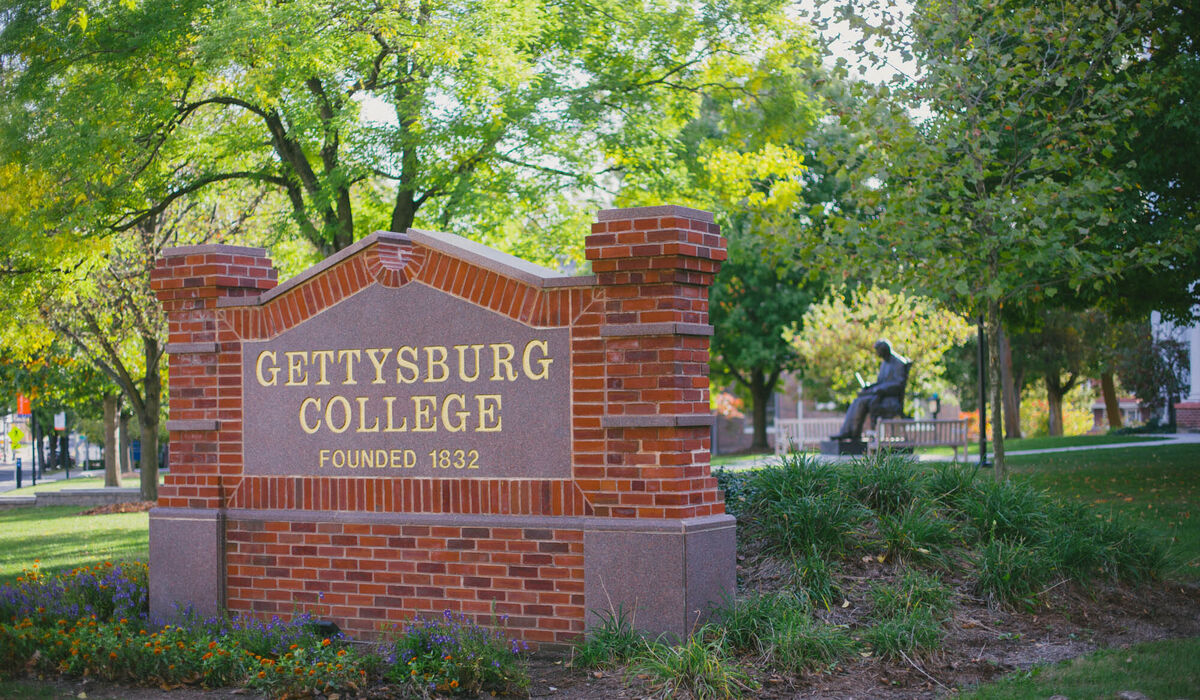
Gettysburg College’s liberal arts and sciences education creates a multidisciplinary foundation for students pursuing legal careers. For Judge Brett Engler ’08, Associate Judge of the District Court of Maryland, 11th District, Gettysburg’s focus on academic rigor, skill-building, and faculty mentorships helped her pursue her career ambitions in the legal field.
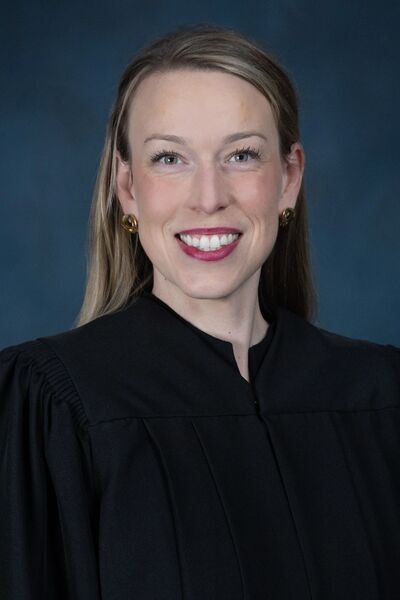
The Honorable Brett Engler ’08 takes the bench in the courtroom as she prepares for opening arguments in the next case. As she hears testimony, considers evidence, and prepares to issue a verdict, Engler remains focused on upholding justice while exercising the critical thinking and compassion she developed as an undergraduate at Gettysburg College.
Engler, originally from Annapolis, Maryland, said Gettysburg fulfilled her desire for a college experience that fostered a personalized education within a liberal arts setting. “Gettysburg was somewhat close to home but still far enough,” she said. “The historical nature of the town and the things to do made Gettysburg very attractive.”
Gettysburg’s track and cross-country programs also stood out to Engler, contributing to her decision to commit to Gettysburg. She recalls retired Gettysburg track and field coach Aubrey Shenk as not only a coach but also a mentor who supported her throughout her college journey.
“He helped me develop the discipline, self-focus, and team focus that I would need to be a successful lawyer,” she said.
Mentors who mattered
A history and political science double major, Engler forged relationships with faculty mentors such as Tim Shannon, the Edwin T. Johnson & Cynthia Shearer Johnson Distinguished Teaching Chair in the Humanities Professor; History Prof. Emeritus Michael Birkner ’72, P’10; the late Political Science Prof. Emeritus Ken Mott; and Africana Studies Prof. Scott Hancock.
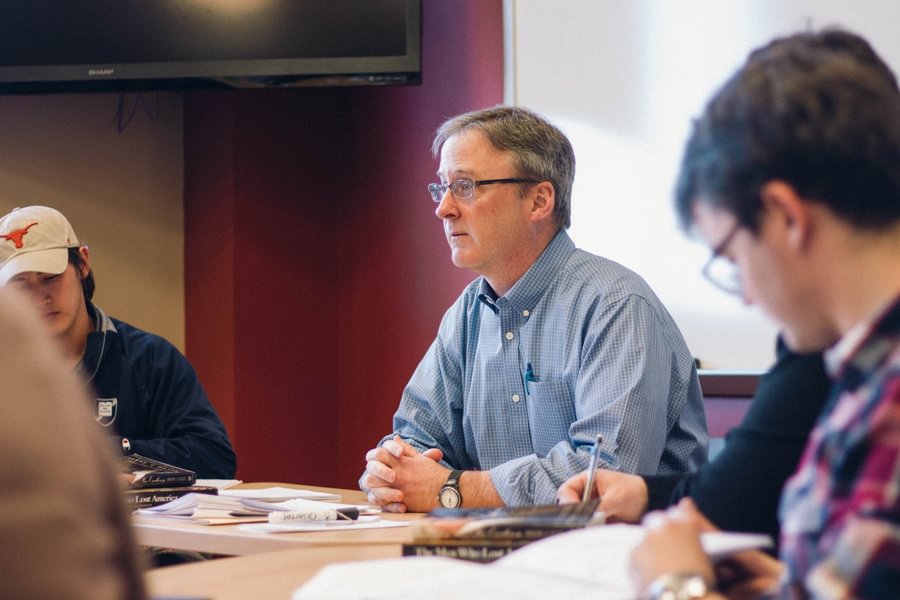
“Prof. Mott taught constitutional law,” she said. “I had an interest in law, but learning about civil rights, the Supreme Court cases, and the history really led me toward thinking about law school. He loved the law and taught us the power of the law.”
Mott was also involved in establishing the Eisenhower Institute, which Engler joined as an Eisenhower Fellow.
“His faith in me pushed me to consider additional ways to engage in significant topics. The Eisenhower Institute became a great resume builder for me,” she said.
Engler also acknowledges the impact of English Prof. Chris Fee and his First-Year Seminar on homelessness in America. She recalls a service-learning trip to the D.C. Central Kitchen and local shelters that introduced her and her classmates to individuals and families who had experienced homelessness. The course, she said, challenged students to confront societal assumptions about poverty, homelessness, and social inequities.
As a judge, Engler presides over a varied caseload of criminal, traffic, domestic violence, and general civil matters. Every day she sees litigants in the Frederick community coming to the courthouse from all walks of life. Developing perspective and a broad view of society was something Engler learned at Gettysburg, with encouragement from her mentors.
“Prof. Hancock encouraged us to get out into the community,” Engler said. “For my senior capstone, I completed an oral history project in which I interviewed African Americans who grew up in Gettysburg during the Civil Rights Movement in order to learn about and record how they connected to the broader Civil Rights Movement from the small town famous for the battle over slavery.
“Prof. Birkner also tasked us to complete oral histories with some of the last remaining World War II veterans of Gettysburg. The man I interviewed had never shared his story with anyone, but spoke to me for hours in his home. After I presented him with the transcribed interview, he sent me a note thanking me for giving his family such a gift. I heard that he passed away several years later. The experience really stuck with me and showed me the powerful human connections that can be forged by listening to the experiences of others,” Engler said.
“Gettysburg is a place where you can have discussions and open your mind to different perspectives.”
– Judge Brett Engler ’08
‘Think globally, but also locally’
The lifelong impact of a Gettysburg education is evident in Engler’s career development in the law.
Last fall, Maryland Gov. Wes Moore appointed Engler to serve as an Associate Judge of the District Court of Maryland, 11th District, which includes Frederick and Washington counties. Engler’s 10-year appointment makes her the youngest of Frederick County’s three District Court judges and the only woman to serve on the court currently.
After earning her law degree from the University of Baltimore School of Law in 2011 Engler clerked for the Honorable Clayton Greene of the Supreme Court of Maryland before serving Frederick County as a career prosecutor. She was the Chief of the Domestic Violence Unit prior to her appointment, handling cases ranging from misdemeanor violence to domestic homicide.
“Prof. Hancock and Prof. Birkner encouraged the open sharing of ideas, in addition to teaching us the value of empathy and inclusion.”
– Judge Brett Engler ’08
As chair of the Frederick County Domestic Violence Coordinating Council (DVCC) and the Frederick County Domestic Violence Fatality Review Team (DVFRT), Engler brought together criminal justice and community advocates to improve Frederick County’s response to domestic violence. She also served on the Legal Committee for the Training Institute on Strangulation Prevention and the Criminal Justice Subcommittee of Maryland’s Domestic Violence Fatality Review Statewide Implementation Team (MD-DVRSIT).
As she reflects on her career pathway, Engler credits Gettysburg’s ability to empower students to “think globally, but also locally.”
“Gettysburg is a place where you can have discussions and open your mind to different perspectives,” she said. “I remember having those discussions in Constitutional Law and Law in Society classes. It was always an open environment. Prof. Hancock and Prof. Birkner encouraged the open sharing of ideas, in addition to teaching us the value of empathy and inclusion.”
Engler believes that inclusivity remains a distinctive hallmark of the Gettysburg community.
“Everyone knew who you were, and when you got on campus, you could recognize almost everyone in your class,” she said. “I always felt safe there, not only physically but also intellectually, and was safe to express my ideas. I learned to develop my thought processes and think critically through situations. Gettysburg is truly a wonderful community.”
Learn to lead with integrity with a political science degree at Gettysburg College.
Related Links:
External Links:
By Michael Vyskocil
Main photo by Miranda Harple
Posted: 06/30/26