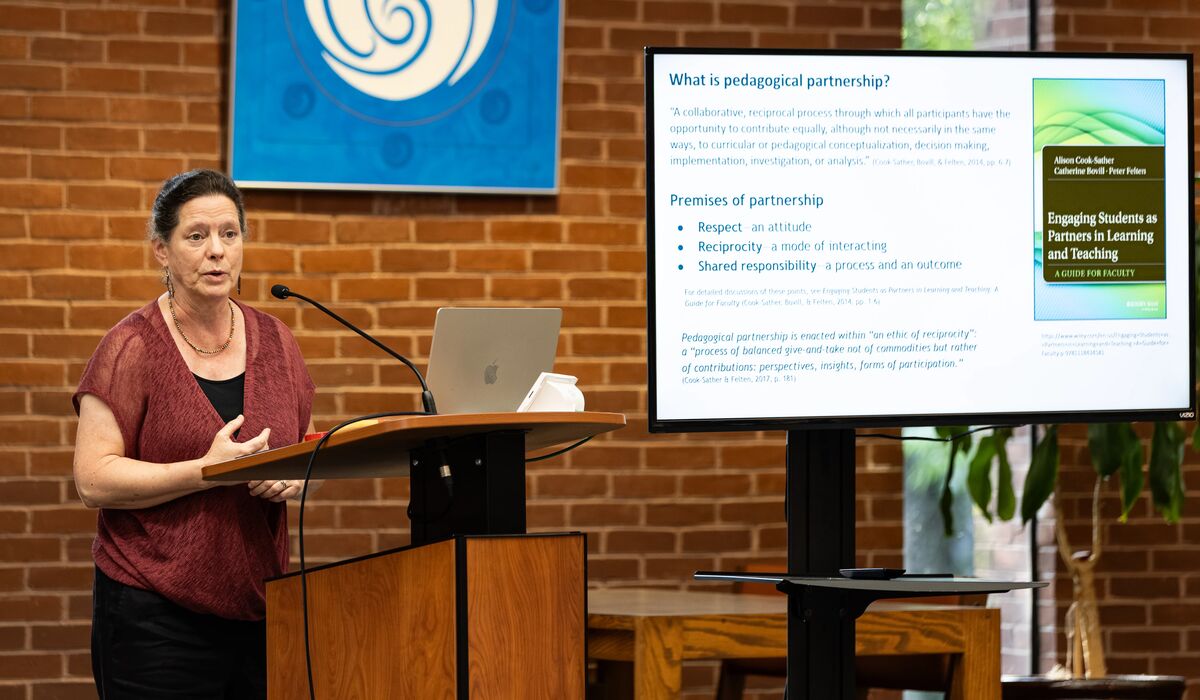
Connecting faculty and staff across the Gettysburg College campus, the annual Summer Pedagogy Institute encourages the exploration of innovative approaches to teaching and learning. A keynote presentation and interactive workshops focused on the value of engaging students as pedagogical partners and co-creators in the curriculum.
Just days before the 2026-2027 academic year began, more than 70 faculty and staff members gathered at Musselman Library to participate in Gettysburg College’s annual Summer Pedagogy Institute (SPI) on Wednesday, Aug. 12, and Thursday, Aug. 13, hosted by The Johnson Center for Creative Teaching and Learning (JCCTL).
Now in its seventh year at Gettysburg, the SPI brings together faculty and staff from various offices and departments across campus to explore innovative, collaborative approaches to the student academic experience.
Topics this year focused on fostering collaborations within and beyond the classroom and included the following subjects:
- The value of pedagogical partnerships
- Experiential learning and inclusive teaching
- The application of educational technology in the classroom
“Through SPI, we reaffirm our commitment to supporting our students and creating new opportunities for them to thrive at Gettysburg.”
– East Asian Studies Prof. Junjie Luo, director of the Johnson Center for Creative Teaching and Learning (JCCTL)
Partners in pedagogical instruction
In her keynote address, Alison Cook-Sather discussed the potential to create and sustain student-faculty pedagogical partnerships and to integrate co-creation approaches into teaching. Cook-Sather is the Mary Katharine Woodworth Professor of Education at Bryn Mawr College and the director of the Teaching and Learning Institute at Bryn Mawr and Haverford Colleges.
Cook-Sather offered a range of examples of how Gettysburg’s faculty could engage their students as pedagogical partners and co-creators. She included examples from Gettysburg faculty who are experimenting with pedagogical partnerships, such as Psychology Prof. Kathy Berenson and her Peer Learning Associates (PLAs). She also highlighted co-creation partnerships from her own experiences and other institutions.
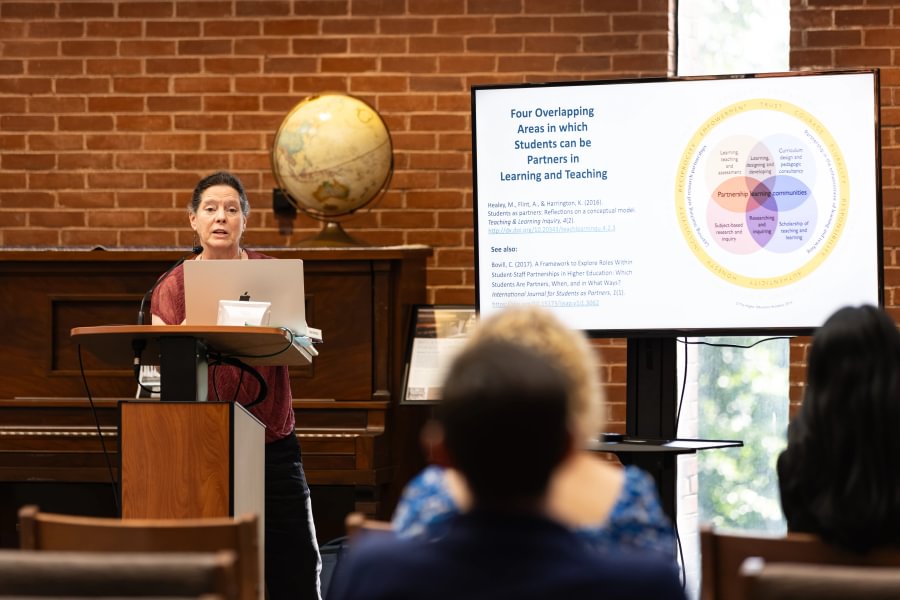
Reflecting on her visit to Gettysburg, Cook-Sather said, “It was an honor and a pleasure to present the keynote address at the Summer Pedagogy Institute. I was deeply inspired by the faculty who participated in the discussion following my remarks. Both their enthusiastic engagement with the examples of pedagogical partnership and co-creation I shared, and their thoughtful questions about these approaches, left me feeling confident that Gettysburg will develop its own well-considered applications and extensions of these practices.”
Over the next year, Cook-Sather will be working with Gettysburg to support students and faculty members as they pilot several partnerships. The work will involve students serving as pedagogical partners to faculty members, engaging in ongoing dialogue with these professors about course planning and instruction.
Putting pedagogy into practice
A lunch-and-learn program on the SPI’s first day gave participants the chance to dialogue and learn more about collaborative partnerships with the following campus offices and programs:
- Center for Career Engagement
- Center for Public Service
- Counseling and Wellness Services
- First-Year Program
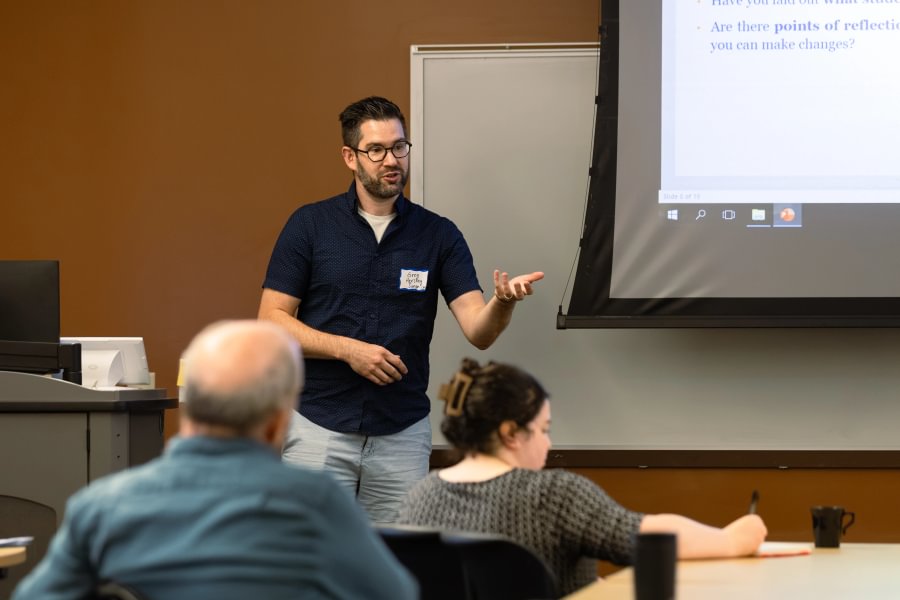
Interactive workshops further built on Cook-Sather’s keynote by addressing the results of this summer’s AI workshop and exploring how experiential learning could be implemented in more ways across the curriculum. Discussions also surrounded the importance of inclusive pedagogical practices and the offerings available to the campus through Educational Technology and The Rogers Center for Innovation and Creativity.
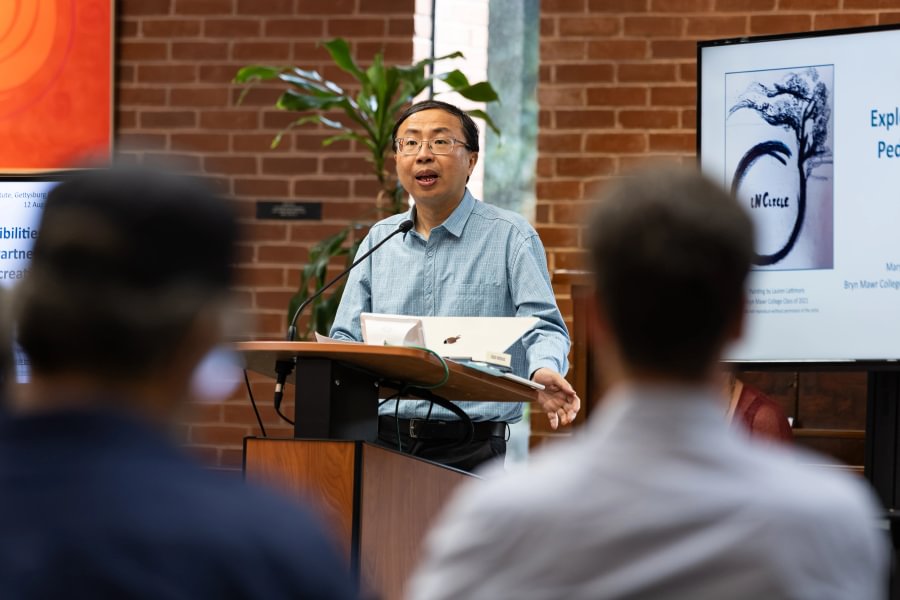
“This year’s Summer Pedagogy Institute, ‘Collaboration in and Beyond the Classroom,’ focused on opportunities to collaborate with students, campus partners, and emerging technologies. The conversations were dynamic and interactive, and our new lightning rounds provided participants engaging opportunities to better understand our students and learn about new initiatives across campus,” said East Asian Studies Prof. Junjie Luo, JCCTL’s director.
“Through SPI, we reaffirm our commitment to supporting our students and creating new opportunities for them to thrive at Gettysburg,” he added.
Luo recognized the efforts of the Provost’s Office, Associate Provost for Faculty Affairs Michelle Schmidt, and the following members of the SPI Steering Committee for organizing this year’s SPI:
- Anthropology Prof. Kirby Farah
- English Prof. Melissa Forbes
- Environmental Studies Prof. Tasha Gownaris ’09
- Theresa Hoover, associate dean for student accessibility, Center for Student Success
- Christine Hopkinson, academic operations assistant
- Kelli Murphy, senior instructional technologist for Educational Technology
- Meggan Smith, assistant director of research and access services at Musselman Library
- Sociology Prof. Divonna Stebick, director of the Office of Teacher Education and Certification
“Each year at SPI, I am infused with a renewed sense of respect for the deep commitment of our faculty to our students’ rich learning experiences at the College,” said Associate Provost for Faculty Affairs Michelle Schmidt. “The collaborative spirit and dynamic discussion by so many of our faculty—ranging from some of our newest faculty members to some of our most experienced and longest-serving faculty members—at this year’s SPI, no doubt, sets the stage for an exciting new academic year.”
Related Links:
External Links:
By Michael Vyskocil
Photos by Tyler Caruso
Posted: 08/26/26