
Theatre Arts
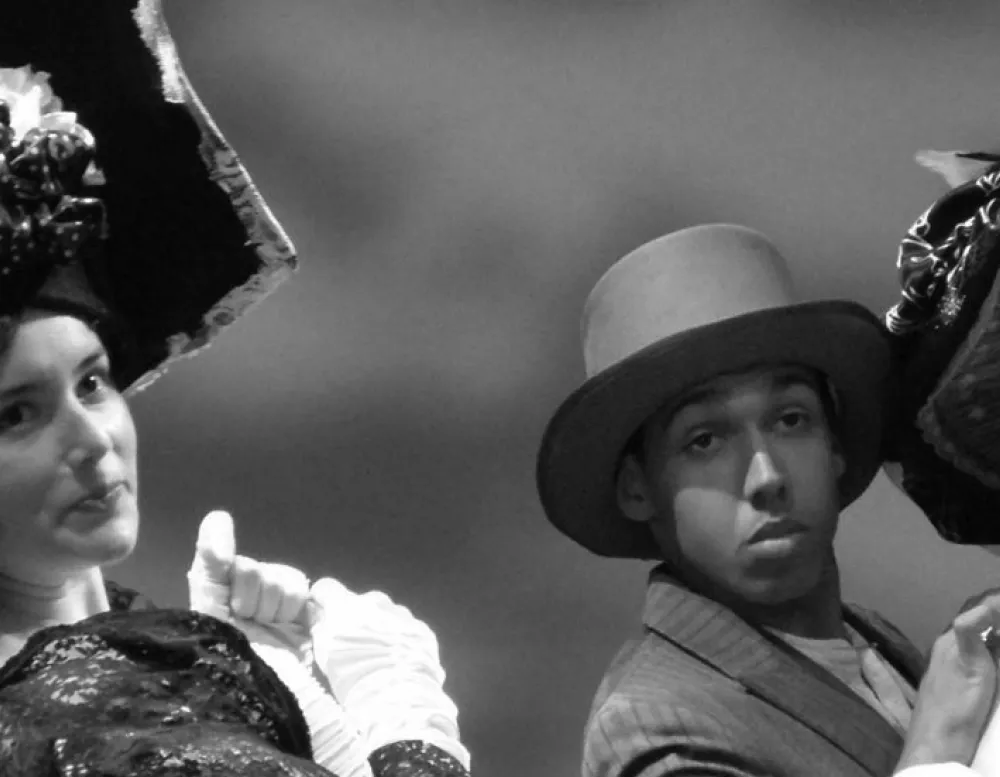
Explore the history and importance of live performance
Majors & Minors
| Program Name | Program Type |
|---|---|
Theatre Arts |
Major Bachelor of Arts |
Theatre Arts |
Minor |
Why study Theatre Arts?
Explore the theatrical event as a complex unit grounded in literature and historical roots, and then translated into performance through the work of playwrights, actors, directors, dramaturgs, and designers.
Why study Theatre Arts at Gettysburg
Opportunities
By studying theatre arts, you develop a breadth and depth of knowledge that you can apply to nearly every profession while building enduring skills such as communication, creativity, and teamwork through storytelling and collaboration.

Academics
The Theatre Arts Department at Gettysburg College explores the history and importance of live performance, providing a bachelor’s degree in theatre arts and a minor in theatre arts.

Community of Artists and Professors
Theatre Arts faculty invite students to write, act, or direct plays while completing courses within this program of study.

Students enjoy a wide range of performance opportunities in the theatre arts department, highlighted by several main stage productions throughout the year in Kline Theatre, studio productions in Stevens Theatre, student-written and -staged one-act plays, and other productions.
Student Opportunities
- Students from all academic disciplines are invited to participate in theatrical productions. You do not need to be a Theatre Arts major or minor to participate in a production.
- Under the direction, supervision and guidance of the theatre faculty, students act, stage manage, build, light, write, sew, and even direct as they translate each play “from page to stage.”
Theatre students can also take advantage of off-campus opportunities, including internships and study abroad.
Owl and Nightingale Players
O&N, the second-oldest student organization on campus, works in conjunction with the department to advance and promote the arts on campus. The club sponsors a wide variety of events, including special performances, trips and more. Anyone can join the Owl and Nightingale Players! Other student theatre groups include Shots in the Dark, the comedy improvisational club.
Internships
Theatre Arts students have the opportunity to pursue an internship through the Center for Career Engagement. This can include a full-time summer internship or a part-time position during the semester. As an example, several Gettysburg students have had theatre internships while studying abroad in Bath, England, at the Theatre Royal -- one of the oldest English-speaking theatres in the world!
- An internship is a great way to “test out” and gain experience in a specific career field, including theatre-based and other venues.
- An internship can also lead to networking and/or employment opportunities for both current students and new graduates.
Internships specific to theatre arts might include work with children's theatre, set design, casting, publicity, and more. Information on thousands of these and other types of internships (located in both the United States and abroad) can be found in the Center for Career Engagement.
Students should start looking for an internship well in advance, particularly if seeking a position in a coveted theatre setting. For example, exploration of a summer internship should begin the previous fall semester.
Senior Capstones
Capstone projects are presented by graduating seniors at the end of each semester. Past projects have included one (or a combination) of the following:
- A staged reading of an original play
- Design of a main stage show
- Performance of a one-person show
- Research thesis
- Collaborative piece by several seniors
- Direction of a full-length play in Stevens Laboratory Theatre
Study Abroad
Oversees programs are a wonderful way to learn about Theatre Arts beyond U.S. borders. In fact, 50% of the department's majors and minors study abroad! Students can experience a variety of international theatre arts opportunities in such places as Bath, Lancaster, and London, United Kingdom; Italy; Australia; Argentina; Spain; France; Germany, and Japan.
- There are Gettysburg-affiliated programs specifically geared toward performance in England, Australia, Italy, and Argentina. Students don’t necessarily need to be fluent in the language; often, courses are taught in English.
- Students who go to Bath study with Oxford University professors and take side trips during their courses through a program called ASE (Advanced Studies in England).
- Students who study at Lancaster University can also spend a month studying in London beforehand with a Gettysburg College professor, prior to the Lancaster Study Abroad program.
- Other students have studied acting and commedia dell 'arte in Italy; set design and construction in Australia; acting and lighting design in Argentina, and puppetry in Japan.
Students interested in studying abroad can contact the Center for Global Education for more information.
Online Resources
The Theatre Department maintains subscriptions to Artsearch, offstagejobs.com and Playbill.com to be used as a resource for its majors and minors. Many of our students are able to find internships as well as paid positions through these online resources gaining experience and advancing their careers in the theatre.
Productions
Three major main stage productions are offered during every academic year, usually in October, February and April. These are directed by faculty or visiting artists and performed in one of our three theatres:
- The Kline Theatre is a modified thrust theatre seating 220.
- Stevens Laboratory Theatre is a black box theatre seating 50 with moveable seating. Stevens Theatre is used primarily for student scene work, one-acts, or senior capstone productions. It is also used as a classroom studio for various theatre classes.
- The Majestic Theatre is an 850-seat proscenium theatre that has a fly system and orchestra pit. The department uses the space for larger scale productions such as musicals, Shakespeare, or popular comedies.
The production schedule is designed so that each student may see and/or participate in a variety of plays -- from different periods and in different styles -- during their four years at Gettysburg College.
The variety of productions includes Shakespearean plays (typically one every three years), comedies of manners, musicals, classical plays, works by the early modernists, contemporary plays, and new experimental theatre pieces.
In addition, there are a number of student-directed projects, including directing projects by students in the Fundamentals of Directing course; staged readings of plays by students in the Playwriting and Devising course; an independent theatre festival, usually held in March, featuring student-directed plays; senior projects, and sometimes other special events.
Casting for each production is open. In fact, first-year students frequently take major roles alongside veteran performers!
Career Options
A major in theatre arts prepares a student for a career in all aspects of theatre — front-and-center or behind the scenes.
- Gettysburg theatre arts graduates can be found in the theatre industry throughout the country and around the world, working as actors, directors, stage managers, scenic artists, theatre directors, and more.
- But the theatre arts major also offers an excellent foundation for careers or graduate study in other fields, as well — including arts administration, business, education, and law.
- Gettysburg College theatre arts majors have gone on to become highly-successful high school performing arts teachers, college professors, nonprofit executives, national sales managers, lawyers, librarians, and more. That’s because a degree in theatre arts from Gettysburg College gives graduates the necessary tools to pursue a wide variety of careers that stretch beyond the walls of a performing arts center, too.
In fact, theatre arts within the framework of Gettysburg’s liberal arts environment enables students to practice and excel at communication, critical/creative thinking, teamwork, and even “project management” through the process of staging a performance. These experiences in theatre, and the exposure to the wide variety of educational opportunities they offer, can stimulate and impact life choices long after a student’s four-year Gettysburg experience is complete.
Featured Courses
100 Level
Overview of theatre, including historical background, literary works, technical aspects, and performance techniques. The theatre of today is studied in relation to its predecessors and in terms of its modern forms in cinema and television. Students read texts and analyze methods used in bringing those works into production. Field trips offer opportunities to critique performances. Open to first- and second-year students only.
200 Level
Survey of the theatre from the Greeks to the Renaissance. Emphasis is placed on the relevance of theatre design, production techniques, and acting styles to the plays of their periods. The course covers Greek, Roman, Medieval, Spanish Golden Age, Elizabethan, Japanese, and Italian Renaissance.
300 Level
During a seven-week program, students rehearse and perform in two mainstage productions for children and families as part of the Gettysburg Theatre Festival (founded 1963). Students work alongside professional actors, administrators, and designers of the Festival and under professional direction. Commedia dell'Arte and other improvisational techniques are employed in the creation of each presentation. A study of the works represented on the mainstage, as well as discussion sessions and workshops with professional actors and directors are included in class work.

Theatre Arts Events
Auditions for Directing Scenes
The Christians
The Christians
The Christians
Theatre Arts students at Gettysburg explore the theatrical event
as a complex unit grounded in literature and historical roots, and then translated into performance through the work of playwrights, actors, directors, dramaturgs, and designers. The study of Theatre Arts offers excellent preparation for a variety of careers, both within and outside the discipline.
Major and Minor Information
Ten courses are required for the THA major.
Intro Course
- THA 105: Introduction to Theater
Theater History and Dramatic Literature Core Courses
- THA 203 or THA 204: History of the Theater
- THA 214: Survey or Dramatic Literature
- THA 331: World Drama
- One course focused on the works of Shakespeare. Choose from ENG 210 (topic: Shakespeare), ENG 211, 317, 318, or 319
Studio Core Courses
Choose one from each of the following groups.
- Design: THA 115, 116, 215, or 255
- Acting or Dance: THA 120, 163, 220 or 263
- Directing or Playwriting: THA 212, 262, 282, or 382
Elective Course
- One additional course from those listed above or one course from the following: CLA 266, ENG 214, 312, SPAN 355, THA 320, 382, or FYS 119-3
Senior Capstone
- THA 400: Capstone Experience
A 400-level Individualized Study may substitute for THA 400. With departmental approval, student may incorporate the Capstone project within a pre-existing course in which case the student may choose an additional Theater Arts course or FYS theater-related course.
Six courses are required for the THA minor.
Intro Course
- THA 105: Introduction to Theater
Theater History Course
- THA 203 or THA 204: History of the Theater
Dramatic Literature Course
- THA 214: Survey or Dramatic Literature or THA 331: World Drama
Acting, Dancing, Directing, or Playwriting Course
- Choose one from THA 120, 163, 212, or 262
Studio or Design Course
- Choose one from THA 115, 116, or 215
Elective Course
- One additional course from those listed above or one course from the following: CLA 266, ENG 214, 312, SPAN 355, THA 320, 382, or FYS 119-3
Notes
- Limit of two 100-level courses. This means that because THA 105 is required, you may only take one other 100-level course that is listed above.
First Year Advising and Registration recommendations
Common first-year courses
- THA 105 Introduction to Theatre Arts
- THA 120 Fundamentals of Acting
- THA 163 Introduction to the Dance
- THA 212 Fundamentals of Directing
- THA 215 Fundamentals of Stage Design
First-year students are encouraged to audition for the fall production—auditions take place in the first week of classes. First-years are often cast. Look for audition details via email and posted at Kline Theatre (Brua Hall). There are also opportunities in the scene shop, costume shop, lighting, and administrative office.
Available Courses
100 Level
Course provides an extensive investigation of historical and contemporary trends and practices essential for theatre production. Students gain an understanding of theatre procedures and acquire a grasp of equipment necessary for the execution of scenery, properties, sound, and stage lighting. Course is a combination of lecture and laboratory work and requires backstage participation in college productions.
Overview of the history of theatrical costumes with a look at fashion as dictated by economic, religious, socio-political, and other factors. Study of costume design and construction with hands-on projects which foster technical skills (primarily sewing) and minimal drawing skills. Examination of the basic processes of costume research, design, and construction as they fit into the total production concept of a play. Introduction to general and specialty stage make-up. Practical experience in preparing costumes and serving backstage for main stage productions.
Study of the theory and technique of the art of acting: movement analysis, non-verbal play, complicity. Devised scenes, status play and improvisation, and scene presentations from contemporary plays accompany critical analysis of plays, character action, and live performances.
Overview of the development of social and theatrical dance of western cultures from the 15th century to present day. It will expand understanding of dance in its social, cultural, political, artistic and performance context. The course will also introduce students to the innovators, dancers, choreographers and dance masters who contributed to the development of dance throughout the centuries. Ballroom etiquette, period fashion and its effect on dance movement and how dance is depicted in fine and decorative arts and on film will complete the exploration.
Overview of theatre, including historical background, literary works, technical aspects, and performance techniques. The theatre of today is studied in relation to its predecessors and in terms of its modern forms in cinema and television. Students read texts and analyze methods used in bringing those works into production. Field trips offer opportunities to critique performances. Open to first- and second-year students only.
200 Level
Overview of dramatic literature from the Greeks to the present. Play structure is analyzed, and comparisons made between methods of executing plot, development of character, and theme. Includes plays from the Greek and Roman periods, medieval, Elizabethan, and seventeenth through twentieth centuries. Emphasis is placed on written analysis.
Modern dance theory and practice exploring basic modern dance technique and movement invention. Course includes modern dance technique, improvisation, and composition. Students develop an understanding of movement in relation to space, time, and energy through movement practice and experimentation. Students explore basic spatial, rhythmic and dynamic movement through individual and group movement composition studies. No previous dance experience is required.
Workshop in art of writing and collaborative devising of works for the stage. Students will learn to identify and analyze play structure, character development, and effective plot construction through writing and movement exercises, both individually and collaboratively. Through improvisation, rehearsed readings, and intensive post-reading feedback, students will produce their own scripts, experimenting with different genres. Students will attend performances, read and analyze playscripts, and analyze and perform each other’s works, culminating in a public staged reading of texts.
Examination of historical and contemporary theories of scene, lighting, and costume design. Students consider design as the visual manifestation of a playwright's concepts. In addition to designing both a play for proscenium, arena, thrust, and profile stages and a period play for a period other than its own, students complete advanced designs in scene, lighting, and costumes, and create designs for the Laboratory Theatre Series in association with students in Theatre Arts 282. Prerequisite: Theatre Arts 215.
Study of traditional Japanese theatre, focusing on Noh, Bunraku Puppet Theatre, and Kabuki from the fourteenth century to the present. The course examines major theories and a variety of representative plays of the three theatrical forms and investigates their artistic, religious, and socio-cultural significances. Emphasis is on adaptation of literary canons, treatment of convention, seminal playwrights, and performance styles. Instruction in performing Noh chanting and dancing unites theory and performance to deepen understandings of the non-western tradition. Readings in English
Further study in the theory and techniques of the actor, the analysis and interpretation of acting roles, and the building of characterization. Analysis and performance of contemporary and classic plays and acting for the camera. Prerequisite: Theatre Arts 120 or permission of the instructor.
Basic theories and technique of design for the stage. The theory behind the design, and the interrelationship of scene design, lighting, costumes, and properties. How stage design interprets themes and moods of a play is studied, as well as identification of period and place. Course follows a lecture-discussion format and involves extensive studio work. Students analyze, create, and execute basic designs for the Laboratory Theatre Series, in association with students in Theatre Arts 212
Study of the theory and technique of the art of the director. Course explores dramatic action, script and story analysis, why a play is selected, auditions and casting, and the purpose and techniques of blocking, movement, and acting, including Viewpoints. Particular attention is given to the preparation of the director's production promptbook and other written analysis. Students are required to direct scenes in class and a short play as part of the Laboratory Theatre Series.
Rehearsal, performance, or technical aspects of theatrical productions for the Gettysburg Department of Theatre Arts season. Students work alongside professors of Acting, Directing, and Design and of the department and under professional direction. 0.25 unit awarded.
Rehearsal, performance, or technical aspects of theatrical productions for the Gettysburg Department of Theatre Arts season. Students work alongside professors of Acting, Directing, and Design and of the department and under professional direction. 0.25 unit awarded.
Survey of the theatre since the Italian Renaissance to the present. Emphasis is placed on the relevance of theatre design, production techniques, and acting styles to the plays of their periods. The course is devoted to French Neoclassical, the Restoration, and the eighteenth, nineteenth, and twentieth centuries
Survey of the theatre from the Greeks to the Renaissance. Emphasis is placed on the relevance of theatre design, production techniques, and acting styles to the plays of their periods. The course covers Greek, Roman, Medieval, Spanish Golden Age, Elizabethan, Japanese, and Italian Renaissance.
300 Level
During a seven-week period, students participate in the varied technical aspects of mounting two mainstage productions for children and families as part of the Gettysburg Theatre Festival (founded 1963). Hands-on experience is gained from the construction, painting and placement of sets, hanging and running of stage lights, and the construction and gathering of properties and costumes. A study of the technical and design aspects along with the cultural and aesthetic heritage of the works produced is integral to the course.
For students who have demonstrated that their skills in performing before the public (both young and old) might be further developed. Students continue work begun in Theatre Arts 307; they are expected to produce mature and advanced work and undertake a broader range of roles and more complex ones. Prerequisite: Theatre Arts 307.
Design Course for students who have demonstrated the skill and talent to undertake further studies in design. Culminates in an independent study project. Prerequisite: Theatre Arts 155 and 255.
Overview of dramatic literature and stage practices of contemporary African, Caribbean, Indian, and Asian theatre. The course includes an introduction to post-colonial literature and theory, including the ways that indigenous theatrical practices were affected by colonial traditions. Focus is on the historical context of each work as well as on themes of national identity, liberation and oppression.
Study of major dramatists from after World War II to the present and of dramatic movements such as realism, naturalism, expressionism, as well as Theatre of the Absurd. Prerequisite: Theatre Arts 214.
The course aims to expand the range of theatrical means by merging the skill sets of the actor with the playwright, designer, and director. Emphasis on the student’s personal artistic vision and choice of expression. Research and creation assignments in self-scripting and ensemble creation; utilizing non-traditional forms and spaces; and the collision of performance with emerging technologies.
During a seven-week program, students rehearse and perform in two mainstage productions for children and families as part of the Gettysburg Theatre Festival (founded 1963). Students work alongside professional actors, administrators, and designers of the Festival and under professional direction. Commedia dell'Arte and other improvisational techniques are employed in the creation of each presentation. A study of the works represented on the mainstage, as well as discussion sessions and workshops with professional actors and directors are included in class work.
400 Level
Examination of concepts, approaches, and professional practices in the Theatre Arts, culminating in an intensive experience for Theatre majors. Under faculty supervision, students develop and present a final production or research project, either individually or in collaboration with other seniors. Offered every spring.
Individualized tutorial counting toward the minimum requirements in a major or minor, graded A-F
Individualized tutorial counting toward the minimum requirements in a major or minor, graded S/U
Individualized tutorial not counting in the minimum requirements in a major or minor, graded A-F
Individualized tutorial not counting in the minimum requirements in a major or minor, graded S/U
Individualized research counting toward the minimum requirements in a major or minor, graded A-F
Individualized research counting toward the minimum requirements in a major or minor, graded S/U
Individualized research not counting in the minimum requirements in a major or minor, graded A-F
Individualized research not counting in the minimum requirements in a major or minor graded S/U
Internship counting toward the minimum requirements in a major or minor, graded A-F
Internship counting toward the minimum requirements in a major or minor, graded S/U
Summer Internship graded A-F, counting in the minimum requirements for a major or minor only with written permission filed in the Registrar's Office.
Summer Internship graded S/U, counting in the minimum requirements for a major or minor only with written permission filed in the Registrar's Office
Theatre Arts
More In Theatre Arts
Ready to Do Great Work?
