Examine how dueling political and economic systems compete for global influence.
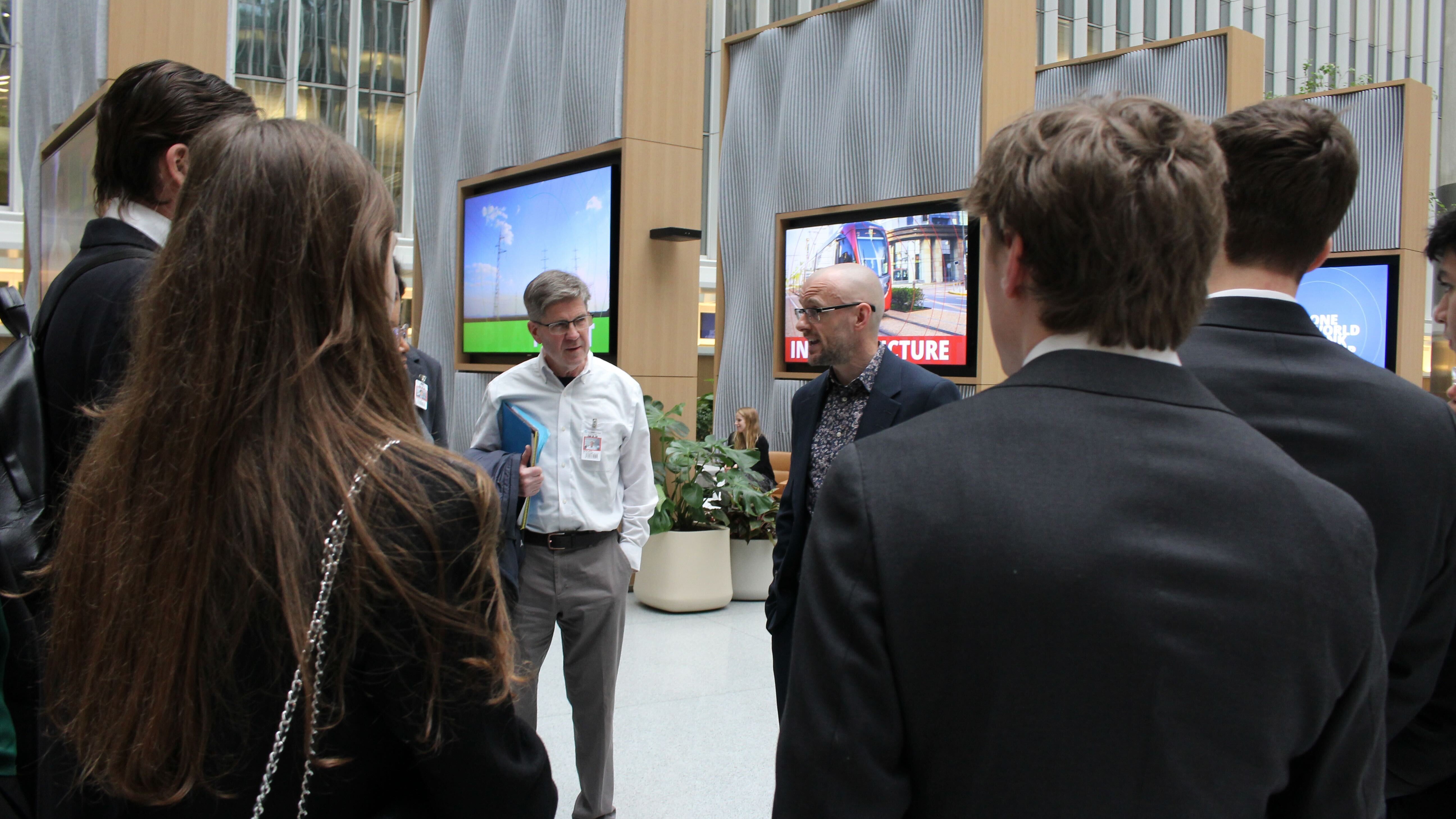
Economic Transformation: Masters and Markets -- Who Runs the World? explores why some countries rely more on government control while others trust free markets and which systems actually work best in today’s world. Led by Senior Fellow John Austin, this seminar explores how nations organize their political institutions and economic systems—and why those choices matter. It invites students to join international experts to grapple with one of the most important questions of the 21st century: which political and economic systems will shape the future—and why.
Governments vs. Free Markets: What Works?
Thirty-five years ago, the Collapse of the Soviet Union appeared to settle a decades-long ideological contest. As communist regimes fell across Eastern Europe and Russia, and China opened its economy while joining global institutions like the World Trade Organization, many believed the competition between state-directed economies and democratic free-market capitalism had been decisively resolved.
But recent events have reopened that debate.
Growing inequality and political polarization in Western democracies have fueled populist movements skeptical of globalization. China’s rapid economic rise has occurred alongside increasing state control under Xi Jinping, while Russia under Vladimir Putin has moved away from its brief post–Cold War experiment with democracy toward a more centralized and authoritarian model. At the same time, many countries—from Brazil and India to Canada and South Africa—are experimenting with their own blends of democratic governance, state intervention, and market economics.
Why does this matter now? From global trade and supply chains to technology, energy, and national security, the competition between political and economic systems is shaping the world that undergraduate students will soon enter.
About the Seminar
In this program, students will explore the evolution of different governance and economic models—from the planned economies of the Soviet Union and China to the liberal democratic systems that emerged as dominant after the Cold War. The seminar will also examine the growing debate over the strengths, weaknesses, and future of these competing approaches.
Students will analyze the trade-offs between economic growth, social stability, individual freedom, and human rights—against the backdrop of renewed “great power” competition over which systems best deliver prosperity and opportunity.
Participants will meet with diplomats, policymakers, and international experts representing countries with different political and economic models. Together, they will explore questions such as:
- What are the advantages--and drawbacks--of state-directed economic systems versus free-market capitalism?
- How do different political and economic models shape individual opportunity, social welfare, and environmental outcomes?
- What are the strengths and limits of the open, rules-based international system created after World War II?
- How do emerging state-led and authoritarian models challenge that system today?
Learning Objectives
By the end of this program, students will be able to:
- Analyze competing political and economic systems to understand how democracies, authoritarian regimes, and hybrid models organize power and markets.
- Assess real-world impact of different governance and economic models on growth, social stability, and individual freedoms.
- Apply insights to current global issues, from trade and technology to climate and inequality, evaluating which systems "deliver."
- Present evidence-based conclusions in reports and briefings, communicating complex ideas clearly to peers and experts.
Final Project
Students will participate in a "Policy Lab" exercise as part of a symposium of policy leaders in Washington, D.C. Participants will identify a weakness with modern democratic capitalism and work in teams to design and present policy reforms that strengthen governance while maintaining a strong free market.
Fall 2026 Schedule:
This program includes three intensive weekends (two in Gettysburg and one overnight in Washington, D.C.), plus a full-day convening in Washington, D.C. and virtual check-ins on Wednesdays in between. Transportation and accommodations are provided for all D.C. visits, and travel time is included in the schedule below.
VIRTUAL: Introduction/Orientation
- Tuesday, September 1, 12-1:30pm
IN PERSON: Intensive 1 in Gettysburg
- Friday, September 18, 6-8:30pm
- Saturday, September 19, 9am-8pm
VIRTUAL: Student Research Introduction
- Tuesday, September 29, 12-1:30pm
IN PERSON: Intensive 2 in Washington, D.C. (Fall Break)
- Monday, October 12, 7am-7pm
- Tuesday, October 13, 9am-9pm
VIRTUAL: Check-in
- Tuesday, October 27, 12-1:30pm
IN PERSON: Intensive 3 in Gettysburg
- Friday, November 6, 6-8:30pm
- Saturday, November 7, 10am-3pm
VIRTUAL: Check-in
- Tuesday, November 10, 12-1:30pm
IN PERSON: Convening with Practitioners in Washington, D.C.
- Thursday, November 19, 7am-8pm
- Includes final check-in and completed report review
Applicant Information
Students in all majors and class years are welcome to apply. The seminar may be especially appealing to students majoring in political science, economics, international and global studies, public policy, history, and related fields. It is led by John Austin, Senior Fellow at the Eisenhower Institute and the Brookings Institution. Austin is a key convener of international policy experts on international economy and democracy, and the economic transformation of heartland regions in the U.S. and Europe.
Attendance at ALL sessions is required.
It is each student's responsibility to ensure that class schedules do not conflict, or to make arrangements with professors to make up work or assessments.