Understand how funding cuts affect essential services—and how communities are responding.
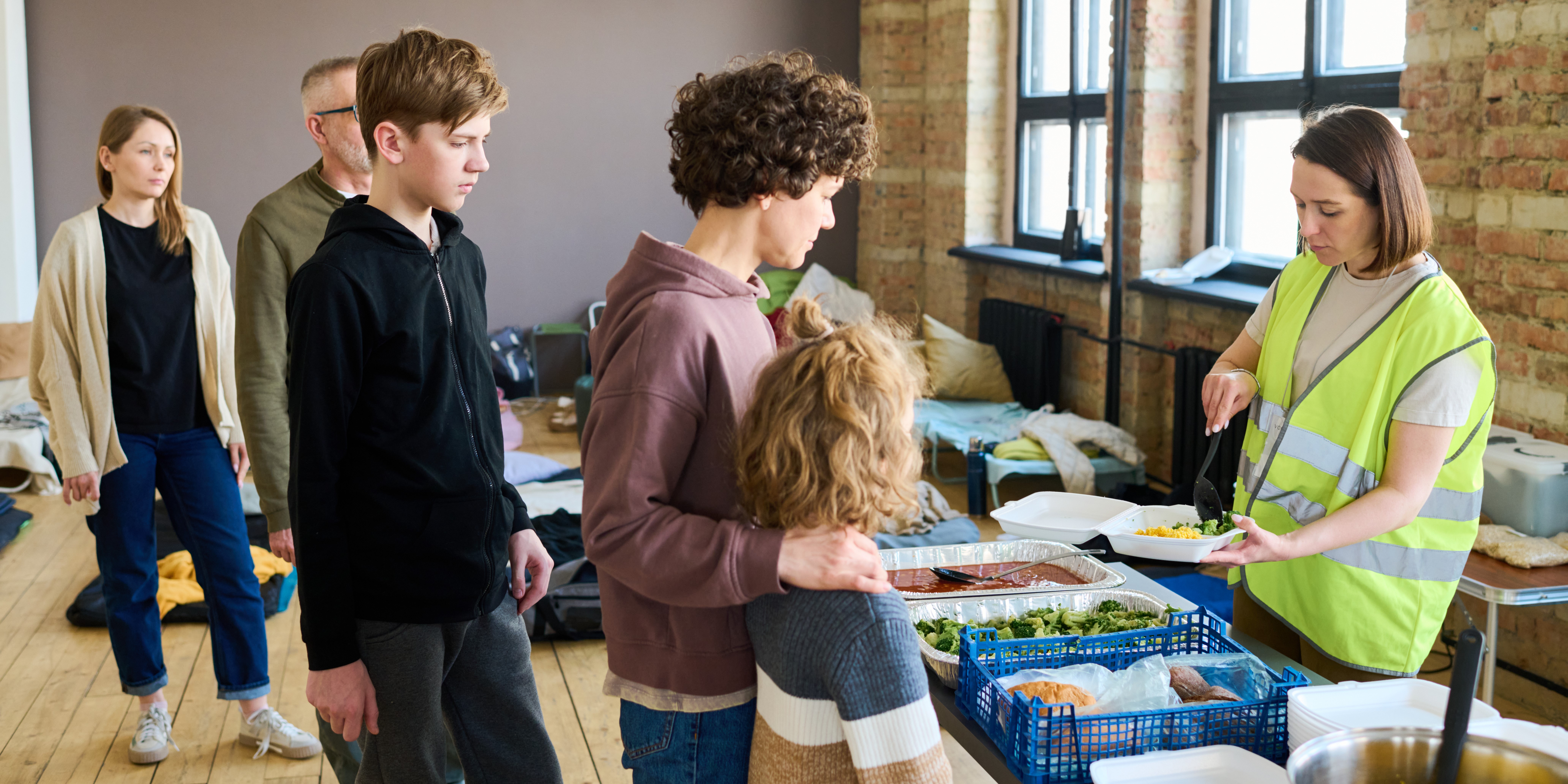
Building America: Housing, Health and Education is a yearlong seminar designed to give students an in-depth look at federal funding that supports the essential needs of children and families, and the impact of recent cuts to programs like Medicaid, SNAP, and Head Start. Students will explore how these three areas are interconnected, and learn how cuts, aimed at reducing bureaucracy and government spending, are affecting access to services for families in urban, suburban, and rural communities. Participants will hit the road to see firsthand how local governments are working with community organizations and philanthropy to ensure that the needs of their residents can still be met. Finally, students will complete a group research project analyzing the national impact of funding cuts, and report on unique and effective solutions.
Federal Cuts: What's at Stake
At the U.S. Department of Education, federal grants administered by states and districts have historically been used to narrow opportunity and achievement gaps for the nation’s most impacted children:
- The Individuals with Disabilities Education Act (IDEA) ensures an equitable education for students who learn differently;
- Title III of the Every Student Succeeds Act (ESSA) provides support for English language learners, among others; and
- Head Start, founded 60 years ago as an anti-poverty program, has ensured early childhood education of more than 37 million children, and serves as a vital source of health, family engagement, and community connection.
At the Department of Health and Human Services, nearly half of America’s children are enrolled in Medicaid or the Children’s Health Insurance Program (CHIP), providing essential care that allows them to attend school regularly, focus in class, and achieve academic success.
The Department of Agriculture’s Supplemental Nutrition Assistance Program — more commonly known as SNAP or Food Stamps — is the nation’s largest anti-hunger program, supporting more than 34 million individuals, nearly half of them children. SNAP helps families afford food and groceries, a basic necessity linked directly to improved birth outcomes, healthy development, early learning, and school success.
The family self-sufficiency program at the Department of Housing and Urban Development has served over 52,000 public housing tenants, often single mothers aged 25-44.
Local Response
This program examines how local jurisdictions and organizations are stepping up to find creative ways to leverage federal funding that’s still available to ensure residents and families can receive needed services. We will see how creative strategies position communities as “shock absorbers” amid policy shifts and funding cuts at the national level. Although local communities are able to fill minor gaps, they are not able to replace large amounts of federal support that people have relied on for generations. This seminar will consider what communities can do to support those who are being left behind – and what it will cost.
Seminar and Final Project
This experiential learning seminar combines discussions with experts and site visits to local communities that are finding ways to fill gaps through partnerships and participatory action. Students will meet with government, program, and philanthropic leaders. They will observe programming in action and interview parents and residents. The seminar includes participation in a one-day conference in Washington, D.C., examining these issues.
Concurrently, students will track the national impact of a specific funding stream as a group project, presented in a final presentation that also highlights some of the most effective strategies they encountered.
This seminar is suitable for students from many academic disciplines, including economics, sociology, political science, data science, business, health sciences, public policy, public health policy, and other areas. Students with interest and experience in federal policy and practice, government relations, education studies, child development, and family engagement are especially encouraged to apply.
This experiential learning seminar is organized by Emily Samose ‘95, a Gettysburg College alumni and consultant based in Washington, D.C. Samose has many years of experience, and connections to a broad network of education, housing, and health executives and thought leaders who will share their expertise throughout program sessions.
Program Schedule
Students will meet on campus for five two-hour sessions per semester, as well as a 5-day trip over fall break and 2-3 days in D.C. during spring break. Students must commit to attending all sessions and on-site experiences.
Fall 2026
Session 1: Introduction and Overview
Wednesday, September 9, 4-6PM
- Program introduction and overview, covering historical context, current needs, federal, state and municipal funding support.
Session 2: Housing
Wednesday, September 23, 4-6PM
- Public and affordable housing in the United States: federal → local funding, structures and services, qualifications for families and individuals.
Session 3: Health and Education
Wednesday, October 7, 4-6PM
- Exploration of Head Start – history, families served, impacts made, link between health and early education, what the future holds.
Fall Study Trip: Community Visit
Fall Break: October 9-October 13, full days
- Learn from state and local leaders about current funding and partnership strategies to ensure families still receive services in the face of federal funding cuts, visit and experience housing, health, and education programming in action.
Session 4: Health
Wednesday, October 28, 4-7PM
- Medicaid - overview, numbers served, current status, and what the future holds. Debrief community visits.
- Extra hour to work on group project.
Session 5: Education
Wednesday, November 11, 4-7PM
- Funding streams in support of students and families from economically challenged circumstances -- how they have worked, what is happening now, and what the future holds.
- Extra hour to work on group project.
Spring 2027
Session 6: Housing, Health, and Education in Rural Communities
Wednesday, January 27, 2-7PM
- Data trends re: assets and needs, close analysis of access to housing, health and education services, primary federal programs relied on, and other support systems for rural families.
- Includes site visits to local agencies and housing units in Adams County.
Session 7: Health and Education
Wednesday, February 10, 4-6PM
- Mental health for children, youth, and teens -- data trends defining the national issue, services available in local communities, costs, integrations of services into school and afterschool.
Session 8: Housing and Education
Wednesday, February 24, 4-7PM
- Important connections in urban and suburban communities; key interventions at home, in school, and in OST programs that lead to learning progress for students, the essential role of parents and parent engagement, and the supporting funding sources.
- Extra hour to work on group project.
Study Trip: Washington, D.C.
Spring Break: March 11-13, full days
- Participate in the one-day D.C. Learning Acceleration Summit to learn about the education systems in Washington, D.C., the primary interventions and programs available to students and the family engagement process.
- Visit urban, rural, and suburban public housing settings.
- Meet with leaders addressing key issues in health, housing, and education.
Session 9: Education, Housing, and Health
Wednesday, March 24, 4-6PM
- Debrief key learnings from D.C. summit, visits, and meetings.
- Work on final project and prepare/practice
Session 10: Final Presentation Day
Wednesday, April 7, 4-6PM
- Final project presentations and wrap-up.
Previous Building America Programs
- Fall 2023: Reinventing Education (final report | media coverage)
- Spring 2024: Affordable Housing
- 2024-25: Transportation & Health
- Fall 2025: Eisenhower's Interstate System